Visit Mehta Art Gallery

A Contemporary Abstract Journey Through Banaras, Where Color Becomes Prayer and Silence Becomes Light

By Artist Dhirendra Sisodia & Artist Amit Kumar Mehta

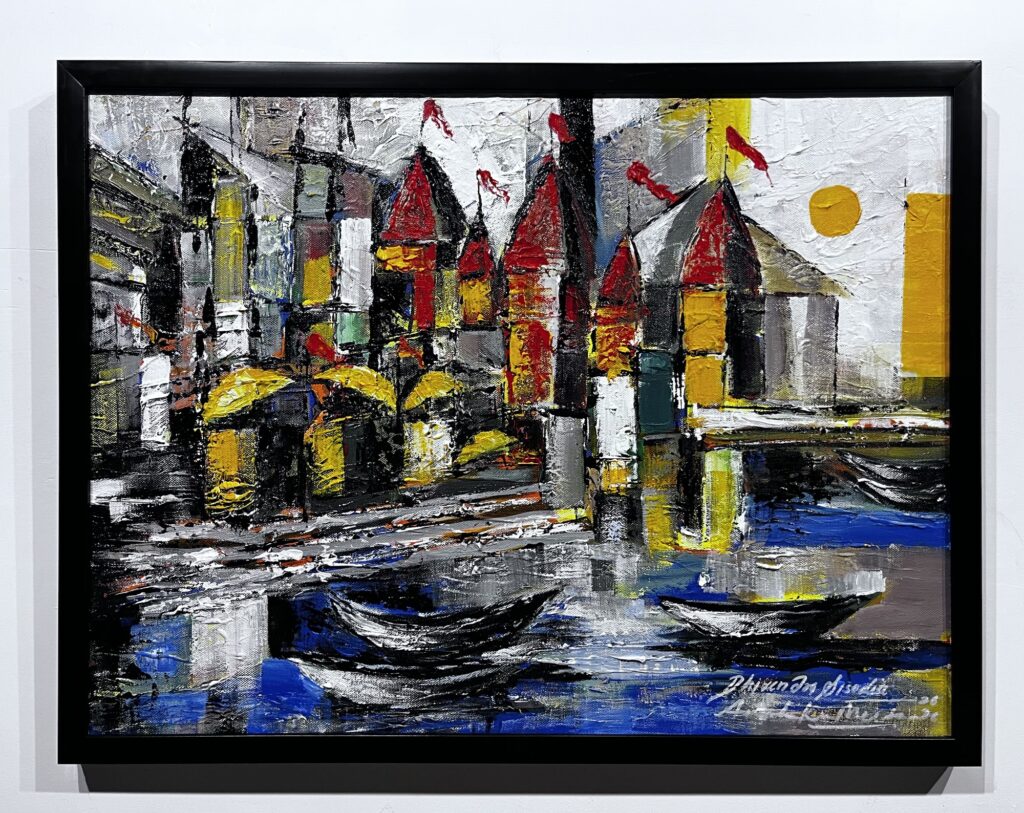
There are cities that exist on maps, and then there are cities that exist within the soul. Banaras belongs to the second kind. It is not merely a destination resting beside the sacred river; it is a timeless vibration, a breathing hymn, an endless dialogue between life and eternity. Every stone of its ghats carries stories, every wave of the Ganga reflects centuries of devotion, and every dawn arrives like a spiritual awakening painted across the sky. In this contemporary abstract artwork by Artist Dhirendra Sisodia and Artist Amit Kumar Mehta, Banaras is not represented through realism alone. Instead, it is felt through movement, through texture, through layered emotions flowing across the canvas like sacred water itself.

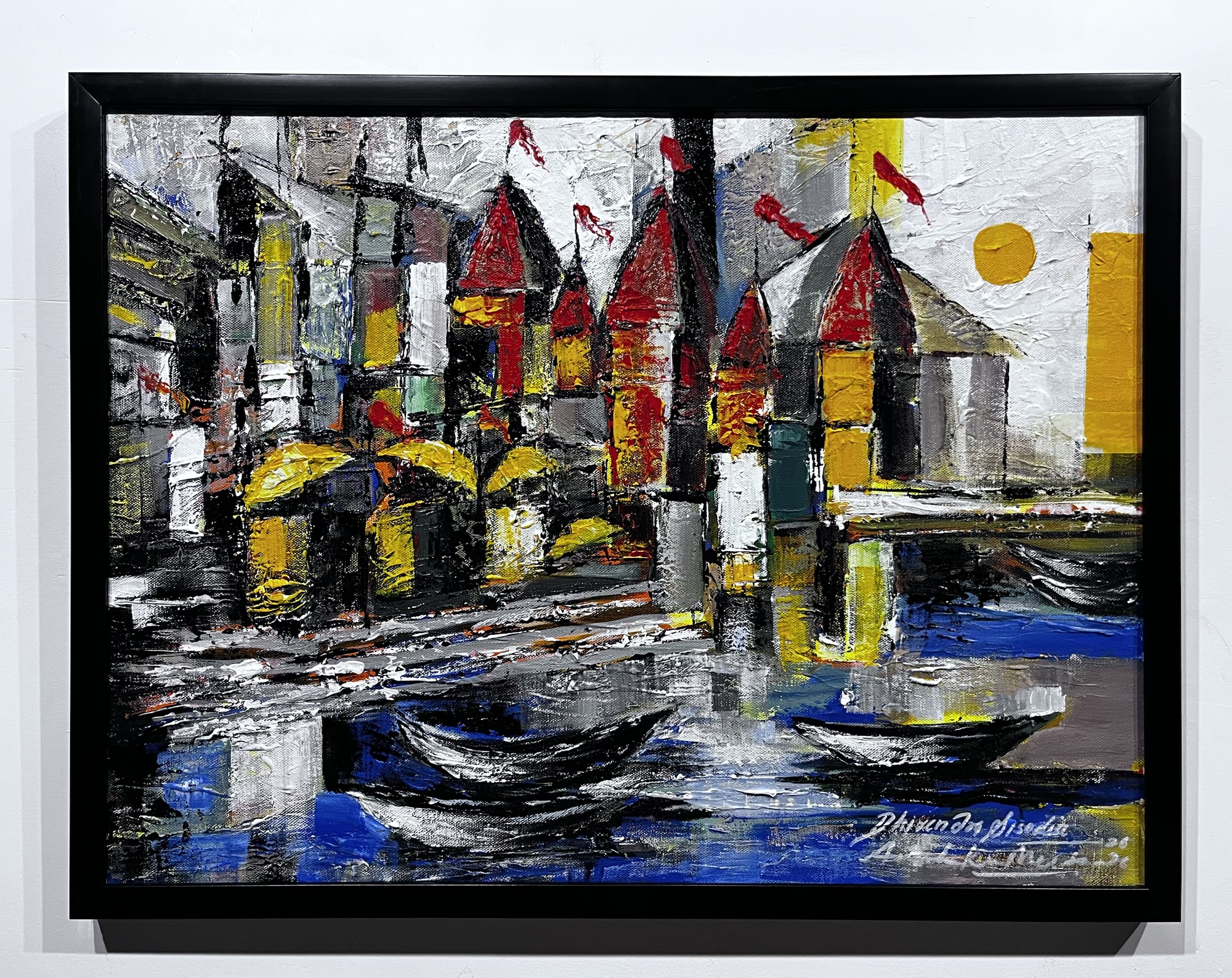
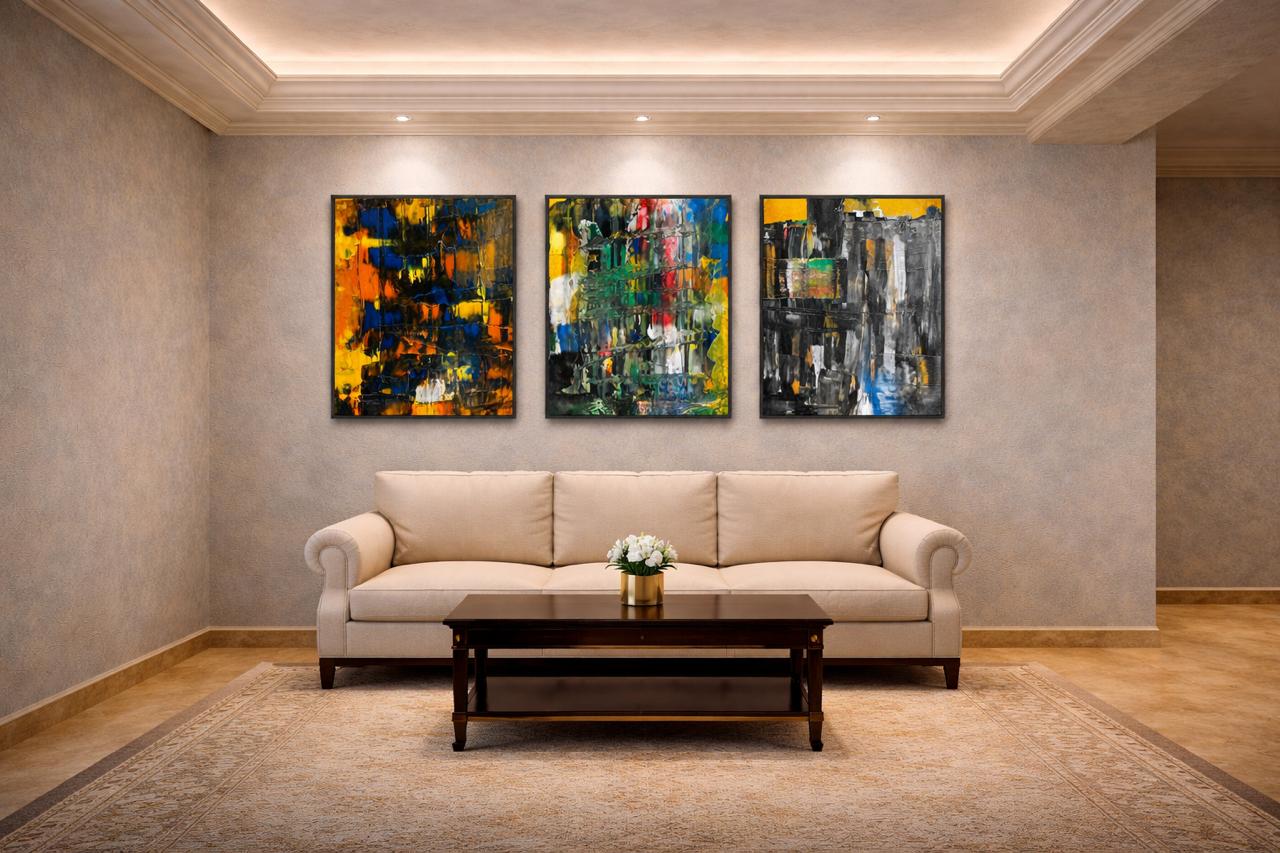
This acrylic painting on canvas is not simply a visual composition. It is an experience of rhythm, silence, devotion, chaos, birth, liberation, and peace woven together through color and abstraction. The painting speaks in a language beyond words, where every stroke carries memory and every texture holds an inner prayer. The artists do not attempt to recreate the ghats as they physically appear; rather, they reveal what Banaras feels like when one stands at the edge of the river and listens deeply to existence itself.

At first glance, the painting appears alive with intense movement. Bold reds rise like temple spires against muted greys and whites. Deep blues flow across the lower surface like the eternal Ganga carrying reflections of the sky and human consciousness together. Black vertical forms stand with immense strength, like ancient pillars of time witnessing generations come and go. The composition feels fragmented yet complete, chaotic yet peaceful, abstract yet spiritually intimate. This duality is the true spirit of Banaras.

Banaras has always existed between opposites. It is where birth and death sit beside one another without fear. It is where celebration and mourning share the same riverbank. It is where fire becomes liberation and ashes become eternity. In this artwork, these contradictions dissolve into harmony. The painting does not separate joy from sorrow or life from moksha. Instead, it allows them to flow together naturally, just as the Ganga accepts everything without judgment.

The process of creating this painting itself mirrors the philosophy of the city. Built layer by layer using acrylic on canvas, the artwork carries visible textures that reveal the emotional journey of the artists. Each layer was not merely applied technically but emotionally. Colors were not chosen for decoration; they emerged from inner states of feeling. The thick palette knife textures create depth similar to the layered history of Banaras itself. Beneath every visible surface lies another hidden emotion, another memory, another silence.

Artist Dhirendra Sisodia brings a powerful sense of structure and intensity into the composition. His treatment of architectural abstraction transforms the temples and ghats into emotional symbols rather than literal forms. The rising red shapes resemble sacred flames, temple peaks, and spiritual ascension all at once. They pull the viewer upward, creating a feeling of transcendence. Through bold contrasts and expressive layering, he introduces energy that feels almost musical, like the sound of temple bells echoing through misty mornings.

Artist Amit Kumar Mehta, on the other hand, infuses the canvas with emotional fluidity and meditative depth. His understanding of color relationships and atmospheric silence allows the painting to breathe. The blues and whites do not remain static; they flow like consciousness itself. There is softness hidden beneath the dramatic textures, a peace quietly emerging from within the abstraction. His contribution creates emotional balance, allowing the painting to become not only expressive but spiritually reflective.

Together, the collaboration becomes more than two artistic styles merging. It becomes a conversation between two inner worlds connected by one sacred vision. The painting feels united because both artists approach Banaras not only as painters but as seekers. Their shared emotional connection with the city transforms the canvas into a spiritual landscape rather than a physical one.

One of the most striking aspects of this artwork is its treatment of color psychology. The red tones dominate sections of the painting with fierce emotional presence. In Indian spirituality, red symbolizes life force, devotion, energy, and sacrifice. Here, the reds appear almost like burning consciousness emerging through layers of grey existence. They represent the eternal flame of Banaras, the fire that destroys illusion and awakens truth. Yet these reds are balanced by expansive whites and muted tones that introduce calmness and surrender.

The blues flowing across the lower part of the composition carry immense emotional resonance. These are not ordinary blues. They feel deep, sacred, reflective. They mirror the spiritual depth of the Ganga at twilight, where the river becomes less water and more eternity. Within these reflections lie human emotions, longing, peace, surrender, hope. The boats floating silently in the foreground symbolize life itself. Small, temporary, drifting through the vastness of time and existence. Yet despite their fragility, they continue forward.

The abstraction in the painting allows viewers to discover their own meanings within the work. Some may see spiritual liberation. Others may feel nostalgia, silence, or emotional healing. This openness is what gives contemporary abstract art its enduring power. Unlike realism, abstraction does not dictate emotion. It invites emotion. It creates space for personal reflection. The painting becomes a mirror where viewers encounter not only Banaras but themselves.

Texture plays a central role in communicating this emotional depth. The thick acrylic layers create a tactile presence that almost resembles weathered walls, ancient temple surfaces, flowing water, and cracked memories. The palette knife work introduces rawness and honesty. Nothing appears overly polished or artificial. The surface feels alive, carrying imperfections similar to human life itself. These textures remind us that beauty often emerges not from perfection but from experience.

Light within the painting also carries symbolic meaning. The golden-yellow circular form appearing near the upper right section resembles the sun, but it also feels spiritual, like a divine eye watching over existence. It radiates warmth amid the dense abstraction. In Banaras, sunlight holds sacred significance. Morning light touching the river is seen as a blessing, a moment of spiritual purification. The artists capture this feeling not literally but emotionally through glowing accents emerging from layered darkness.

There is also a remarkable sense of rhythm throughout the composition. The painting moves like music. Vertical structures rise and fall like chants. Reflections ripple like melodies. Colors collide and dissolve like human emotions during meditation. This rhythmic movement reflects the living heartbeat of Banaras itself. The city never truly sleeps. Its rhythms continue endlessly, through prayers, cremation fires, boat songs, temple bells, footsteps on stone ghats, and silent conversations between humans and the divine.

What makes this artwork deeply contemporary is its ability to merge tradition with modern emotional language. Banaras is ancient, yet the painting speaks in a highly modern visual vocabulary. Instead of detailed realism, the artists use abstraction to communicate timeless truths. This approach allows younger audiences and contemporary art lovers to engage with spiritual themes in a fresh and emotionally accessible way. The painting respects tradition without becoming trapped by it.

In many ways, this artwork challenges viewers to slow down. Modern life often demands speed, distraction, and surface-level experiences. But Banaras teaches patience. It teaches observation. It teaches surrender. Similarly, this painting cannot be fully understood in a single glance. The longer one looks, the more emotions emerge from beneath the layers. Hidden textures appear. Colors begin to converse. Silence becomes visible. The artwork rewards contemplation.

The collaborative energy between Artist Dhirendra Sisodia and Artist Amit Kumar Mehta also reflects a deeper artistic philosophy, that art is not competition but shared creation. Their combined vision demonstrates how two distinct artistic voices can unite harmoniously while maintaining individuality. This balance mirrors the spiritual essence of Banaras itself, where countless beliefs, rituals, and identities coexist beside one sacred river.

Emotionally, the painting carries a profound sense of moksha, liberation from attachment and illusion. Yet this liberation is not portrayed through emptiness alone. It emerges through fullness, through intense emotional experience transformed into peace. The chaotic textures gradually dissolve into calm reflections. The dense structures open into spaciousness. Darkness gives birth to light. This emotional transformation mirrors the spiritual journey of human existence.

There is a quiet humanity hidden within the abstraction as well. Though no detailed human figures dominate the canvas, human presence is everywhere. It exists in the boats, in the reflections, in the architecture, in the flowing movement of color. The painting reminds us that Banaras is ultimately about people seeking meaning, pilgrims searching for peace, souls searching for liberation, artists searching for expression.

Acrylic as a medium plays an essential role in achieving this emotional intensity. Its versatility allows the artists to build layers rapidly while preserving spontaneity. Unlike slower mediums, acrylic responds immediately to gesture and emotion. This immediacy gives the painting raw authenticity. Every stroke feels connected to a real emotional moment during creation. The layering process also mirrors spiritual accumulation, experiences building over time until they become wisdom.

The black frame surrounding the artwork enhances its dramatic presence. It acts almost like a silent boundary between the material and spiritual worlds. Inside the frame, colors flow freely like consciousness escaping limitation. The contrast between the dark border and luminous interior intensifies the emotional impact, drawing viewers inward toward contemplation.

Ultimately, this painting is not about explaining Banaras. Banaras cannot truly be explained. It can only be experienced. Through abstraction, texture, rhythm, and emotional color, Artist Dhirendra Sisodia and Artist Amit Kumar Mehta create a visual meditation on existence itself. Their work transforms canvas into a sacred space where viewers can pause, reflect, and reconnect with deeper emotions often forgotten in everyday life.

The painting reminds us that life is constantly flowing, just like the river. Moments pass, forms change, bodies disappear, but something eternal continues beneath it all. In the reflections of blue water, in the rising temple forms, in the burning reds and silent whites, we witness not only the spirit of Banaras but the rhythm of human existence. Birth, devotion, struggle, peace, surrender, liberation, all coexist within one flowing reality.

This artwork stands as a contemporary spiritual expression where abstraction becomes prayer and color becomes emotion. It invites viewers not merely to observe but to feel. To remember. To surrender. To listen to the silence beneath the noise of the world.

And perhaps that is the true essence of Banaras. Not a city of endings, but a city where every ending quietly transforms into light.

“Where Death Becomes Liberation: Kashi Beyond Time, Faith and History”

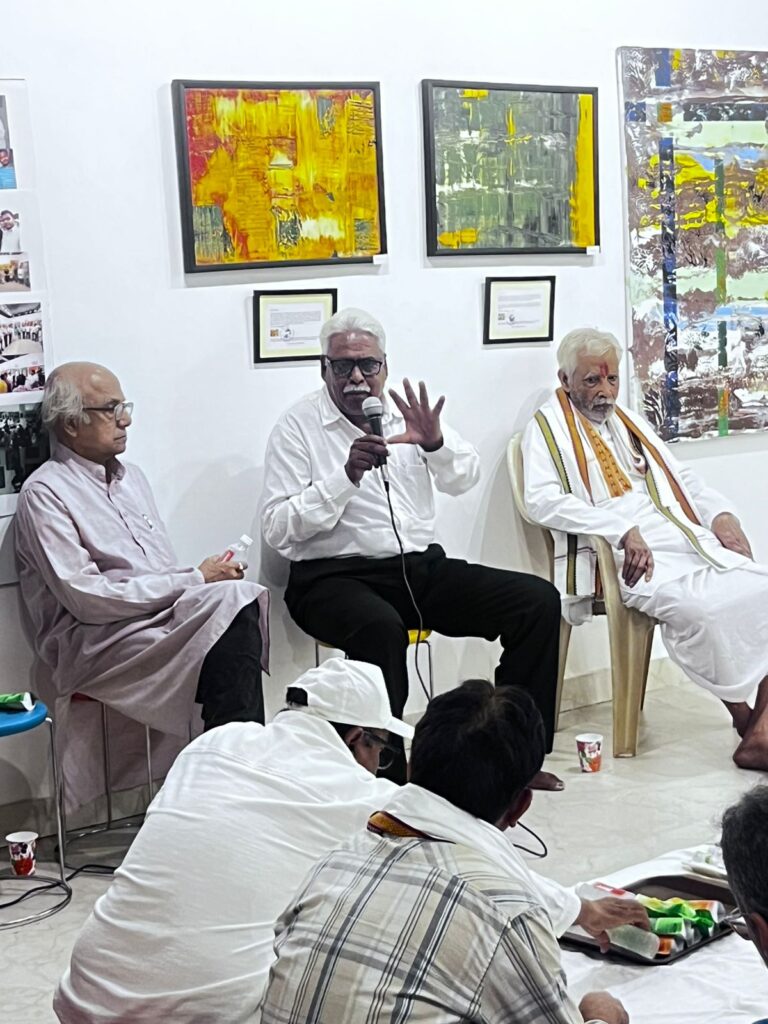
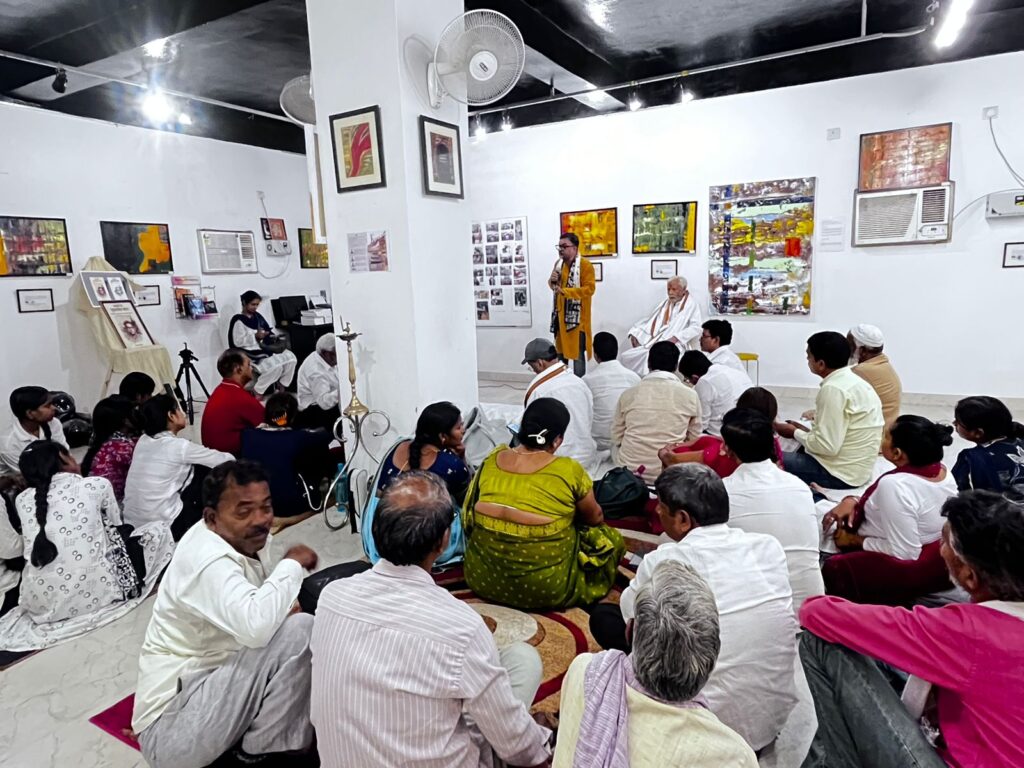
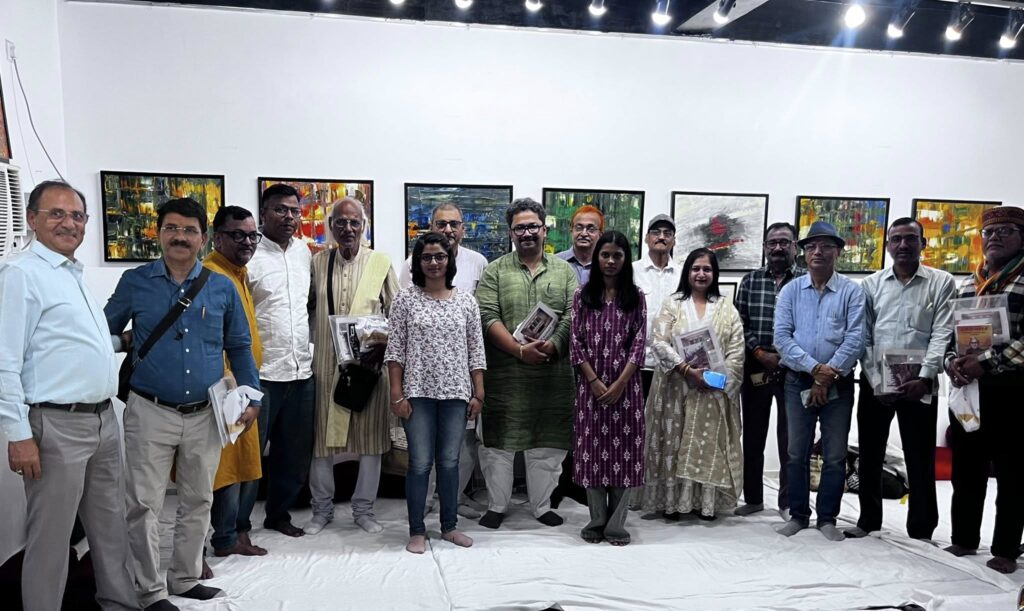
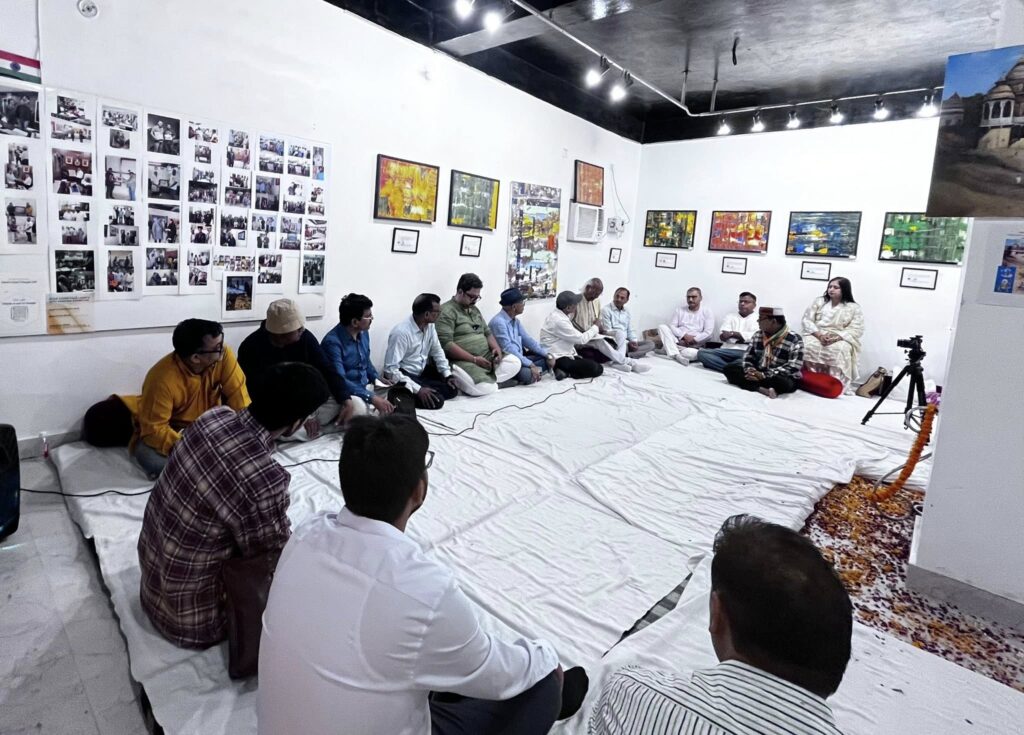
In the timeless city of Kashi, where the chants of mantras merge with the flowing rhythm of the Ganga and the smoke from ancient cremation grounds rises like prayers into the sky, conversations about life, death and spirituality become more than philosophical discussions, they become living experiences. This eternal spirit of Varanasi found a profound voice during the ‘Chorus-2026’ event organized at Mehta Art Gallery under the coordination of acclaimed contemporary artist Amit Kumar Mehta.

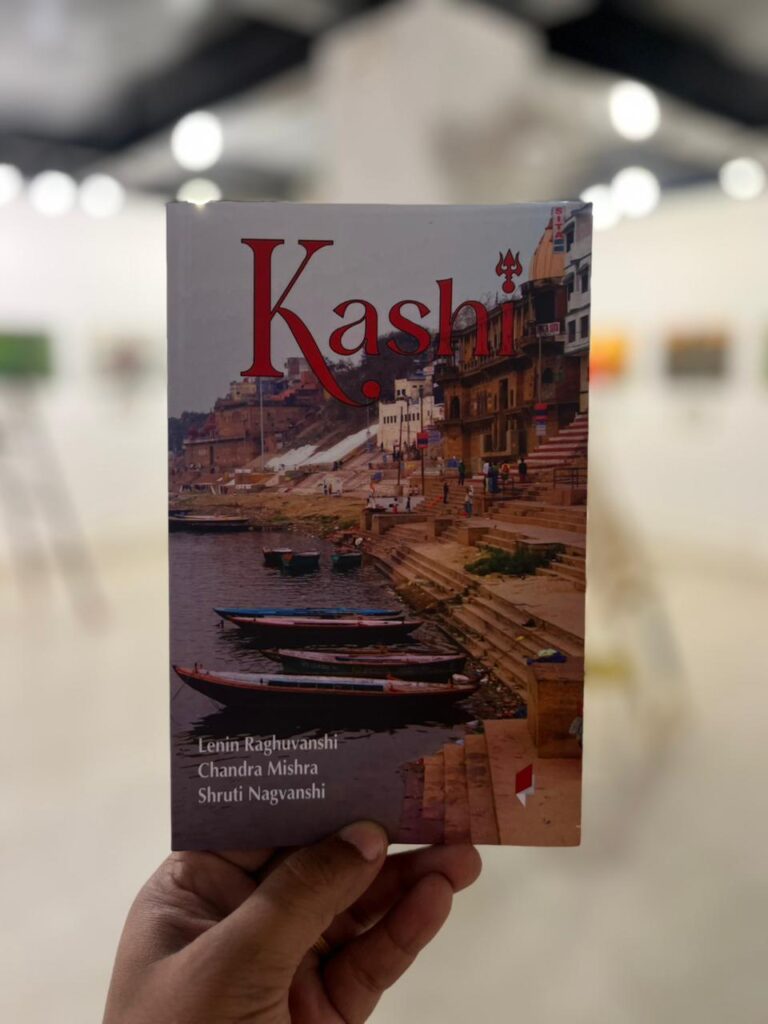
The event brought together scholars, journalists, thinkers and lovers of culture for an engaging discussion on the book Kashi, authored by Dr. Lenin Raghuvanshi, Chandra Mishra and Shruti Nagvanshi. The gathering transformed into a deeply reflective exploration of the spiritual, historical and social identity of Kashi, one of the world’s oldest living cities.

The central theme that resonated throughout the evening was the idea that Kashi is not merely a geographical city but a spiritual consciousness. Former chairman of the Kashi Vishwanath Temple Trust and eminent astrologer Prof. Nagendra Pandey articulated this sentiment with remarkable depth. He described Kashi as a sacred realm where the distinction between life and death dissolves. According to him, death in Kashi is not feared but embraced as auspicious, because the city represents liberation from worldly cycles rather than attachment to earthly existence.

Prof. Pandey explained that people do not arrive in Kashi seeking luxury or pleasure; they come searching for moksha, the ultimate liberation of the soul. For centuries, devotees and seekers have spent their final days in the city’s ashrams and old residences built along the ghats of the Ganga, hoping to attain spiritual freedom through prayer, meditation, sacred rituals and the blessings of Baba Vishwanath. The belief that one who leaves the mortal body in Kashi is freed from the endless cycle of birth and death continues to shape the city’s spiritual identity even today.

Yet, the discussion moved beyond traditional religious interpretations. Prof. Pandey referred to the book Kashi as the outcome of deep spiritual inquiry and disciplined study. He noted that the book presents the city from a broad and inclusive perspective rather than limiting it to ritualistic symbolism. According to him, true meditation begins with the attempt to understand the unknown, and Kashi has historically served as one of humanity’s greatest centres for such exploration. In his words, the city challenges people not only to worship, but to seek deeper truths about existence itself.

The discussion gained further dimensions through the observations of senior journalist Amitabh Bhattacharya, who emphasized that Kashi is not solely a centre of Hindu faith but also a remarkable confluence of multiple traditions, religions and philosophies. He pointed out that the city has long nurtured coexistence without conflict, allowing diverse ideologies to survive together in a shared cultural space. Referring to research and historical observations, he mentioned that traces of nearly 26 religions and sects can still be found in Varanasi, reflecting the city’s extraordinary pluralism.

Bhattacharya distanced Kashi from narrow political narratives and stressed that no single ideology or group can claim ownership over its spirit. Kashi, he argued, belongs to everyone and survives precisely because of its openness and originality. Drawing a poetic comparison with the river Ganga, he observed that just as the river changes its course in unusual ways around Varanasi, the city too symbolizes independence of thought and resistance to rigid definitions. His remarks highlighted the need for future scholars and writers to continue studying Kashi in all its layered complexity, much like the authors of the book had attempted to do.

The evening also featured critical reflections on the social and historical contradictions associated with the city. Senior journalist Ajay Rai presented a more probing interpretation of Kashi, urging listeners not to romanticize its image without acknowledging historical realities. He argued that to view Banaras merely as a holy city is to overlook its human and social complexities. According to him, Kashi is a living idea that evolves continuously through time, traditions and societal transformations.

Ajay Rai raised significant questions about the inclusive image often associated with Kashi. Referring to history, he reminded the audience that before 1957, Dalits were not allowed entry into the Kashi Vishwanath Temple. Such facts, he said, demonstrate that the city’s spiritual greatness must also be examined alongside its social inequalities. To assume that Kashi has always been entirely harmonious would mean ignoring important struggles and historical contradictions.

Quoting passages from the ancient Skanda Purana, he further argued that attaining salvation in Kashi is not as simple as dying within its sacred geography. Spiritual liberation, according to traditional wisdom, also depends upon one’s conduct, discipline and moral life. Rai criticized the increasingly superficial presentation of moksha in contemporary times, where excessive emphasis is often placed on beautification projects and symbolic representations rather than deeper spiritual understanding. He expressed concern that the commercialization of sacred spaces risks distancing Kashi from its original philosophical essence.

His remarks introduced an important balance into the conversation. While many continue to celebrate the mystical aura of Kashi, voices like Rai’s remind society that spirituality without introspection can become incomplete. The changing environment of the city, he suggested, deserves constant study, writing and dialogue if future generations are to understand its true spirit.

Adding another perspective to the evening’s discourse, senior journalist Kumar Vijay reiterated that Banaras cannot be reduced to the status of an ordinary city. For him, Kashi represents a way of living where spiritual discipline and ethical conduct matter more than rituals alone. Simply dying in the city, he suggested, is not enough; the quality of one’s life and actions remains equally important in the spiritual journey.

Historian Dr. Mohd. Aarif expanded the discussion by highlighting the historical and cultural plurality of Kashi. He recalled how even the great Urdu poet Mirza Ghalib had admired the intellectual and cultural richness of Banaras. Dr. Aarif also referred to the teachings and literary traditions of Kabir and Tulsidas, both of whom emerged from the spiritual atmosphere of Kashi and placed human values, compassion and love at the centre of their philosophy.

According to Dr. Aarif, the book Kashi reflects this pluralistic tradition and offers researchers an opportunity to understand the city from fresh perspectives. Rather than presenting a singular narrative, the book attempts to capture the multiple layers of faith, resistance, spirituality, history and human experience that define the city.

The event itself reflected the intellectual energy and cultural dialogue for which Banaras has always been known. Conducted by author and social activist Dr. Lenin Raghuvanshi, the evening became a meeting point of scholarship, art and social reflection. Senior journalist Vijay Vineet expressed gratitude to all the participants and visitors who contributed to the meaningful exchange of ideas.

A special appreciation was also extended toward artist Amit Kumar Mehta, whose efforts through Mehta Art Gallery continue to create spaces where art intersects with literature, philosophy and public discourse. In a city where cultural events often remain limited to ceremonial performances, initiatives like Chorus-2026 demonstrate the power of art spaces to become centres of intellectual engagement and social reflection.

The gathering witnessed the presence of several prominent personalities, including C.B. Tiwari ‘Rajkumar’, Rahul Yadav, Idris Ansari, Pankajpati Pathak, Mangala Prasad Rajbhar, Dr. Shammi Kumar Singh, Vikas Dubey, Chandra Mishra and many others, all contributing to the spirit of collective dialogue.

What ultimately emerged from the evening was a renewed understanding of Kashi, not as a frozen symbol of mythology, but as a living civilization constantly negotiating between spirituality and reality, faith and history, tradition and transformation. Kashi survives because it refuses to remain one-dimensional. It welcomes saints and skeptics, scholars and seekers, rituals and revolutions. It is simultaneously ancient and evolving.

The discussion at Chorus-2026 reminded listeners that the soul of Kashi lies not merely in its temples or cremation grounds, but in its ability to provoke questions about existence itself. Here, death is not seen as an ending but as a passage. Faith is not merely ritual but inquiry. And spirituality is not isolation from society but engagement with human truths.

In an era dominated by speed, noise and material ambition, conversations like these restore the deeper cultural and philosophical relevance of cities like Kashi. They remind us that some places are not defined by architecture or administration alone, but by centuries of accumulated memory, thought and spiritual imagination.

Kashi continues to stand on the banks of the Ganga not merely as a destination, but as an eternal dialogue between life and liberation. And through initiatives like Chorus-2026 at Mehta Art Gallery, that dialogue continues to inspire new generations to look beyond the visible world and search for meanings that transcend time itself.

#Kashi #Varanasi #Banaras #MehtaArtGallery #AmitKumarMehta #Chorus2026 #KashiVishwanath #SpiritualIndia #Moksha #Ganga #IndianCulture #BanarasDiaries #ArtAndCulture #LeninRaghuvanshi #Kabir #Tulsidas #IndianPhilosophy #CulturalDialogue #SacredCity #VaranasiEvents

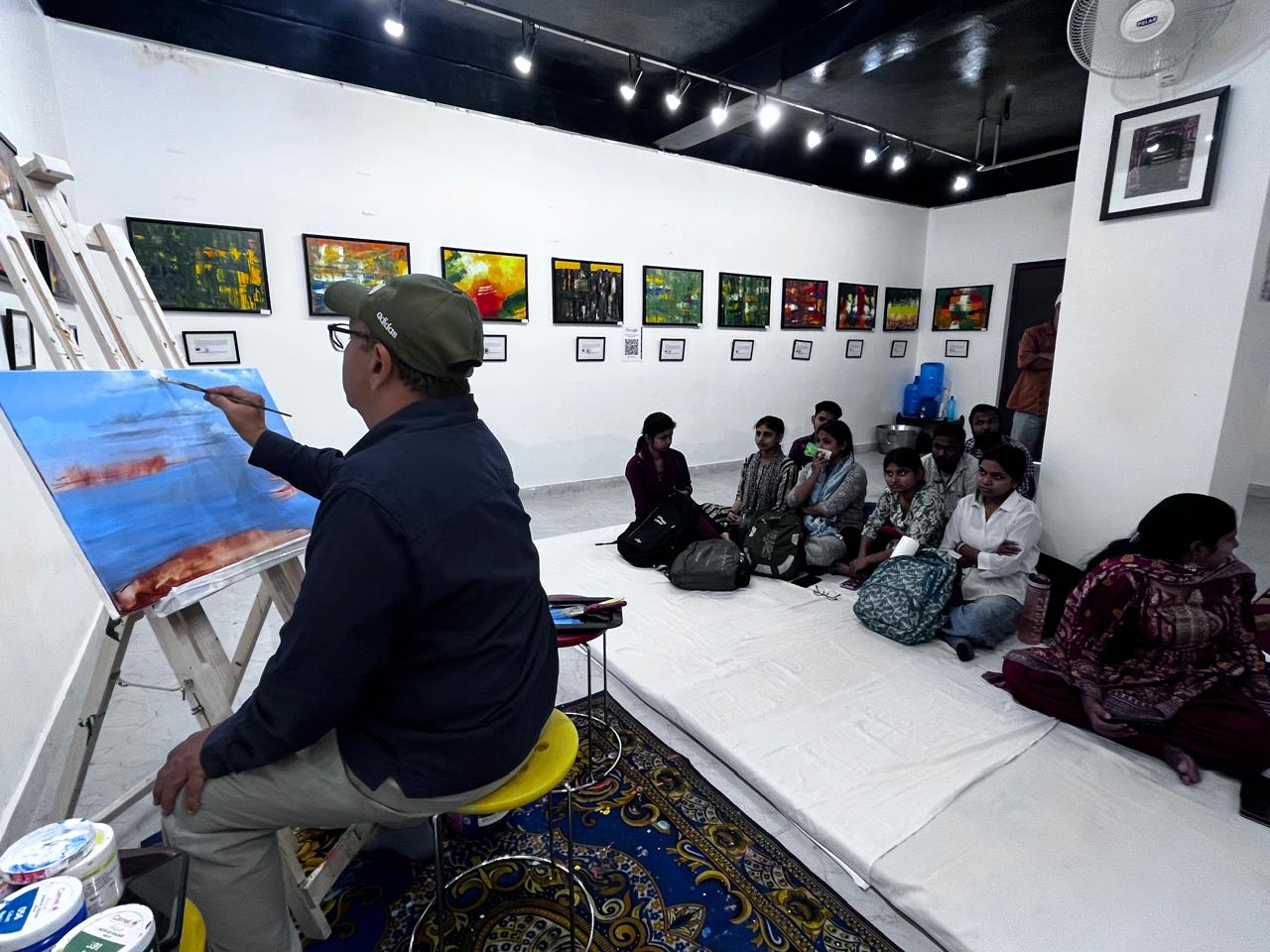
Art has always been a bridge between imagination and reality. It gives shape to emotions, transforms silence into expression, and allows individuals to connect deeply with themselves and the world around them. In a city as culturally vibrant and spiritually rich as Varanasi, art continues to flourish through meaningful initiatives that encourage creativity among young minds. One such inspiring event recently took place at Mehta Art Gallery, where a special Landscape Painting Workshop was conducted by renowned senior artist Dhirendra Sisodia.

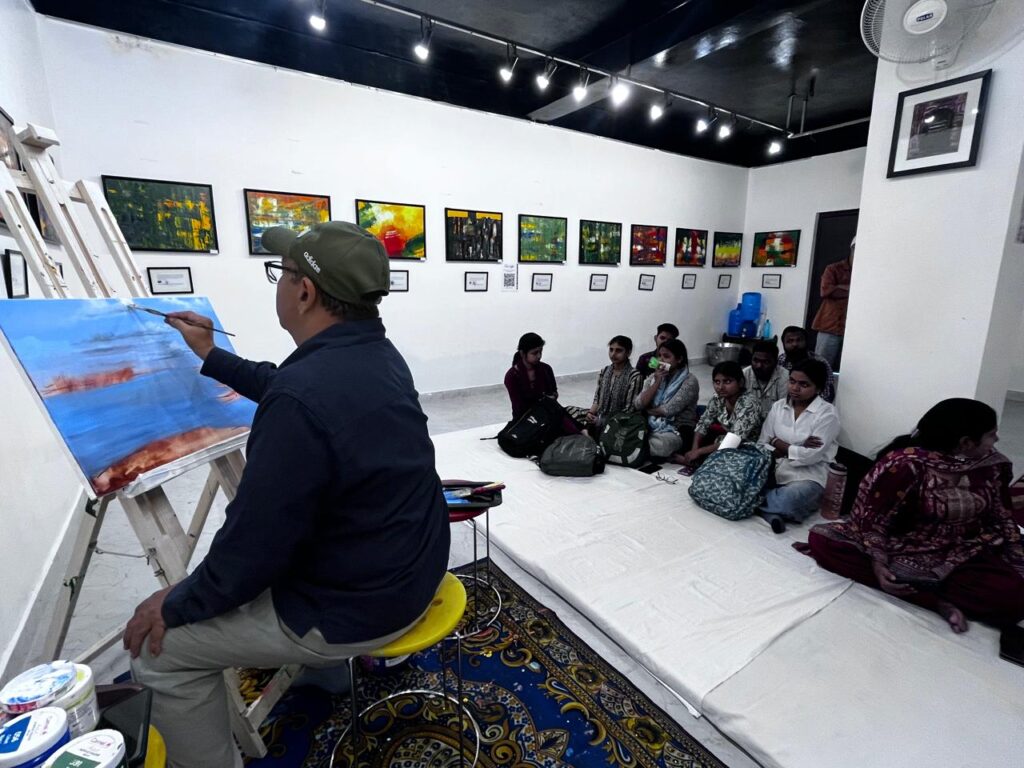
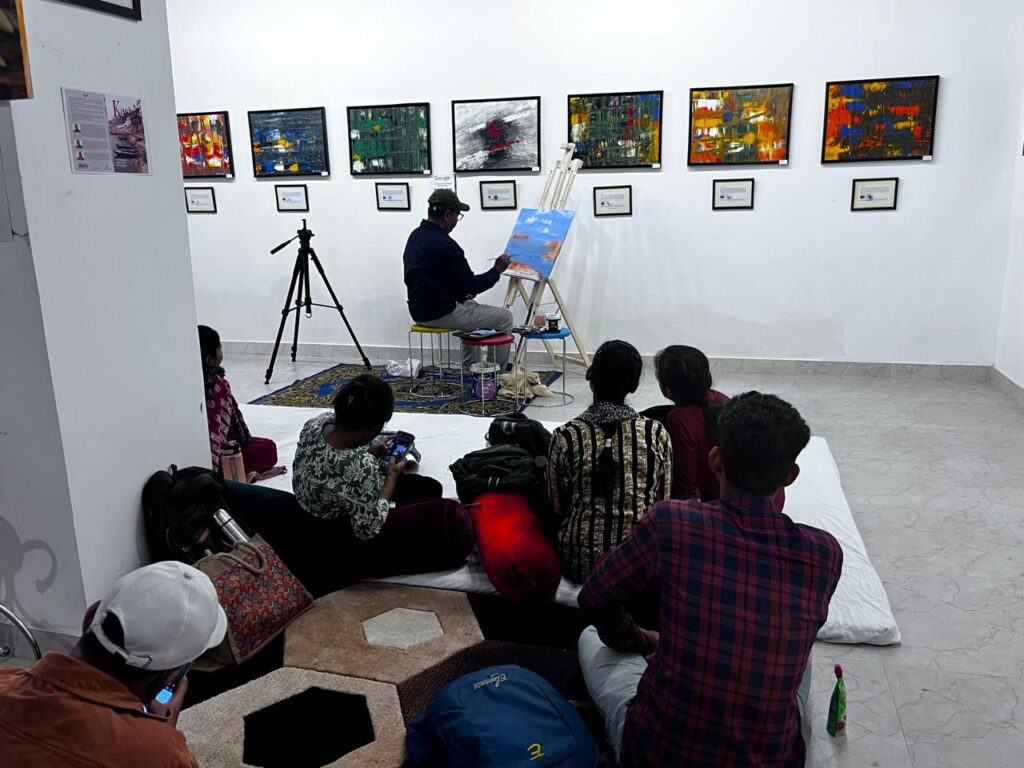
The workshop became a beautiful celebration of creativity, learning, colours, and artistic exchange. Students from various colleges, institutions, and art enthusiasts from different backgrounds gathered together to participate in an immersive session focused on the art of landscape painting. The event not only offered practical learning but also created an atmosphere where young artists could experience the emotional and meditative side of painting nature on canvas.

A Creative Morning Filled with Inspiration

As participants entered the gallery space, the atmosphere was filled with excitement and curiosity. Canvases, acrylic colours, brushes, easels, and palettes were carefully arranged, transforming the gallery into an open studio of imagination. Young artists eagerly waited to observe and learn from Dhirendra Sisodia, whose artistic journey and experience have inspired many emerging painters.

The workshop began with an introduction to the fundamentals of landscape painting. Sisodia Ji spoke about how landscapes are not merely representations of mountains, rivers, trees, or skies, but reflections of emotions and experiences. According to him, every natural scene carries a rhythm, a mood, and a story that an artist must learn to observe deeply before translating it onto canvas.

He emphasized that a good landscape painting is not just technically correct; it must also carry sensitivity and feeling. Nature itself is a living composition of light, movement, balance, and harmony, and the role of an artist is to capture that essence with honesty and emotion.

Understanding Landscape Painting Beyond Technique

One of the most enriching aspects of the workshop was the way the senior artist connected technical learning with emotional understanding. He explained how every landscape has layers of depth and perspective, and how colour tones can create mood and atmosphere.

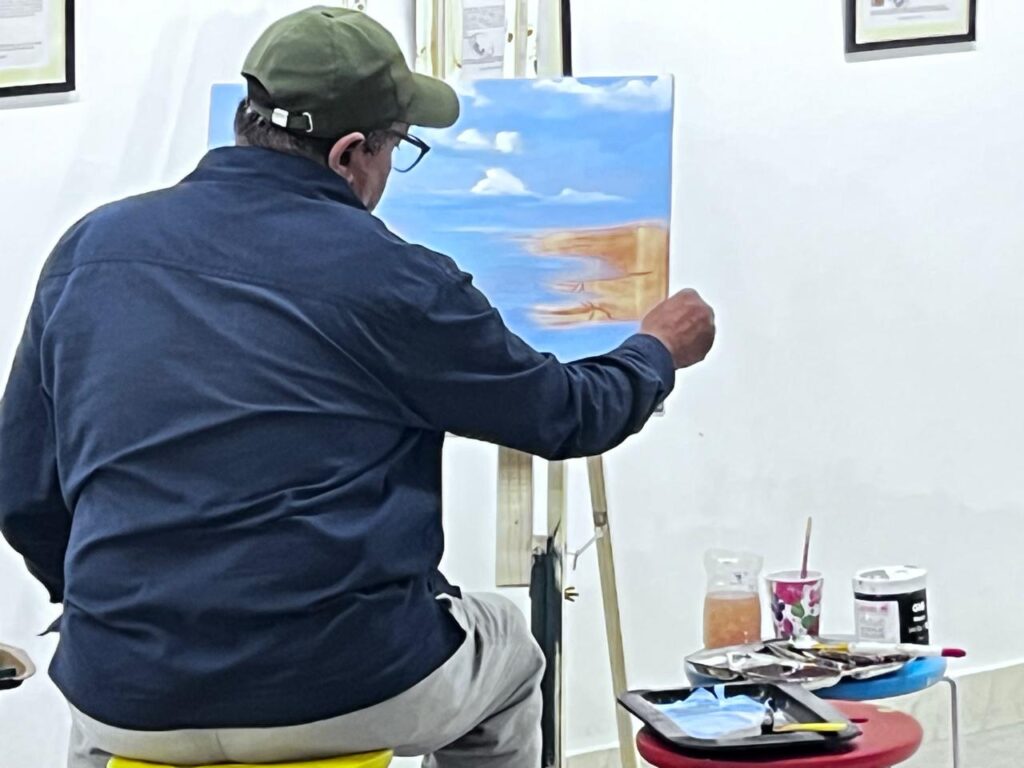
Using acrylic paints on canvas, Sisodia Ji demonstrated how artists can create a sense of distance, light, and movement in their paintings. He discussed the importance of understanding foreground, middle ground, and background in landscape composition. Participants learned how colour intensity changes with distance and how softer tones can create atmospheric perspective.

He also explained the role of natural lighting in painting. Whether it is the softness of morning light, the dramatic warmth of sunset, or the calmness of cloudy skies, each moment in nature carries a different visual emotion. Through live demonstration, he showed how artists can blend colours to achieve realistic and expressive effects.

The students watched carefully as a blank canvas slowly transformed into a beautiful landscape filled with flowing visual energy. Brushstroke by brushstroke, the painting evolved into a scene that appeared alive with natural rhythm and balance.

Live Demonstration: Bringing Nature to Canvas

The live painting session became the highlight of the workshop. Participants gathered around the canvas as Sisodia Ji started creating a landscape composition from scratch. He began with a loose sketch and gradually developed the structure of the scenery.

He demonstrated how to block large areas with broad strokes before moving toward finer details. Participants learned how trees can be painted using texture techniques, how skies can be blended smoothly, and how reflections in water can be created using controlled brush movements.

The session offered valuable lessons in patience and observation. Young artists realized that painting is not only about copying visuals but about interpreting what one feels while observing nature.

Throughout the demonstration, the senior artist interacted continuously with participants, answering questions and sharing personal experiences from his artistic journey. His humble and encouraging approach created a comfortable learning environment where students felt motivated to experiment without fear.

Participation of Young Artists and Students

The workshop witnessed enthusiastic participation from students and young artists from different colleges and institutions. Among the participants were Saurav Verma, Aaditya Rai, Tejaswa Singh Tomar, Pooja, Sandhya, Khushboo, Aaradhana, and many others who actively engaged in the learning process.

Some participants were beginners who had never worked seriously on canvas before, while others already had artistic experience and came to refine their techniques. Regardless of their skill level, every participant found the workshop meaningful and inspiring.

As the session progressed, participants began creating their own landscape paintings under the guidance of the senior artist. It was fascinating to see how each individual interpreted nature differently. Some used vibrant colours and expressive strokes, while others preferred softer palettes and detailed realism. This diversity highlighted the beauty of artistic individuality.

The gallery space soon became filled with colourful canvases, creative discussions, and moments of artistic discovery. Participants exchanged ideas, observed each other’s work, and encouraged one another throughout the session.

Learning the Importance of Observation

One of the key lessons shared during the workshop was the importance of observation in art. Sisodia Ji explained that an artist must learn to “see” before learning to paint. Nature constantly changes, light shifts, shadows move, colours evolve, and textures transform with weather and time.

He encouraged students to spend more time observing real landscapes instead of depending entirely on photographs. According to him, direct observation develops sensitivity, which eventually strengthens artistic expression.

He also shared that landscape painting teaches patience and mindfulness. When artists observe natural elements carefully, they become more connected to their surroundings and their inner emotions. In today’s fast-paced digital world, such practices help individuals slow down and reconnect with themselves creatively.

Art as Emotional Expression

Beyond technical guidance, the workshop also became a discussion about the emotional role of art in life. Participants were encouraged to understand painting not only as a profession or hobby but also as a medium of self-expression and mental peace.

The senior artist explained that every colour carries emotional energy. Cool tones may create calmness, warm colours may express passion or energy, and contrasting shades may generate dramatic impact. By understanding emotional colour relationships, artists can create more meaningful works.

Young participants shared how painting helps them release stress, improve concentration, and feel emotionally balanced. Many students expressed that the workshop inspired them to take art more seriously in their personal and creative journeys.

Encouraging Young Creative Minds

The initiative by Mehta Art Gallery reflects an important commitment toward nurturing young talent and promoting artistic culture in the city. In recent years, the gallery has emerged as a vibrant creative space where exhibitions, workshops, discussions, and cultural interactions regularly take place.

Founder and artist Amit Kumar addressed the participants during the workshop and shared the vision behind organizing such events. He emphasized that art should remain accessible to everyone, especially young students who wish to explore their creativity.

According to him, workshops like these provide a practical learning environment where participants gain direct interaction with experienced artists. Such experiences cannot be replaced by textbooks or online tutorials because they involve personal guidance, observation, and emotional connection.

He also mentioned that the gallery aims to continuously create opportunities for emerging artists through exhibitions, collaborative projects, and educational programs.

Presence of Social Activist Lenin Raghuvanshi

The event was further enriched by the presence of Lenin Raghuvanshi, who appreciated the role of art in society and encouraged young participants to continue their creative pursuits.

He spoke about how art contributes to cultural development and social sensitivity. According to him, when young individuals engage in creative activities, they develop broader perspectives and emotional awareness, which positively influences society as a whole.

He praised the efforts of Mehta Art Gallery for creating an environment where art education and cultural interaction can flourish together. His encouraging words inspired many students to remain dedicated to their artistic growth.

Distribution of Participation Certificates

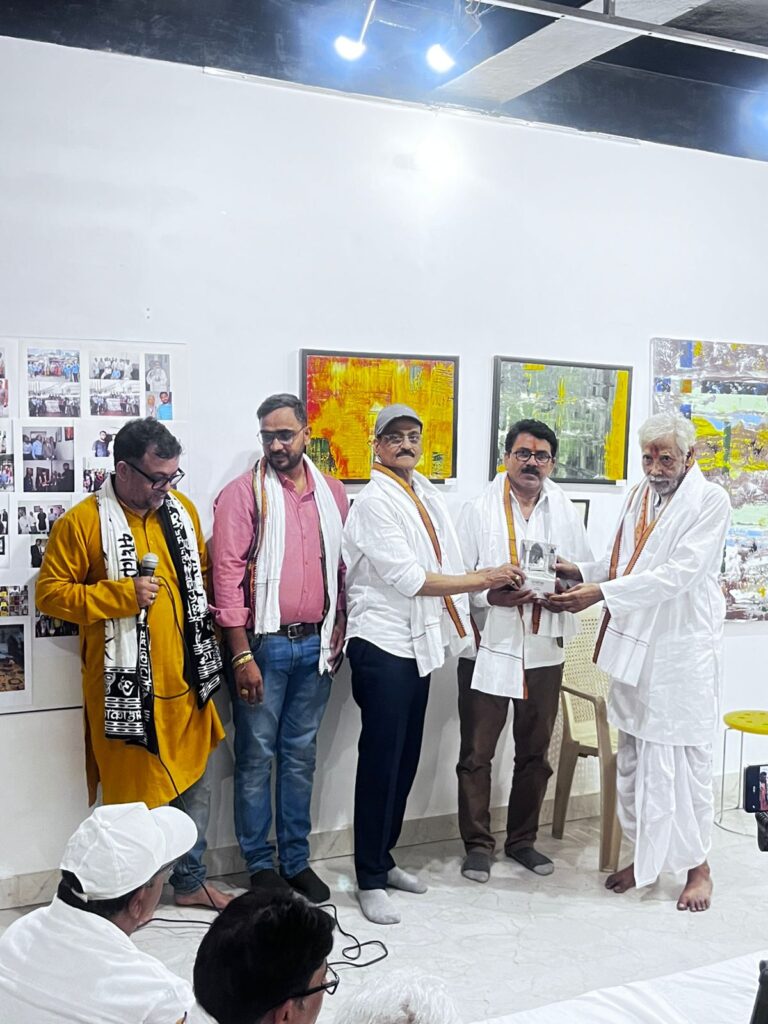
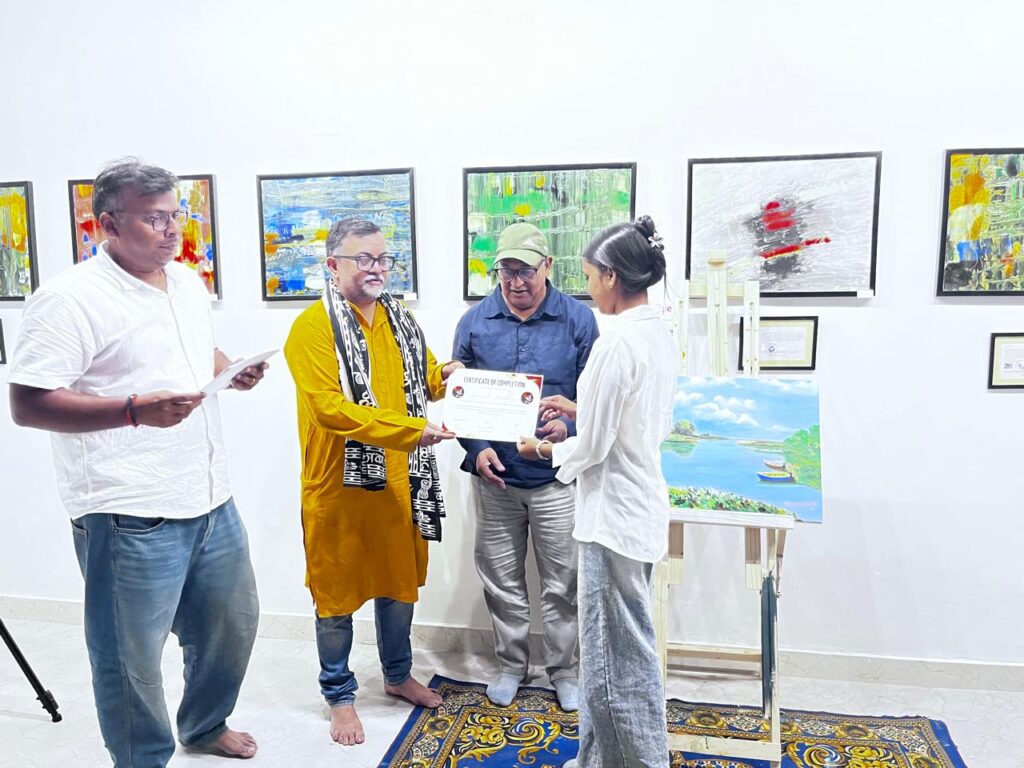
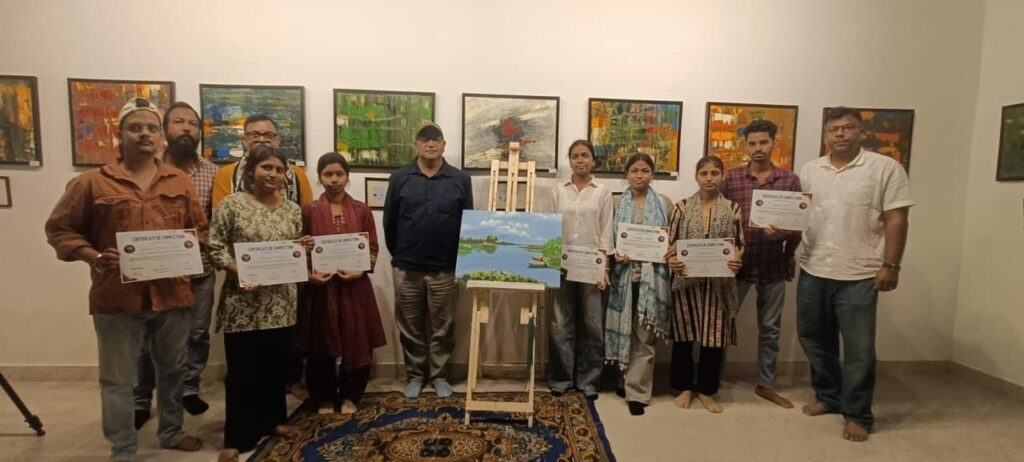
At the conclusion of the workshop, participation certificates were distributed to all attendees as a gesture of appreciation and encouragement. The certificates were presented jointly by Lenin Raghuvanshi, senior artist Dhirendra Sisodia, and Amit Kumar.

The certificate distribution ceremony became a proud and memorable moment for participants. Many students clicked photographs with their artworks and mentors, preserving memories of a meaningful artistic experience.

For several young artists, receiving recognition in such a creative environment boosted their confidence and motivated them to continue practicing art with dedication.

A Platform for Artistic Dialogue

One of the most valuable outcomes of the workshop was the interaction between experienced artists and emerging talents. Such events create a bridge between generations of artists, allowing knowledge, philosophy, and techniques to be shared directly.

Participants had the opportunity to discuss not only painting methods but also artistic struggles, inspiration, discipline, and career possibilities in the art world. These conversations often become life-changing moments for young creatives who seek direction and encouragement.

The workshop also highlighted the importance of physical creative spaces like galleries. In an era dominated by digital communication, art galleries continue to serve as cultural hubs where people gather, interact, and experience creativity collectively.

The Growing Art Culture in Varanasi

Varanasi has always been known for its spiritual depth, music, literature, and cultural richness. In recent years, the city’s contemporary art scene has also been gaining recognition through the efforts of independent artists, galleries, and cultural organizations.

Events like the Landscape Painting Workshop demonstrate how art is becoming increasingly accessible to younger audiences. Such initiatives help build a stronger artistic community while encouraging creative exploration among students and aspiring artists.

Workshops also play an important role in preserving artistic traditions while introducing modern techniques and contemporary perspectives. They encourage experimentation, dialogue, and continuous learning.

Why Landscape Painting Remains Timeless

Landscape painting has existed across centuries and artistic movements because nature continues to inspire humanity universally. Whether realistic, impressionistic, abstract, or contemporary, landscapes allow artists to express emotion through natural forms.

In today’s urban and digitally distracted lifestyle, landscape painting offers a calming and reflective experience. It reconnects individuals with nature, silence, observation, and mindfulness.

Through this workshop, participants not only learned painting techniques but also experienced the meditative beauty of artistic creation. They discovered how observing skies, trees, water, and open spaces can become a source of emotional healing and inspiration.

Conclusion: A Celebration of Art, Learning, and Creativity

The Landscape Painting Workshop at Mehta Art Gallery was far more than a technical training session. It became a celebration of creativity, mentorship, artistic dialogue, and emotional expression.

Under the guidance of Dhirendra Sisodia, young artists explored the beauty of nature through colours and imagination. They learned valuable artistic techniques while also understanding the deeper emotional and philosophical aspects of painting.

The active participation of students, the encouraging presence of Lenin Raghuvanshi, and the dedicated efforts of Amit Kumar made the event truly memorable and inspiring.

As the workshop concluded, participants left not only with certificates and paintings but also with renewed confidence, creative energy, and a stronger connection to art. Events like these continue to strengthen the cultural identity of Varanasi and inspire a new generation of artists to dream, create, and express themselves fearlessly through art.

“Beyond the Brush: A Journey of Life, Emotions, and Expression in Contemporary Abstraction”

In the timeless city of Varanasi, where spirituality and tradition have long defined its cultural identity, an extraordinary artistic moment unfolded on the evening of April 26. Amid the familiar echoes of temple bells and the quiet flow of the Ganges, a different kind of expression found its voice, one that did not rely on rituals or scriptures, but on colors, textures, and the profound language of abstraction. This moment was shaped by Amit Kumar Mehta, an artist whose work bridges the deeply personal with the universally human, and who has steadily carved a space for contemporary abstract art within a city known more for its classical forms.

The exhibition, held at Mehta Art Gallery, was not simply a presentation of paintings; it was an immersive journey into the layered realities of life itself. Amit Kumar Mehta unveiled a series of 24 paintings, each one rooted in the themes of life expression, feelings, emotions, and the journey of existence. These were not narratives in the conventional sense, nor were they bound by the constraints of literal interpretation. Instead, they existed in the fluid and open-ended realm of contemporary abstract art, where meaning is not dictated by the artist but discovered by the viewer. The canvases became mirrors, reflecting not a fixed story but the shifting inner landscapes of those who stood before them.

The preparation for this exhibition had been an intensely personal process. In the months leading up to April, the artist withdrew into a state of deep introspection, allowing his studio to become both a sanctuary and a site of exploration. There were no rigid outlines or predetermined compositions guiding his hand. Each painting began as a dialogue between emotion and instinct, evolving layer by layer as color met canvas. At times, the brush moved with urgency, creating bold and almost turbulent forms that seemed to capture the chaos of thought and feeling. At other moments, the strokes softened, giving rise to quiet gradients and subtle textures that evoked calm, acceptance, or reflection. This oscillation between intensity and restraint became the defining rhythm of the series, mirroring the unpredictable nature of life itself.

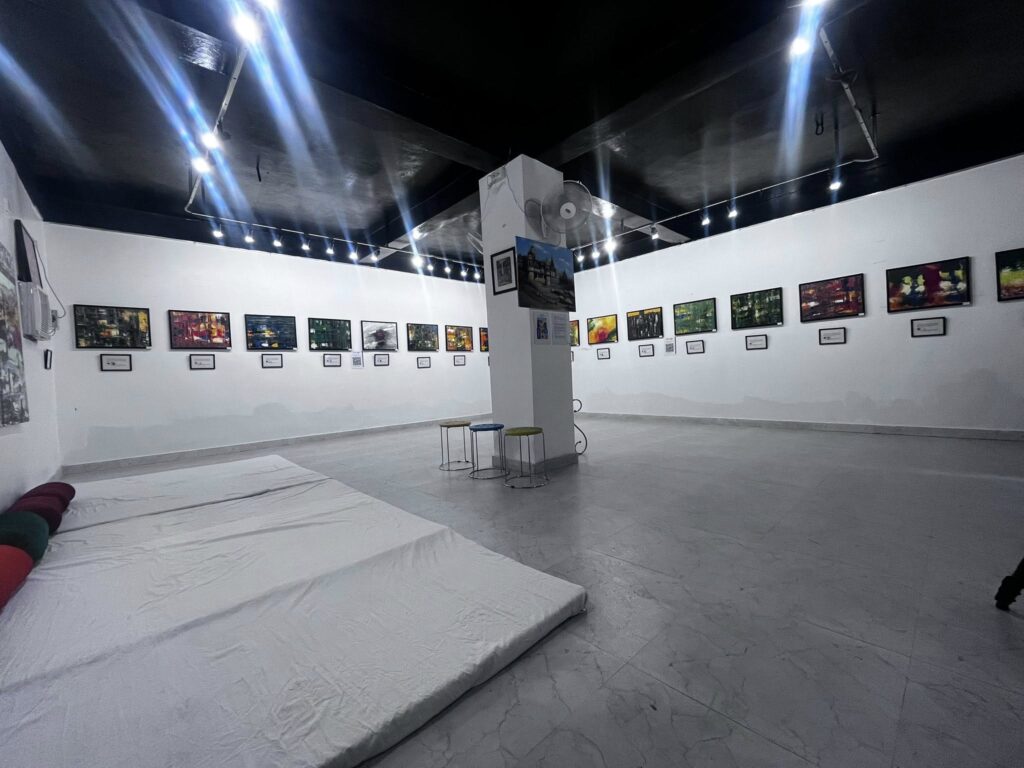
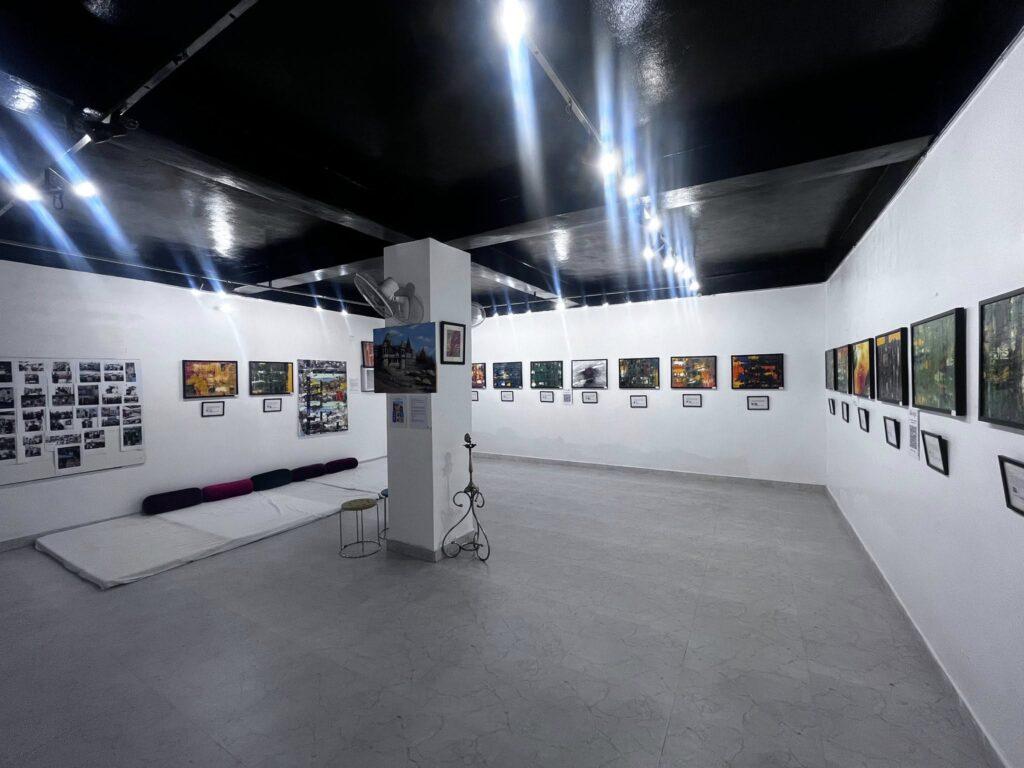
When the day of the exhibition finally arrived, the gallery space had been transformed into an environment that invited contemplation. The lighting was carefully arranged to enhance the depth and texture of each canvas, allowing every stroke and layer to reveal itself gradually. The paintings were placed in a sequence that encouraged viewers to move through them as if they were chapters of a larger, unfolding narrative. As the doors opened and guests began to arrive, there was a palpable sense of anticipation, not just for the event itself but for the experience it promised.

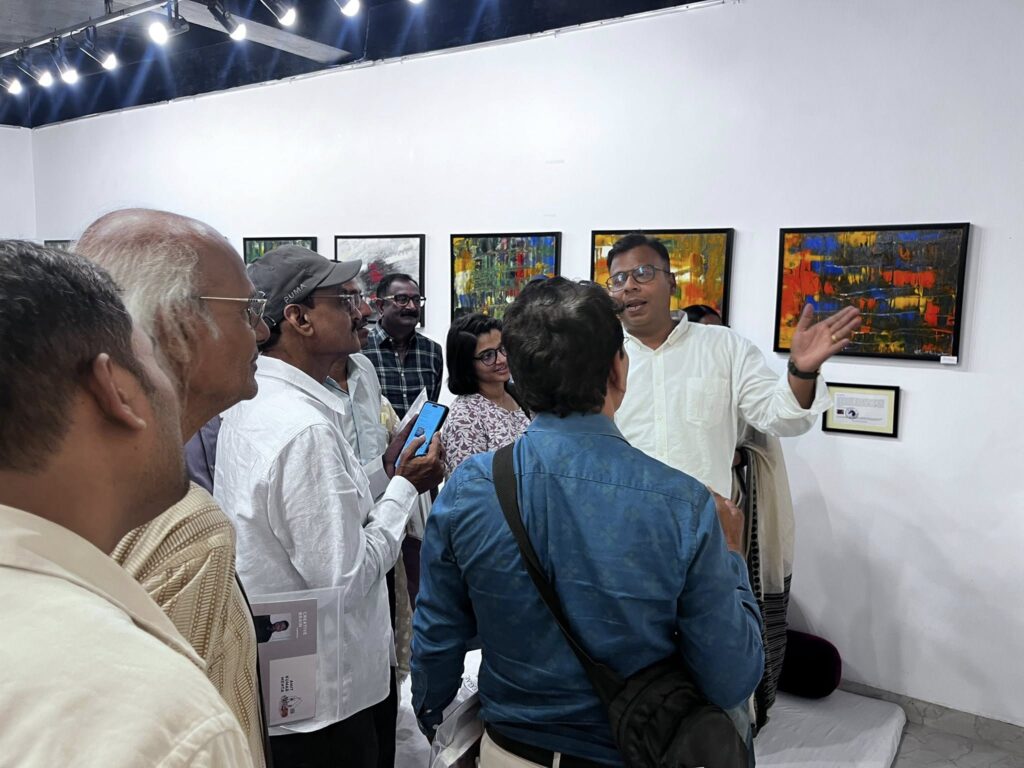
The inauguration was graced by prominent figures from Varanasi’s cultural and intellectual circles, whose presence added significance to the occasion. Yet, as the formalities concluded and the exhibition truly began, it became clear that the focus would remain entirely on the art. Visitors moved slowly through the gallery, their pace dictated not by curiosity alone but by a deeper engagement with what they were seeing. There was a noticeable absence of hurried observation. Instead, people paused, reflected, and allowed themselves to be drawn into the emotional spaces created by each painting.

What made the exhibition particularly powerful was the way it fostered a deeply personal connection between the artwork and its audience. Without defined forms or explicit subjects, the paintings invited interpretation rather than imposing it. A canvas filled with sharp contrasts and intersecting lines might evoke struggle or conflict for one viewer, while another might see it as a representation of resilience or transformation. Similarly, a composition of soft hues and flowing textures could be perceived as a moment of peace, a memory of love, or even a sense of loss gently dissolving into acceptance. Each response was valid, and each interpretation added to the richness of the experience.

As the evening progressed, the response to the exhibition grew increasingly remarkable. Conversations emerged, not in loud or performative tones, but in quiet exchanges that reflected genuine engagement. Visitors spoke of how the paintings resonated with their own lives, how certain compositions seemed to capture emotions they had never been able to articulate. For many, this was not just an encounter with art but a moment of self-recognition. The gallery became a space where individual experiences intersected, connected by the shared language of feeling.

The critical response to the exhibition further reinforced its significance. Observers and connoisseurs of art noted the maturity and clarity evident in the works, praising the artist’s ability to balance spontaneity with control. They spoke of the emotional authenticity that ran through the series, describing it as both deeply personal and universally accessible. The exhibition was also recognized for its professionalism, from the thoughtful curation of the artworks to the overall presentation of the space. Many remarked that such a refined and conceptually cohesive exhibition was a rare occurrence in Varanasi, marking a new level of artistic engagement for the city.

For Varanasi itself, this exhibition represented more than an isolated success. It hinted at a subtle but meaningful shift in the city’s artistic landscape. While its rich heritage of traditional art forms remains integral to its identity, the enthusiastic reception of this contemporary abstract exhibition suggested an openness to new modes of expression. It indicated that audiences were not only willing but eager to engage with art that challenges conventional boundaries and invites introspection.

At the center of this transformation was Amit Kumar Mehta, whose approach to art is defined by sincerity rather than spectacle. Despite the overwhelming success and appreciation surrounding the exhibition, his perspective remained grounded. For him, the act of creation is not about producing visually appealing compositions but about engaging in a continuous process of understanding life itself. His paintings are not answers but questions, not conclusions but ongoing explorations. This humility and commitment to authenticity are perhaps what make his work so compelling.

As the evening drew to a close, the gallery space retained a quiet energy, as though the conversations and emotions it had hosted continued to linger in the air. Even as the walls prepared to part with the paintings they had held, there was a sense that the experience itself would endure far beyond the confines of the exhibition. Those who had attended carried with them not just memories of what they had seen, but the feelings those works had stirred within them.

The success of this exhibition stands as both an achievement and a beginning. It marks a significant milestone in the journey of Amit Kumar Mehta and sets a precedent for future artistic endeavors in Varanasi. More importantly, it reaffirms the timeless power of art to connect, to reveal, and to transform. In a world often defined by noise and distraction, this exhibition offered a rare moment of stillness—a space where people could pause, reflect, and encounter themselves through the silent yet eloquent language of abstraction.


#BeyondTheBrush #AmitKumarMehta #MehtaArtGallery #VaranasiArt #ContemporaryArt #AbstractArt #ArtExhibition2026 #IndianArt #ModernArtIndia #ArtOfExpression #EmotionsOnCanvas #LifeInArt #AbstractExpressionism #ArtCollectors #CreativeJourney #VisualStorytelling #ArtLoversIndia #GalleryExhibition #EmergingArtistIndia #ArtAndSoul

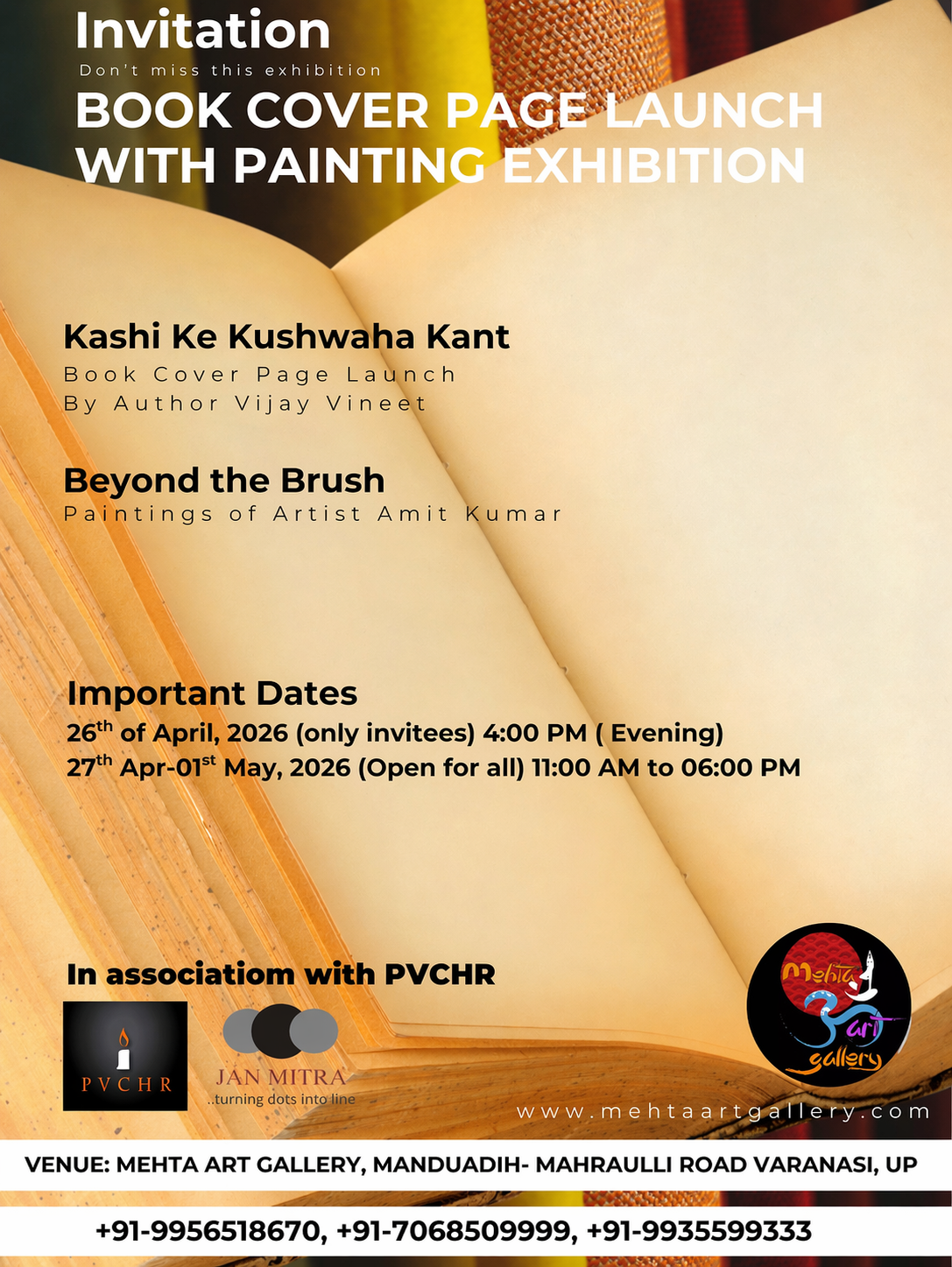
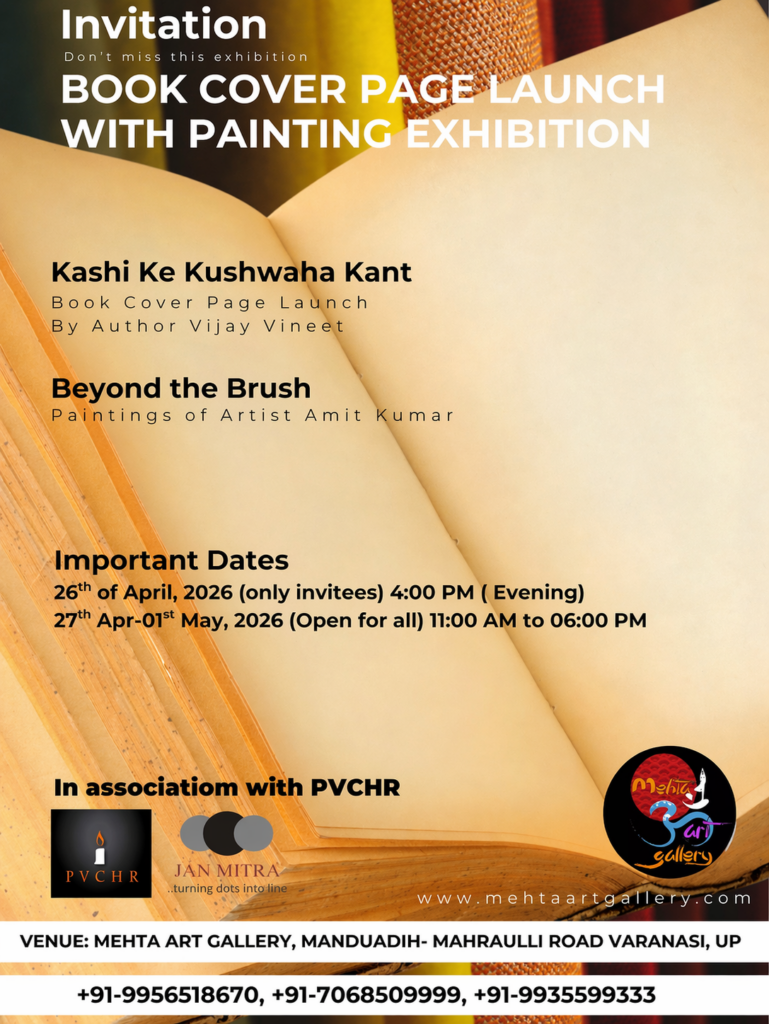
Warm Invitation
It gives us immense pleasure to cordially invite you to grace the cover unveiling ceremony of the much-awaited book
“Kashi Ke Kushwaha Kant” by senior journalist-author Mr. Vijay Vineet.

“Beyond the Brush” painting exhibition by Artist Amit Kumar

  • Date: April 26, 2026 (Invitees only)
  • Time: 4:00 PM
  • ⁠April 27- May 01, 2026 (open for all)
  • Venue: Mehta Art Gallery, Mehta Bhavan, Manduadih-Mahraulli Road,
    Raja Moti Chand Rd, Varanasi, Uttar Pradesh – 221108
    Contact: +91-9956518670, +91-7068509999, +91-9935599333

This occasion will be further enriched by the presence of renowned litterateur Mr. Vyomesh Shukla, who will present an engaging and thought-provoking dialogue on the literary works of Vijay Vineet. A meaningful discussion on his newly published books will also be held.
During the program, you will also get an opportunity to interact with the talented artists associated with Mehta Art Gallery.
In association with PVCHR

Regards!

Complete Schedule

KASHI: A Living Canvas of Light and Shadow

A Critical & Aesthetic Review by Amit Kumar Mehta

(Artist & Founder, Mehta Art Gallery)

There are books that inform, books that provoke, and then there are books that transform the way we see a place we thought we already knew. Kashi belongs to the third category. It is not merely a book, it is an experience, a layered journey through the spiritual, social, political, and human textures of one of the oldest living cities in the world, Varanasi.

As an artist, I have always believed that a city like Kashi cannot be captured in a single frame. It must be painted in layers, of time, memory, struggle, devotion, decay, and rebirth. This book does precisely that. It does not attempt to beautify Kashi in a romanticized light; instead, it reveals its truth, both luminous and unsettling.

Kashi Beyond the Sacred: A Shift in Narrative

The most striking aspect of Kashi is its refusal to reduce the city to a spiritual postcard. Traditionally, Kashi is presented as a city of ghats, temples, and moksha—a sacred geography. However, this book disrupts that singular narrative and introduces us to a parallel Kashi, one that exists beneath the chants, rituals, and tourist imagery.

The authors: Lenin Raghuvanshi, Chandra Mishra, and Shruti Nagvanshi, bring together a perspective rooted not in abstraction, but in lived experience. Particularly, Raghuvanshi’s background as a human rights activist working with marginalized communities deeply informs the text.

What emerges is a counter-narrative, a Kashi where spirituality coexists with systemic inequality, where faith is entangled with politics, and where heritage is increasingly commodified.


A City as a Palimpsest: Layers of History and Identity

Reading this book feels like walking through the narrow lanes of Kashi, each turn revealing another layer of history. The authors present Kashi not as a static entity, but as a living palimpsest, constantly rewritten by time and power.

From ancient spiritual traditions, Hindu, Buddhist, Jain, Islamic, to colonial influences and modern urban transformation, the book situates Kashi within a broader civilizational continuum. It reminds us that Kashi’s greatness lies not just in its antiquity, but in its plurality.

As an artist, I see this as a multi-layered painting, where older strokes are never erased but remain visible beneath newer ones. The book excels in making these invisible layers visible again.


The Invisible City: A Powerful Social Lens

One of the most compelling sections of the book is its exploration of what it calls the “Invisible City.”

This is the Kashi of:

  • Sanitation workers
  • Dalits
  • Weavers
  • Widows
  • Informal labourers

These are the people who sustain the city, yet remain absent from its dominant narratives.

The book forces the reader to confront uncomfortable truths:

  • Who cleans the sacred ghats?
  • Who weaves the iconic Banarasi sarees?
  • Who is excluded from the very spirituality the city celebrates?

This is where Kashi becomes more than a cultural text, it becomes a moral document.

As an artist, I find this deeply moving. Art, like literature, must give voice to the unseen. This book does exactly that, it reclaims dignity through storytelling.


Spirituality vs Spectacle: A Critical Insight

One of the most relevant and contemporary themes in the book is the tension between spirituality and spectacle.

Kashi today is undergoing rapid transformation, beautification projects, tourism development, and global branding. While these changes bring visibility and economic growth, the book questions:

  • At what cost does this transformation occur?
  • Is spirituality being reduced to performance?
  • Is faith becoming a commodity?

The authors argue that the sacred is increasingly being packaged and consumed, turning Kashi into a theatrical space rather than a lived experience.

This idea resonates strongly with my artistic practice. True art, like true spirituality, cannot be manufactured for spectacle, it must emerge organically from lived experience.


Language and Narrative Style: Simple yet Penetrating

The language of Kashi is not overly academic, yet it carries intellectual depth. It is accessible without being simplistic, and poetic without losing clarity.

The narrative moves fluidly between:

  • Personal accounts
  • Historical analysis
  • Social critique
  • Philosophical reflection

This makes the book engaging for a wide audience, scholars, artists, activists, and general readers alike.

At times, the tone becomes intense, even confrontational, but that is precisely where its strength lies. It does not seek comfort; it seeks truth.


Women in Kashi: Strength in Silence

The book’s focus on women, particularly widows and marginalized women, is both sensitive and powerful.

It highlights how:

  • Women carry the burden of tradition
  • Their suffering is often normalized
  • Their resilience goes unnoticed

Yet, the book does not portray them as victims alone. It presents them as agents of survival and strength, navigating a deeply patriarchal structure.

As an artist, I find this portrayal profoundly human. It reminds us that behind every cultural symbol lies a lived reality.


Commodification of Culture: A Critical Warning

The chapter on the market and commodification is particularly significant in today’s context.

Kashi’s heritage, its rituals, crafts, and spirituality, is increasingly being:

  • Marketed
  • Packaged
  • Sold

The book critiques how this process:

  • Displaces artisans
  • Dilutes authenticity
  • Converts culture into a product

This is not just a critique of Kashi, it is a critique of modern society itself.


Philosophy of Resistance: The Soul of the Book

At its core, Kashi is a book about resistance.

Not resistance in the form of protest alone, but resistance as:

  • Survival
  • Dignity
  • Memory
  • Continuity

The authors draw from spiritual traditions, especially the philosophy associated with Mahadev, to frame resistance as a way of being.

This gives the book a philosophical depth that elevates it beyond sociology or history.


Artistic Interpretation: Kashi as a Living Canvas

Reading Kashi, I could not help but visualize it as a vast canvas:

  • The ghats as textured strokes
  • The Ganga as a flowing line of continuity
  • The narrow lanes as intricate patterns
  • The people as living colours

But beneath this beauty lies a deeper layer, one of cracks, fractures, and hidden stories.

This book does what great art does, it reveals what is not immediately visible.


Strengths of the Book

  1. Authentic Perspective
    Rooted in lived experience, not abstract theory
  2. Balanced Narrative
    Celebrates Kashi while critically examining it
  3. Strong Social Lens
    Highlights marginalized voices
  4. Philosophical Depth
    Connects spirituality with social reality
  5. Relevance
    Speaks directly to contemporary transformations

Limitations (A Balanced View)

No serious work is complete without acknowledging its limitations.

  • At times, the tone may feel ideologically strong, which could challenge readers seeking neutrality
  • Certain arguments could benefit from more empirical data or references
  • The narrative occasionally becomes repetitive in emphasizing key themes

However, these do not weaken the book; rather, they reflect its passionate engagement with the subject.


Why This Book Matters Today

In a time when cities are being reimagined through infrastructure and branding, Kashi reminds us that:

A city is not its buildings, it is its people.

It challenges us to rethink:

  • Development
  • Heritage
  • Spirituality
  • Identity

And most importantly, it asks us to listen to voices we often ignore.


Final Reflection: A Personal Note

As someone deeply connected to art and culture, reading Kashi felt like rediscovering a familiar place with new eyes.

  • Every city has a visible and invisible side
  • Every culture has a celebrated and suppressed narrative
  • Every artwork must strive to reveal both

It reminded me that:

Kashi is not an easy book. It does not comfort, it awakens.


Conclusion

Kashi is a powerful, necessary, and deeply relevant work. It is not just a book about a city, it is a mirror to society.

It invites readers to move beyond surface beauty and engage with deeper truths.

For artists, thinkers, and anyone who seeks to understand India beyond clichés, this book is essential reading.


Rating (Artistic & Intellectual Perspective) (4.5 / 5)


Closing Line

Kashi is not just a place, it is a question. This book does not answer it; it compels you to live it.

By Artist Amit Kumar Mehta
Luxury Interior & Art Consultant | Founder: Mehta Art Gallery, Varanasi, Uttar Pradesh

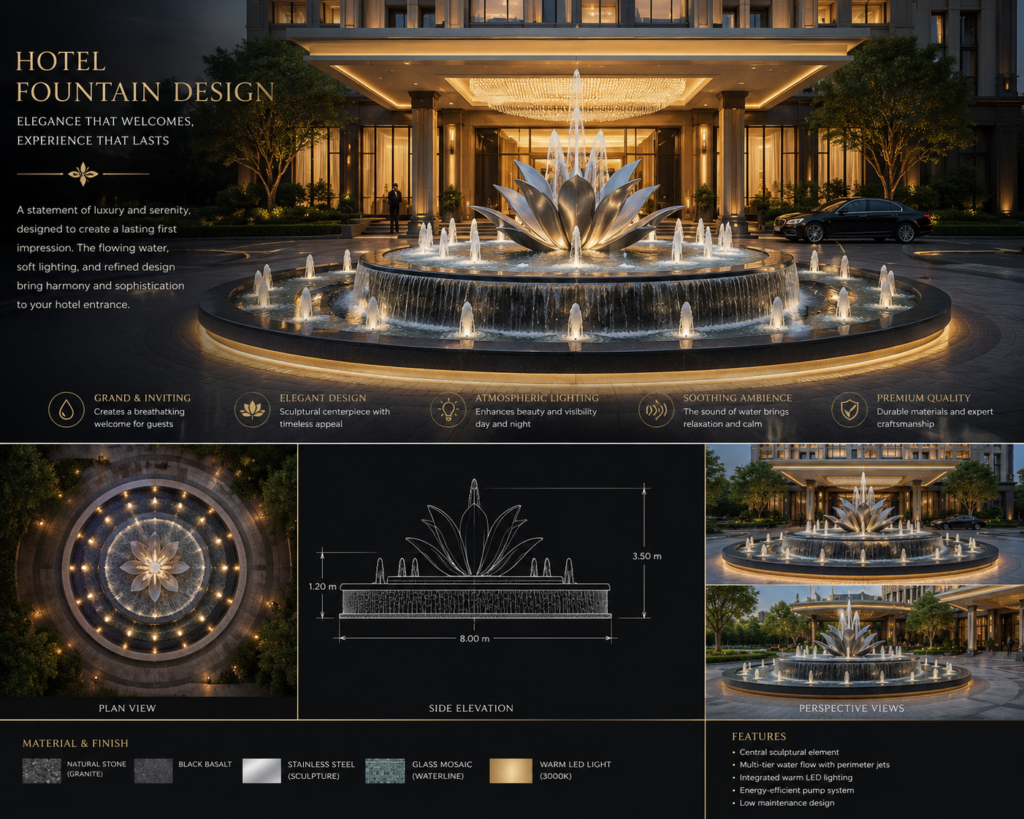
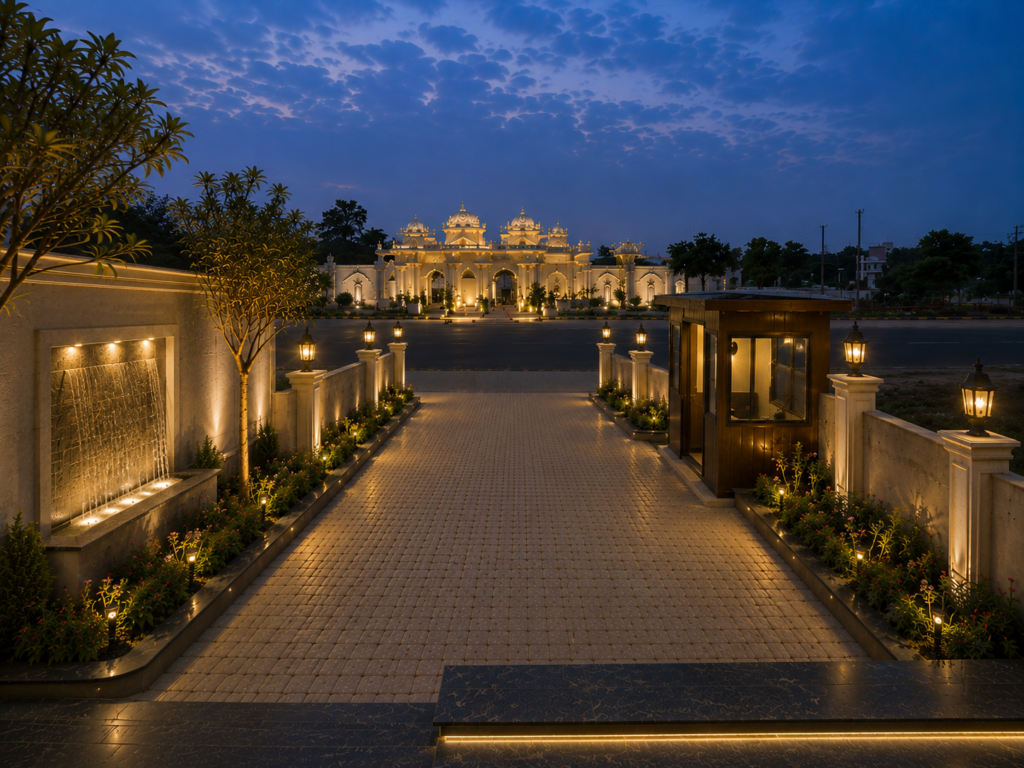
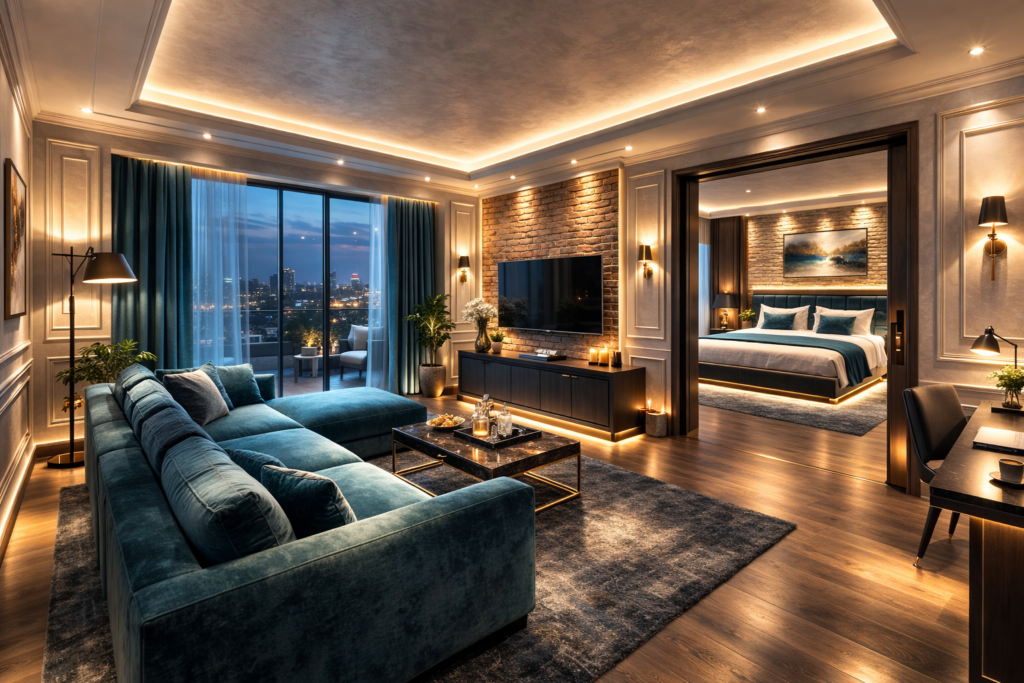
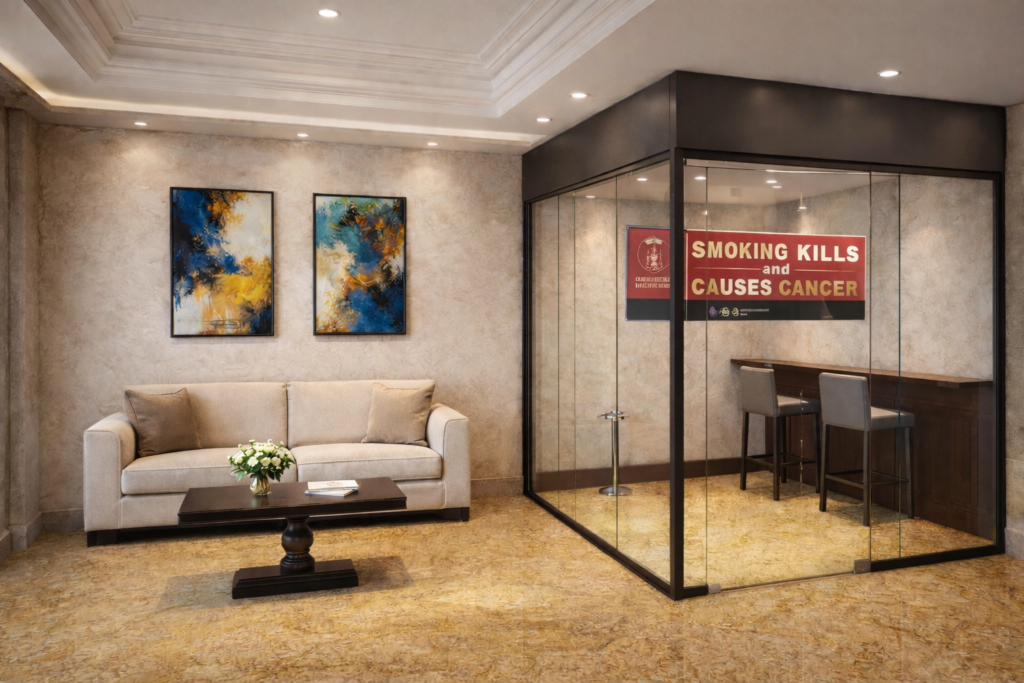
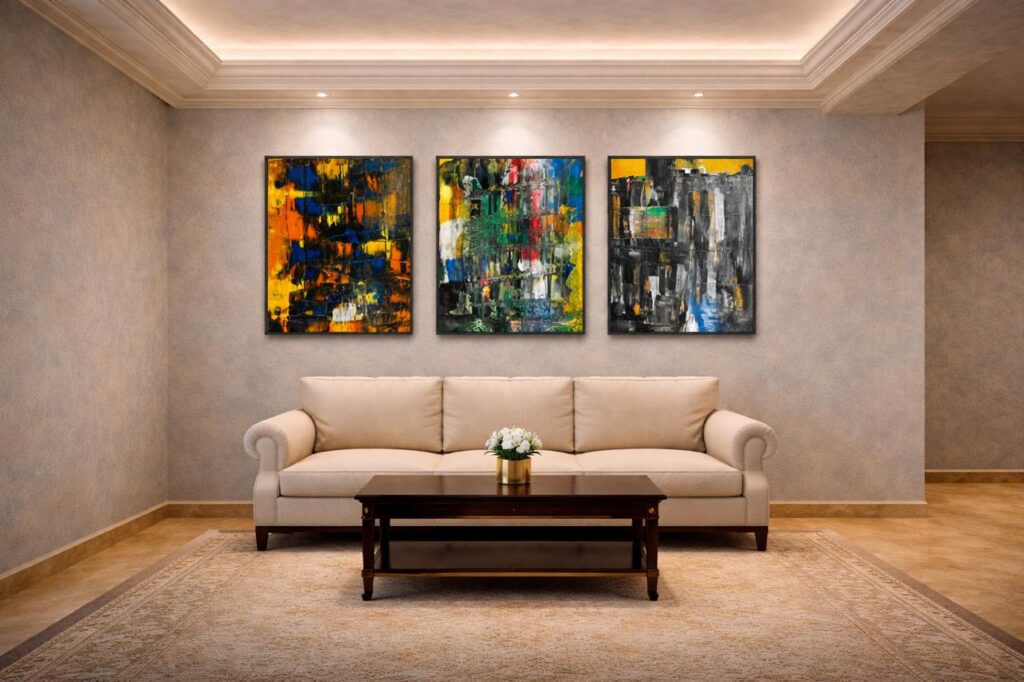
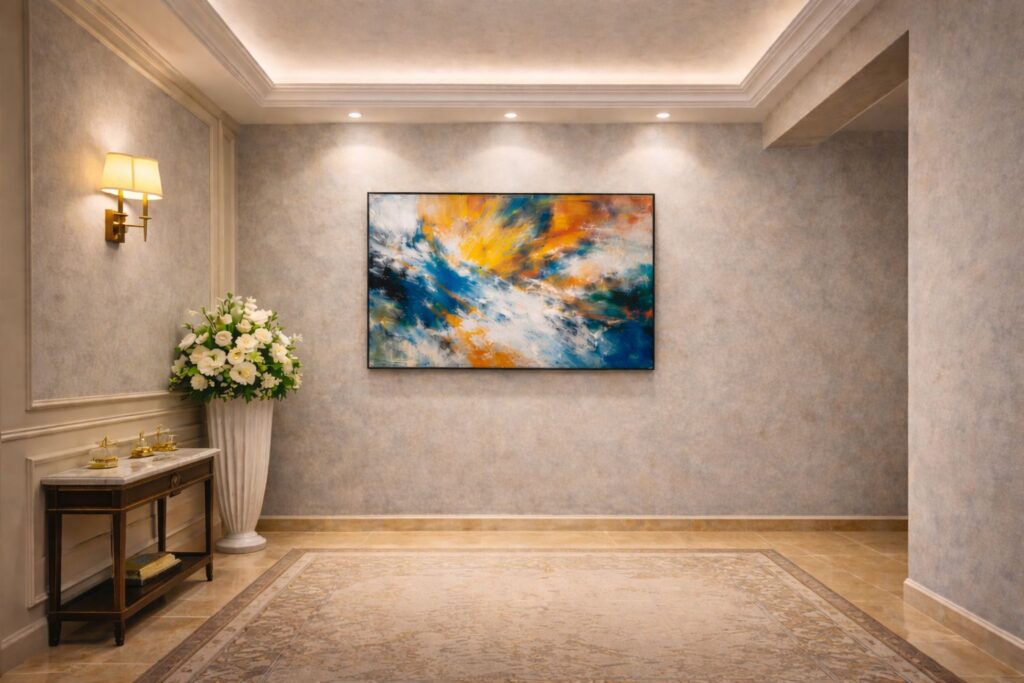
In today’s world of architecture and interior design, spaces are no longer created only for functionality, they are designed to create experiences, emotions, and identity. Whether it is a hotel lobby, a corporate office, a hospital waiting area, a luxury home, or a public building, the design of the space shapes how people feel within it.

Bringing a completely fresh perspective to interior consultancy in India, Artist Amit Kumar Mehta, founder of Mehta Art Gallery, Varanasi, introduces a unique concept known as Artist-Led Interior Visualisation & Design Consultancy.

Recognised as India’s First Artist-Led Hospitality and Interior Consultant, Amit Kumar Mehta believes that when artists lead the creative process, spaces gain a deeper artistic soul, originality, and a timeless identity.

Unlike traditional interior design approaches that primarily rely on technical layouts and catalog-based design elements, artist-led interiors emerge from imagination, observation, cultural sensitivity, and years of artistic exploration.

A New Philosophy of Design: Interiors as Living Art

Every space tells a story. However, most commercial interiors are often repetitive, predictable, and heavily influenced by trends. Artist-led interior design shifts the approach entirely.

Artists naturally think in terms of composition, balance, emotion, texture, light, and storytelling. These elements transform ordinary architecture into environments that feel meaningful and memorable.

Through his consultancy, Amit Kumar Mehta approaches interiors as a form of large-scale art composition, where walls, lighting, furniture, materials, and artworks come together as a unified artistic narrative.

The result is not just a decorated space, but a signature experience.

The Visionary Behind the Concept

Artist Amit Kumar Mehta is a full-time artist and founder of Mehta Art Gallery in Varanasi, with over 12 years of professional artistic experience. His journey spans fine art creation, mural installations, art events, cultural initiatives, and collaborations including international cultural exchange programs with Nepal.

Over the years, his artistic practice has evolved beyond canvas into architectural and spatial expression. This transition naturally led to the development of artist-driven interior visualisation and consultancy, where creativity leads the design process.

His belief is simple:
“A space designed by artists carries emotion, originality, and timeless aesthetic value.”

Interior Consultancy for Multiple Sectors

While many designers specialise in only one category such as residential or hospitality, Mehta Art Gallery offers artist-led interior visualisation consultancy for a wide variety of sectors, including:

Hotels & Hospitality Spaces
Luxury hotels, boutique hotels, resorts, banquet halls, and hospitality lounges designed to create memorable guest experiences.

Hospitals & Healthcare Interiors
Healthcare spaces require calm, comfort, and psychological positivity. Artist-inspired interiors help reduce stress and create healing environments for patients and visitors.

Corporate Offices & Workspaces
Creative yet sophisticated office interiors that inspire productivity, innovation, and professional elegance.

Residential Homes & Luxury Villas
Personalised artistic interiors for homes where architecture meets emotion and individuality.

Restaurants & Cafés
Ambience-driven interiors that elevate dining experiences and create Instagram-worthy spaces for customers.

Housing Societies & Community Spaces
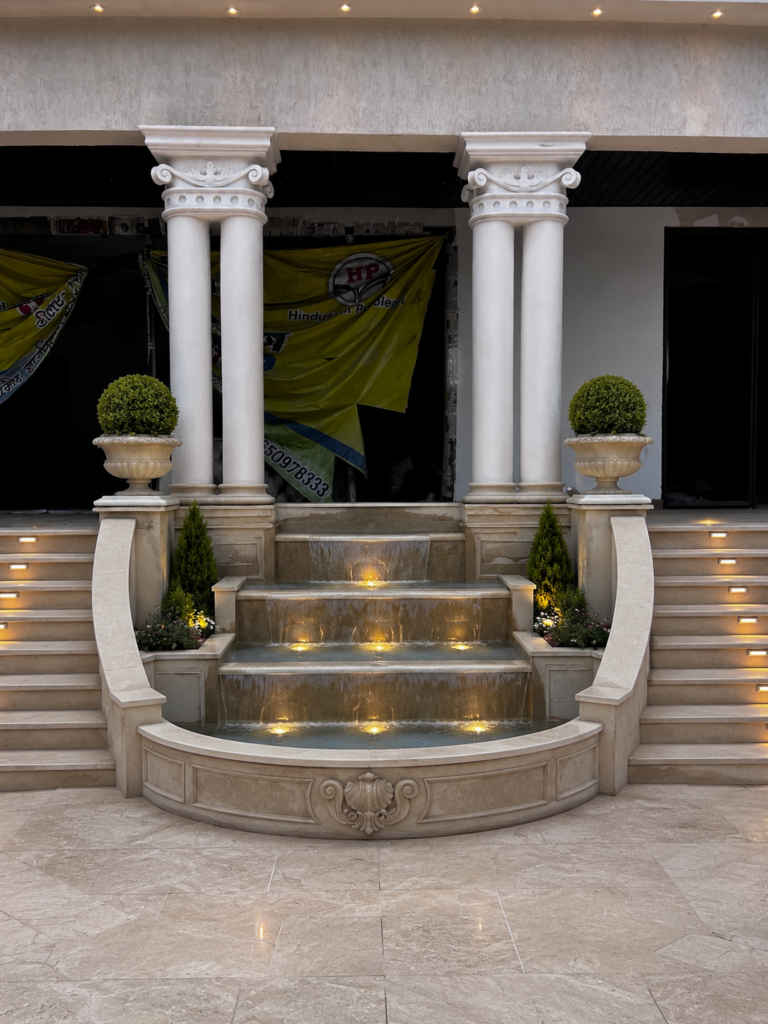
Entrance areas, lobbies, community halls, and landscape walls enhanced through artistic design and murals.

Government & Public Projects
Artistic visualisation and design for cultural spaces, institutions, civic buildings, and public art installations.

This wide range of consultancy allows the creative philosophy of artist-led design to influence many types of spaces across India.
Interior Design Visualisation – Seeing the Concept Before Construction

One of the most important services offered by Mehta Art Gallery is interior design visualisation consultancy.

Before execution begins, the entire concept is developed visually so clients can clearly understand how the final space will appear. This includes:

• Conceptual artistic interior designs
• 3D visualisation of spaces
• Artistic wall and mural concepts
• Lighting and material suggestions
• Furniture and layout composition
• Signature artistic installations

This approach helps clients, architects, and contractors align on the vision before construction begins, saving time, cost, and uncertainty.

The Advantage of Artist-Led Interior Consultancy

The greatest strength of artist-led design is creativity born from artistic experience and exploration.

Artists travel, observe cultures, study forms, experiment with materials, and constantly push the boundaries of imagination. These experiences shape a design perspective that cannot be replicated by template-based interior planning.

Some key advantages include:

Original Concepts
Every project receives a unique artistic identity rather than repeating market trends.

Creative Thinking
Artists approach spatial problems with imagination and unconventional ideas.

Emotional Impact
Spaces designed by artists often feel more human, expressive, and inspiring.

Art Integration
Paintings, murals, sculptures, and textured wall compositions become natural parts of the design.

Long-Term Value
Original artistic design tends to age better than trend-driven interiors.

In-House Artist Team and Creative Collaboration

Another defining strength of Mehta Art Gallery is the presence of an in-house team of artists and creative professionals.

This team collaborates on conceptual development, artistic installations, and visualisation of projects. Together they bring multiple creative perspectives to each design.

This ensures that projects receive deep artistic attention and craftsmanship, rather than standardised design templates.

The team works closely with architects, contractors, and developers to ensure that artistic ideas translate smoothly into practical execution.

Art as the Identity of a Space

In many premium spaces around the world, art plays a defining role in shaping the identity of architecture. Whether it is a large mural in a hotel lobby, a sculptural installation in a corporate building, or a textured wall in a luxury residence, art adds personality and depth.

Through Mehta Art Gallery, original artworks can be integrated into interiors including:

• Contemporary paintings
• Abstract compositions
• Spiritual and cultural artworks
• Cement relief murals
• Sculptural wall art
• Metallic textured installations

Each piece is designed to complement the architecture and theme of the space.

Pan-India Interior Consultancy

Although the studio is located in Varanasi, Uttar Pradesh, consultancy services are available across India.
Projects are guided from the concept stage to artistic execution, ensuring that the creative vision remains consistent throughout the process.

Developers, architects, businesses, institutions, and homeowners looking for premium artistic interiors can collaborate with Mehta Art Gallery to transform their spaces.

The Future of Artist-Led Interiors in India

As India’s architecture and design landscape evolves, there is a growing appreciation for originality, culture, and artistic identity within built environments.

Artist-led interior consultancy represents a progressive step where fine art, architecture, and spatial design merge together.

Through his work, Artist Amit Kumar Mehta aims to introduce a design philosophy where creativity leads the way and every space becomes a reflection of artistic thought.

Because when art becomes part of architecture, spaces become unforgettable.

Contact for Consultancy

Artist Amit Kumar Mehta
Luxury Interior & Art Consultant
Founder: Mehta Art Gallery

Varanasi, Uttar Pradesh, India

Website:
www.mehtaartgallery.com

Interior Consultancy Available Pan-India

For premium artistic interiors, visualisation consultancy, murals, and creative spatial concepts, connect with Mehta Art Gallery and transform your space into a work of art.


#AmitKumarMehta
#MehtaArtGallery
#ArtistLedDesign
#InteriorDesignIndia
#LuxuryInteriors
#CreativeInteriors
#ArtInArchitecture
#HospitalityInteriorDesign
#HospitalInteriorDesign
#CorporateInteriorDesign
#RestaurantInteriorDesign
#ResidentialInteriors
#GovernmentProjects
#PublicArtIndia
#InteriorVisualisation
#LuxuryDesignConsultant
#ArtisticSpaces
#IndianArtists
#VaranasiArtists
#CreativeArchitecture
#DesignInnovation
#PremiumInteriorDesign
#ArtDrivenDesign
#InteriorConsultancy
#DesignWithCreativity

Warm greetings from Mehta Art Gallery, Varanasi.

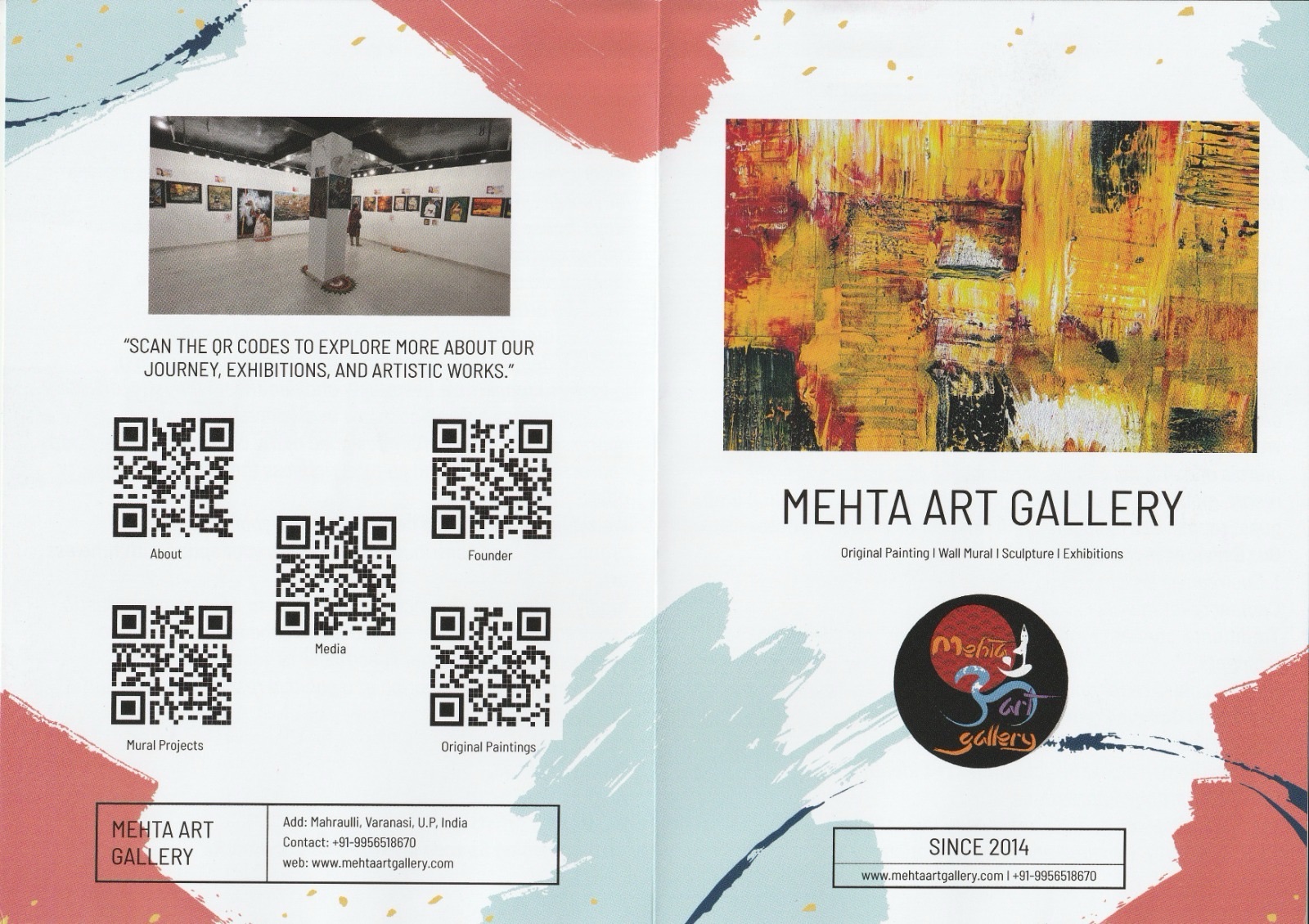
I am Amit Kumar Mehta, Artist & Founder of Mehta Art Gallery. We specialize in original hand-painted artworks, luxury wall murals, and artistic interior concepts for hotels, resorts, hospitals, banquet halls, villas, corporate spaces, and premium residences.

Our Expertise

• Customized Wall Murals (cement relief & artistic murals)

• Original Canvas Paintings (hand-painted artworks)

• Premium Interior Art Consultancy & Concept Visualisation

• Spiritual, heritage, contemporary, and luxury themes

✔ 100% Original Artworks (No prints or replicas)

✔ Authenticity Certificate with every artwork

✔ Projects executed Pan India

A thoughtfully designed artwork adds elegance, cultural richness, and a unique identity to your property.

📍 Mehta Art Gallery

Mahraulli, Varanasi, Uttar Pradesh, India

📞 +91 9956518670

🌐 www.mehtaartgallery.com

Since 2014

Original Paintings | Wall Murals | Sculptures | Exhibitions

If you have an upcoming project or interior space that needs artistic enhancement, feel free to connect.

Amit Kumar Mehta

Founder & Artist

Mehta Art Gallery

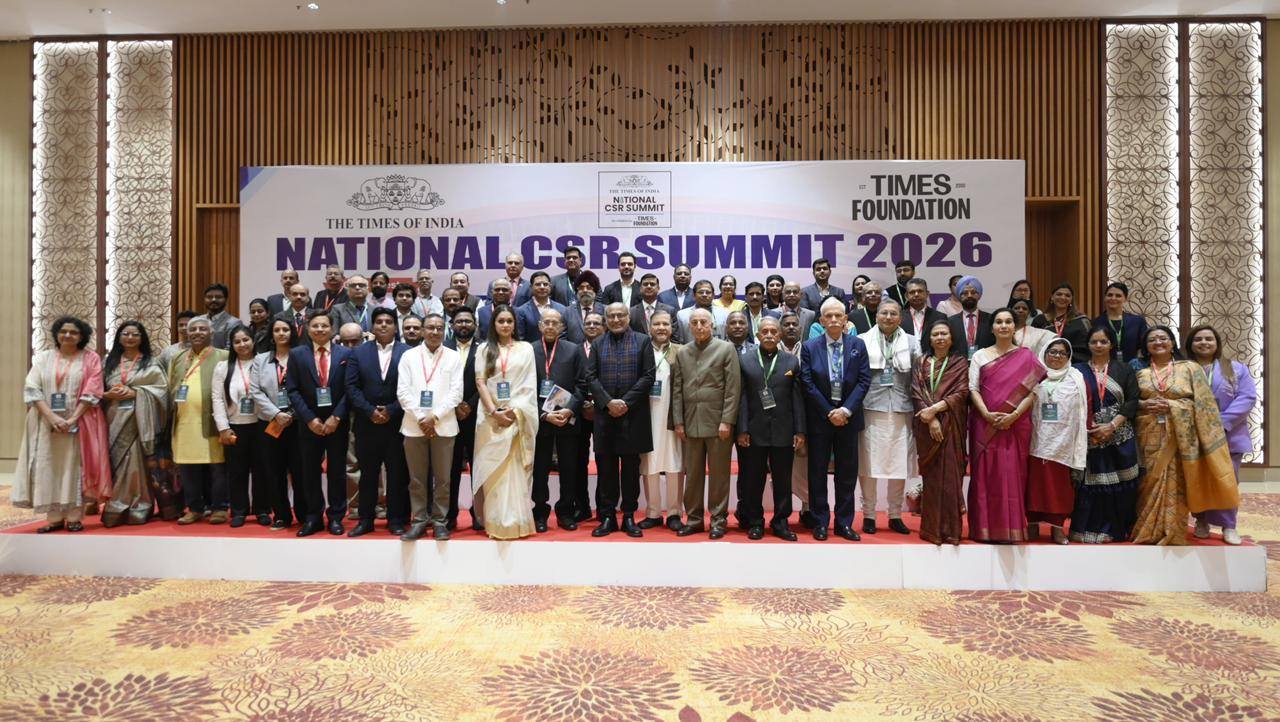
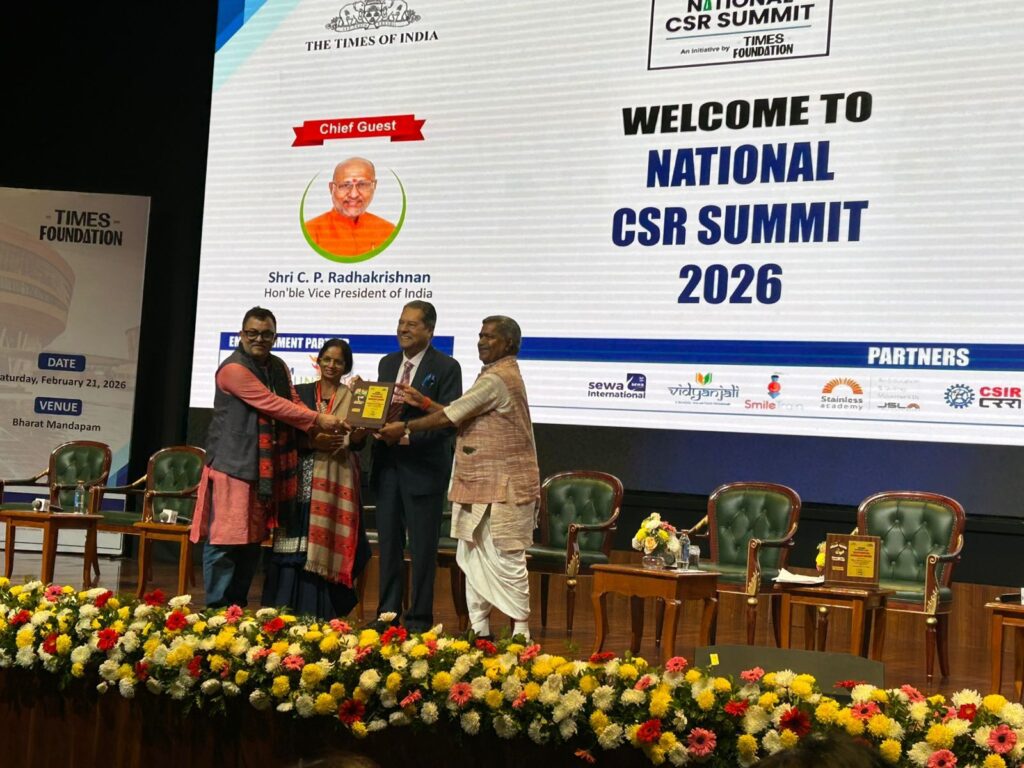
In every era, societies are remembered not only for their economic achievements but for the moral choices they make while pursuing progress. Development without compassion creates distance, while growth guided by responsibility builds civilizations rooted in dignity. The TOI National CSR Summit 2026, organized at Bharat Mandapam in New Delhi, emerged as one such defining moment in contemporary India, a gathering that attempted to redefine the relationship between enterprise and empathy. From the perspective of Mehta Art Gallery, Varanasi, an institution deeply connected with cultural dialogue and artistic consciousness, the summit represented far more than an annual corporate event. It reflected a national introspection about responsibility, justice, and the ethical foundations of development.

Mehta Art Gallery was neither present at the summit nor a recipient of any recognition. Yet, as observers committed to the intersection of art, society, and human experience, the gallery views the recognition of grassroots change-makers as a cultural moment worthy of reflection. Art has always responded to social reality. It absorbs stories of struggle, resilience, and transformation, translating them into visual memory for future generations. When individuals who dedicate their lives to marginalized communities receive national acknowledgement, the moment becomes part of a larger narrative about the direction in which a society chooses to move.

The central motive of the CSR Summit 2026 lay in strengthening the understanding that Corporate Social Responsibility is no longer an optional philanthropic gesture but a vital instrument of nation-building. India’s development journey today demands alignment between economic ambition and social equity. Corporate institutions increasingly influence education systems, healthcare accessibility, environmental sustainability, and livelihood opportunities. The summit emphasized that CSR must evolve beyond symbolic charity and become a long-term ethical commitment rooted in accountability and measurable impact.

Hon’ble Vice-President of India Shri C. P. Radhakrishnan, addressing the gathering, articulated this vision with clarity and conviction. His emphasis on CSR as “nation-building capital” reflected a growing recognition that businesses are stakeholders in the social fabric of the country. Development cannot remain confined to financial growth alone; it must include dignity for workers, opportunity for disadvantaged communities, and sustainable stewardship of natural resources. His message urging institutions to honour commitments underscored an important truth, trust remains the foundation of social progress.

For Mehta Art Gallery, this philosophy resonates deeply with artistic practice. Art itself is an act of responsibility toward society. Artists observe the emotional climate of their time and respond through creation. Murals tell stories of communities. Sculptures preserve collective memory. Paintings express the inner conflicts and hopes of humanity. When national leadership acknowledges compassion as essential to development, it reinforces the belief that creativity and conscience are inseparable forces shaping civilization.

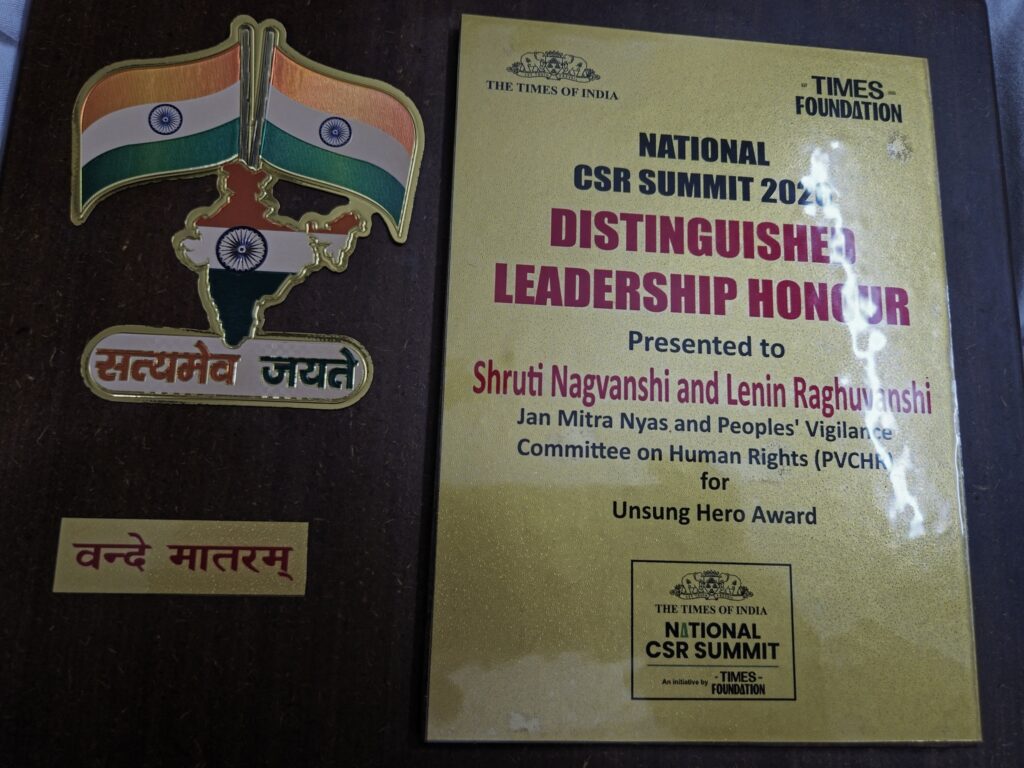
Among the many recognitions presented at the summit, the Distinguished Leadership Honour under the Unsung Hero category carried particular significance. Unlike awards that celebrate visibility or institutional power, this category honoured individuals whose work unfolds quietly among communities often ignored by mainstream narratives. Grassroots activism rarely attracts applause. It requires patience, courage, and emotional endurance in environments shaped by inequality and structural injustice.

The recognition of Shruti Nagvanshi and Lenin Raghuvanshi reflected decades of such commitment. Through Jan Mitra Nyas and the People’s Vigilance Committee on Human Rights (PVCHR), their work has addressed bonded labour, caste discrimination, gender-based violence, and systemic exclusion affecting marginalized populations. Their initiatives have extended across education, rehabilitation, advocacy, and community empowerment, focusing not merely on relief but on restoring agency and dignity.

From the standpoint of Mehta Art Gallery, this recognition symbolizes the meeting point between grassroots experience and institutional acknowledgement. Artists understand the value of unseen labour. A canvas may take months or years before it reaches public exhibition. Similarly, social transformation often occurs slowly, through trust built one conversation at a time. The Unsung Hero honour therefore becomes a reminder that progress is sustained by individuals working beyond visibility.

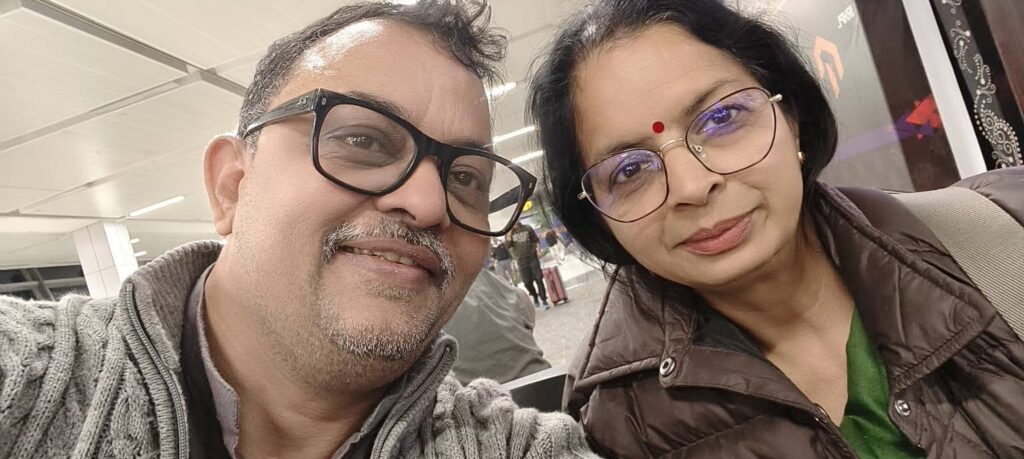
One of the most meaningful dimensions of the recognition was that it honoured Shruti Nagvanshi and Lenin Raghuvanshi together. Their shared award highlighted a partnership extending beyond professional collaboration into a lifelong moral alliance. Beginning their journey together in marriage in February 1992, their personal commitment gradually evolved into a shared public mission rooted in justice and compassion.

In Indian cultural traditions, partnership has long been seen as a source of strength. Artistic and literary heritage celebrates companionship as a creative force capable of shaping social change. Receiving recognition together transformed the award into something deeply symbolic. It affirmed that love and service can exist as complementary energies rather than separate pursuits. The honour arriving close to their marriage anniversary added emotional resonance, suggesting that decades of shared struggle can itself become a form of collective achievement.

Their work through Jan Mitra Nyas and PVCHR emerged not from theoretical frameworks but from encounters with lived realities. Supporting survivors of bonded labour, advocating for education among marginalized children, addressing cases of human rights violations, and strengthening democratic participation at the grassroots level required persistent engagement with communities facing systemic barriers. These institutions sought not only to document injustice but to restore dignity and confidence among individuals often silenced by circumstance.

For Mehta Art Gallery, such efforts mirror the responsibility carried by cultural institutions. Art galleries preserve voices that might otherwise disappear. They provide space for dialogue, reflection, and emotional healing. Just as grassroots organizations create platforms for marginalized communities to speak, artistic spaces create platforms for society to listen.

The summit’s broader discussions emphasized collaboration between corporate institutions and grassroots organizations. CSR initiatives increasingly recognize that financial resources alone cannot produce sustainable transformation. Community trust, local knowledge, and empathy remain essential components of development. Partnerships between enterprises and organizations rooted in lived experience enable resources to reach those who need them most.

From an artistic perspective, collaboration has always been central to creativity. Public art projects often involve communities participating in storytelling through visual expression. Murals revitalizing neglected spaces or sculptures commemorating collective resilience demonstrate how creativity and social engagement intersect. CSR initiatives guided by ethical commitment similarly invest not only in infrastructure but in emotional and social wellbeing.

The presence of Dr. Bhaskar Chatterjee at the summit added another layer of significance to the recognition ceremony. Widely acknowledged for shaping India’s CSR framework, his contributions helped transform corporate responsibility into a structured national commitment. By integrating CSR provisions within the Companies Act, institutional accountability toward society gained legal and ethical grounding.

For observers from cultural fields, this convergence between policy vision and grassroots action symbolizes harmony between imagination and implementation. Just as an artist translates vision into tangible form, policy frameworks provide direction while activists transform intention into lived reality. The recognition ceremony therefore reflected dialogue between institutions shaping policy and individuals implementing change within communities.

Sharing the honour alongside Gandhian social reformer Maheshanand Bhai further emphasized the spirit of grassroots leadership celebrated at the summit. His work in rural empowerment, community participation, and sustainable development echoes Gandhian ideals of service rooted in humility and self-reliance. Mobilizing marginalized communities around rights, education, and dignity demonstrates that transformation often begins locally rather than through centralized authority.

Such recognition resonates strongly with India’s cultural traditions, where ethical living and community engagement have long informed artistic philosophy. Handcrafted practices, collective creativity, and respect for local knowledge remain integral to Indian aesthetics. Honouring individuals grounded in these values reinforces the idea that modernization must remain connected to moral heritage.

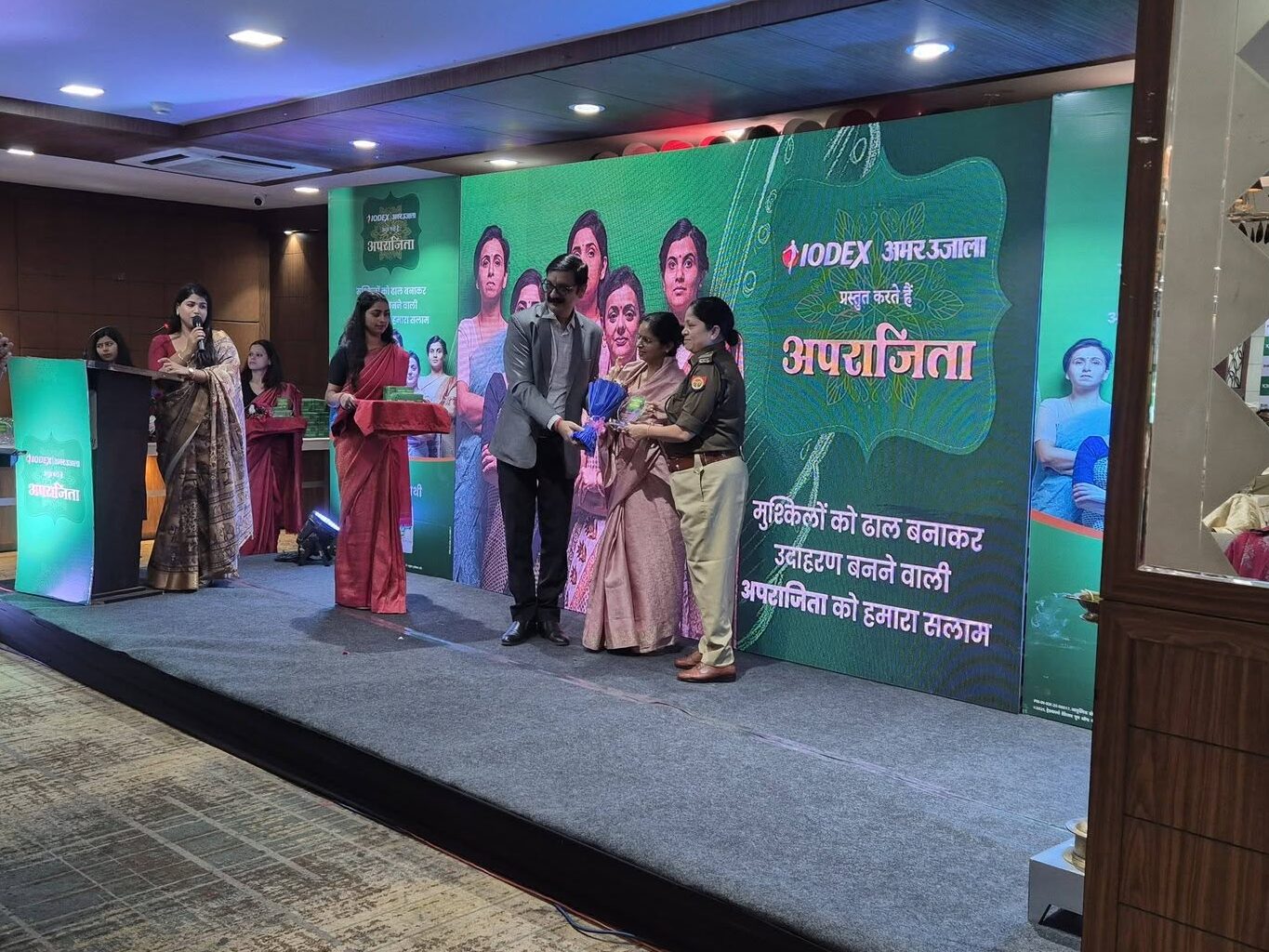
Another powerful dimension connected with this broader narrative was Shruti Nagvanshi’s recognition at the Aparajita ceremony organized by Amar Ujala in Varanasi. Her honour for contributions toward women’s empowerment and community leadership reflected growing acknowledgement of women as central architects of social transformation. Across India, women leaders are reshaping grassroots governance, supporting survivors of violence, and strengthening collective participation in democratic processes.

For Mehta Art Gallery, which frequently collaborates with emerging artists and women creators, such recognition carries deep cultural importance. Empowerment expands artistic expression itself. When women gain confidence and opportunity, communities gain new voices capable of redefining cultural narratives.

Messages of appreciation arriving from international figures also highlighted the universal nature of social commitment. When artists and thinkers across borders recognize grassroots activism, it affirms that compassion transcends geography. Art has long functioned as a bridge connecting cultures through shared emotion. Similarly, the struggle for justice in one region inspires hope elsewhere.

India today stands at a moment of rapid transformation marked by technological innovation and economic ambition. Yet inequality continues to challenge inclusive development. The CSR Summit 2026 emphasized that sustainable progress requires ethical balance. Economic success must coexist with environmental responsibility, gender equality, and protection of human dignity.

From Mehta Art Gallery’s perspective, responsibility extends beyond corporations or governments alone. Artists, educators, entrepreneurs, and citizens all contribute to shaping humane progress. Culture itself becomes a participant in development when it encourages empathy and reflection.

Although the gallery was not present at Bharat Mandapam, reflecting upon such moments becomes part of cultural engagement. Artists interpret society’s conscience. Recognition of individuals dedicated to restoring dignity among marginalized communities inspires creative communities to continue exploring themes of justice and resilience through artistic language.

Awards acknowledge milestones but never conclude journeys. The work undertaken by Shruti Nagvanshi and Lenin Raghuvanshi continues within communities still confronting inequality and exclusion. Recognition amplifies visibility, yet responsibility deepens alongside honour.

The main motive of the CSR Summit 2026, collaboration for inclusive nation-building, ultimately calls upon every sector of society to participate. Government institutions provide policy frameworks, corporate enterprises contribute resources, civil society offers grassroots wisdom, and culture sustains moral imagination.

From the reflective standpoint of Mehta Art Gallery, the recognition celebrated at the summit symbolizes hope that ethical partnerships can guide India’s future toward compassion-driven progress. True nation-building emerges not from isolated achievement but from collective responsibility.

The story of this honour is therefore not merely about awards presented on a stage in New Delhi. It is about the enduring belief that empathy remains the strongest foundation of development. When enterprise meets conscience, when art listens to society, and when leadership honours quiet dedication, a nation moves closer to justice.

In that shared aspiration lies the true spirit of social responsibility, and the journey, like creativity itself, continues.

Wedding Anniversary Tribute to Dr. Lenin Raghuvanshi and Shruti Nagvanshi


There are relationships that quietly nurture personal happiness, and then there are partnerships that gradually become institutions of hope for others. The shared journey of Dr. Lenin Raghuvanshi and Shruti Nagvanshi belongs to the latter, a companionship that has continuously expanded beyond domestic life into the moral, social, and cultural fabric of society. Their wedding anniversary is therefore not merely a remembrance of vows exchanged decades ago; it is an opportunity to reflect upon a life lived together in service of dignity, justice, creativity, and human expression.

Marriage often finds strength in shared understanding, but when shared understanding transforms into shared responsibility, it acquires a rare depth. From the early years of their companionship, both carried a sensitivity toward inequality and suffering visible around them. Growing up in and around Varanasi, they experienced a city where spirituality and struggle coexist closely. Sacred traditions flourished beside poverty and social exclusion. This contrast shaped their awareness that compassion must not remain philosophical alone; it must become action.

Their marriage in 1992 marked the beginning of a journey that gradually intertwined personal life with social commitment. Rather than separating home from society, they chose to open their lives toward those who needed solidarity. This decision demanded courage. Human rights work is rarely comfortable. It involves confronting systems that resist change and standing beside individuals whose voices are often ignored. In such a path, companionship becomes more than emotional support; it becomes shared resilience.

The establishment of the People’s Vigilance Committee on Human Rights (PVCHR) became a defining expression of this shared vision. Emerging from a desire to create spaces for marginalized communities to reclaim dignity, the organization addressed bonded labour, caste discrimination, gender injustice, torture survivors, and rural deprivation. Each intervention required patience and moral clarity. Justice is not achieved through confrontation alone; it grows through listening, healing, and sustained engagement. Their partnership enabled exactly this balance.

Dr. Lenin Raghuvanshi’s advocacy has often appeared through strong public engagement with structural injustice. His efforts connected grassroots realities with broader democratic conversations, ensuring that suffering hidden within villages entered national and international awareness. Yet activism cannot survive through confrontation alone. It requires trust within communities, and this is where Shruti Nagvanshi’s contribution became profoundly transformative. Through women’s leadership initiatives, health awareness programs, and participatory forums, she nurtured confidence among those who had long believed silence was their destiny.

Women began speaking openly about violence and health challenges. Communities started participating in decision-making processes. Young girls discovered the possibility of education where resignation once prevailed. These transformations emerged not from charity but empowerment, a philosophy deeply shared between them.

However, an often less discussed yet equally meaningful dimension of their journey has been their engagement with art and culture as instruments of social dialogue. In a city like Varanasi, art is not merely decoration; it is memory, philosophy, and resistance expressed through colour and form. Understanding this, both recognized that artists play an essential role in shaping collective consciousness.

Their association and encouragement toward artistic initiatives connected with Mehta Art Gallery opened important spaces where creativity could intersect with social awareness. At a time when many independent artists struggled to find recognition beyond commercial boundaries, such collaborations created opportunities for dialogue between activism and art practice.

Art exhibitions supported through these engagements encouraged artists to reflect upon human dignity, social harmony, and lived realities rather than limiting themselves to market expectations alone. Conversations between activists, writers, and artists created an atmosphere where painting, sculpture, and visual expression became mediums of questioning injustice and celebrating resilience.

Dr. Lenin Raghuvanshi’s presence in artistic gatherings and discussions associated with Mehta Art Gallery reflected a belief that human rights discourse should not remain confined to legal or academic language. Art communicates where words fail. A painting depicting labourers, women, or spiritual landscapes of Kashi can sometimes speak more powerfully than policy documents. By encouraging interaction between human rights defenders and artists, he helped expand the understanding that culture itself can become an instrument of democracy.

Artists often work in solitude, wrestling with emotion and imagination. Recognition and moral encouragement therefore hold immense value. Through dialogues, exhibitions, and cultural interactions, artists found affirmation that their work possessed social relevance. The gallery space became not only an exhibition venue but a meeting ground for ideas, where creativity engaged with lived human experience.

Shruti Nagvanshi’s sensitivity toward community participation also reflected in such cultural engagements. Her understanding that art can nurture healing resonated strongly with survivors and marginalized communities who participated in workshops and creative interactions. Artistic expression offered individuals a language beyond trauma, allowing stories to emerge through colours and forms when direct narration felt difficult.

Such intersections between activism and art demonstrate a deeper philosophy guiding their lives, that justice must engage not only institutions but imagination. Social transformation cannot occur through law alone; it also requires emotional awakening within society. Artists, writers, and cultural practitioners therefore become essential companions in movements for dignity.

The challenges faced during decades of activism were not insignificant. Working against bonded labour systems or entrenched discrimination inevitably invited resistance. Social change disturbs inherited privilege. Moments of pressure, uncertainty, and exhaustion must have appeared repeatedly along their journey. Yet companionship provided strength. Their marriage offered a space where vulnerability could exist alongside determination, where difficult experiences could be shared and transformed into renewed courage.

Recognition from national and international platforms gradually acknowledged their contributions. Invitations to speak, awards, and collaborations expanded their influence across borders. Yet what remains remarkable is their rootedness. Despite global recognition, their work continues to return to villages, communities, and ordinary individuals seeking justice. This humility perhaps defines their legacy more than accolades ever could.

Their philosophical orientation toward compassion and equality reflects a belief that activism must also nurture reconciliation. Survivors require healing alongside justice. Communities divided by discrimination require dialogue alongside accountability. This approach shaped models of participatory democracy where people themselves become protectors of rights rather than passive recipients of assistance.

Balancing such demanding social engagement with personal life requires extraordinary understanding between partners. Family becomes both refuge and inspiration. Their ability to nurture familial bonds while sustaining intense activism reflects mutual respect and shared purpose. Rather than competing commitments, family and social responsibility appear to have strengthened one another.

In many ways, their marriage offers lessons urgently needed in contemporary society. Relationships today are often measured through comfort or achievement. Their journey reminds us that companionship can also become service. Love guided by ethical conviction expands outward. It listens to unfamiliar voices and stands beside those whom society forgets.

On this wedding anniversary, countless individuals who may never personally attend a celebration nonetheless remain part of it in spirit. Every worker freed from exploitation, every woman who discovered her voice, every child who entered education instead of labour carries within them an invisible blessing for this partnership. Artists encouraged to continue creative journeys, exhibitions that fostered dialogue, and cultural spaces strengthened through collaboration also form part of this living celebration.

May this anniversary bring moments of reflection amid continuing responsibilities. May their companionship continue inspiring activists, artists, and young leaders searching for examples of integrity grounded in humility. May their shared journey remind society that justice and creativity are not separate paths but companions capable of transforming human consciousness together.

Time counts anniversaries through years, but history measures them through impact. The journey of Dr. Lenin Raghuvanshi and Shruti Nagvanshi demonstrates what becomes possible when compassion, courage, and culture walk side by side. Their marriage stands not only as a personal milestone but as a continuing promise, that when love aligns itself with humanity, hope grows stronger than fear.

Heartfelt wedding anniversary wishes to both of you, companions in life, partners in justice, and inspiring supporters of both humanity and creative expression.