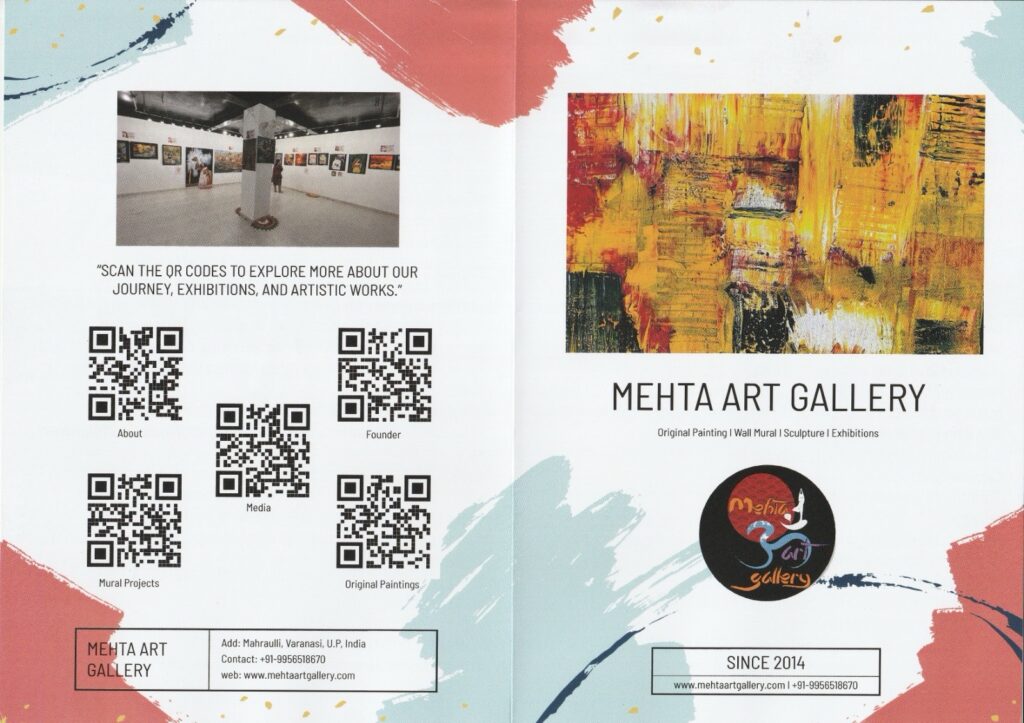
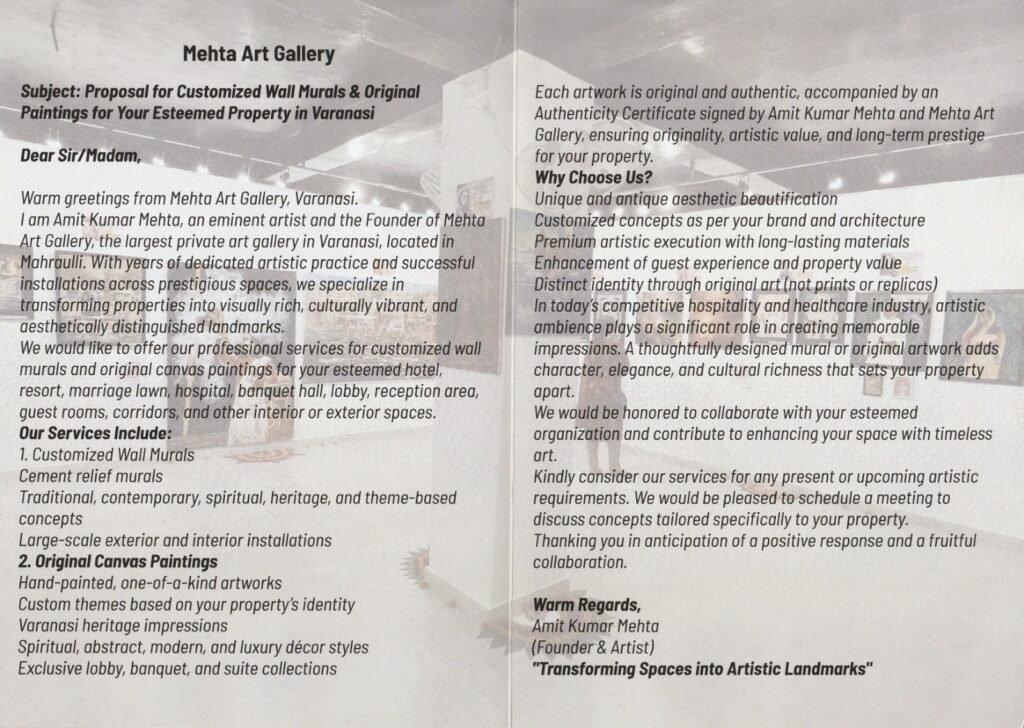
Premium Fountain Design & Installation Services by Mehta Art Gallery
Transform Any Space with Beautifully Designed Conceptual Fountains
Water has always been a symbol of elegance, prosperity, tranquility, and timeless beauty. At Mehta Art Gallery, we specialize in creating stunning conceptual fountain designs that transform ordinary spaces into extraordinary destinations. Whether you are planning a luxury hotel entrance, a grand residential landscape, a corporate headquarters, a government institution, a shopping mall, a public plaza, or a commercial complex, our team is dedicated to designing and delivering fountains that leave a lasting impression.
With years of artistic expertise, innovative design thinking, and professional execution, Mehta Art Gallery has become a trusted name in fountain design, manufacturing, installation, and customization. Our mission is simple: to create unique water features that enhance the visual appeal, prestige, and value of your property.
Customized Fountain Solutions for Every Space
Every location has its own character, architecture, and purpose. That is why we never believe in one-size-fits-all solutions. Our experienced designers carefully study the site, surroundings, architecture, and client requirements before developing a customized fountain concept.
We design and execute fountains for:
Residential Properties
Enhance your home with elegant fountains that create a peaceful and luxurious environment. From garden fountains and courtyard water features to entrance fountains and swimming pool enhancements, we offer tailor-made solutions that reflect your style and personality.
Hotels & Resorts
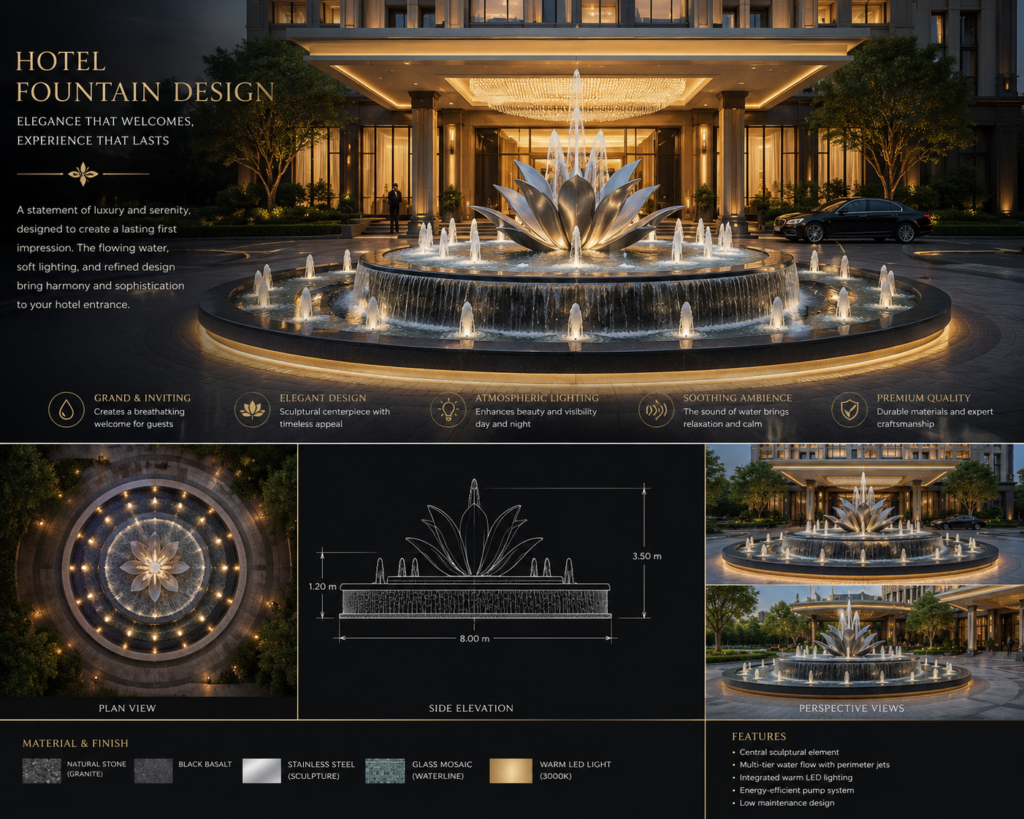
Create unforgettable first impressions with spectacular entrance fountains, musical fountains, illuminated water displays, cascading water walls, and artistic water features. Our hotel fountain designs are crafted to elevate guest experiences and reinforce luxury branding.
Commercial Complexes & Shopping Centers
Attract visitors and create memorable spaces with visually stunning fountains. We design interactive fountains, plaza fountains, decorative water features, and modern architectural water installations that become focal points of commercial developments.
Corporate Offices & Business Parks
Modern businesses understand the importance of creating inspiring environments. Our sophisticated fountain designs add elegance, prestige, and a calming atmosphere to corporate campuses, office buildings, and business centers.
Government Projects & Public Spaces
Mehta Art Gallery has the expertise to develop large-scale fountain installations for government buildings, parks, cultural centers, public squares, tourism projects, and urban development initiatives. Our designs combine artistic excellence with durability and efficient performance.
Educational Institutions & Healthcare Facilities
Beautifully designed water features create welcoming and relaxing environments. We provide customized fountain solutions for universities, schools, hospitals, wellness centers, and healthcare campuses.
Our Specialty: Conceptual Fountain Design
What makes Mehta Art Gallery different is our artistic approach to fountain design. We don’t simply install water features—we create visual experiences.
Our conceptual design process includes:
- Site analysis and planning
- Architectural integration
- Artistic fountain concepts
- 3D visualizations and presentations
- Water flow engineering
- Lighting design integration
- Material selection and detailing
- Installation planning and execution
Every fountain is thoughtfully designed to complement its surroundings while becoming a statement piece that captures attention and admiration.
Wide Range of Fountain Styles
We offer an extensive variety of fountain designs, including:
Entrance Fountains
Grand and elegant water features designed to create powerful first impressions.
Musical Fountains
Synchronized water, music, and lighting systems that create spectacular entertainment experiences.
Dancing Fountains
Dynamic water choreography designed for public spaces, hotels, malls, and entertainment venues.
Sculpture Fountains
Custom-designed artistic sculptures integrated with flowing water to create iconic landmarks.
Water Walls
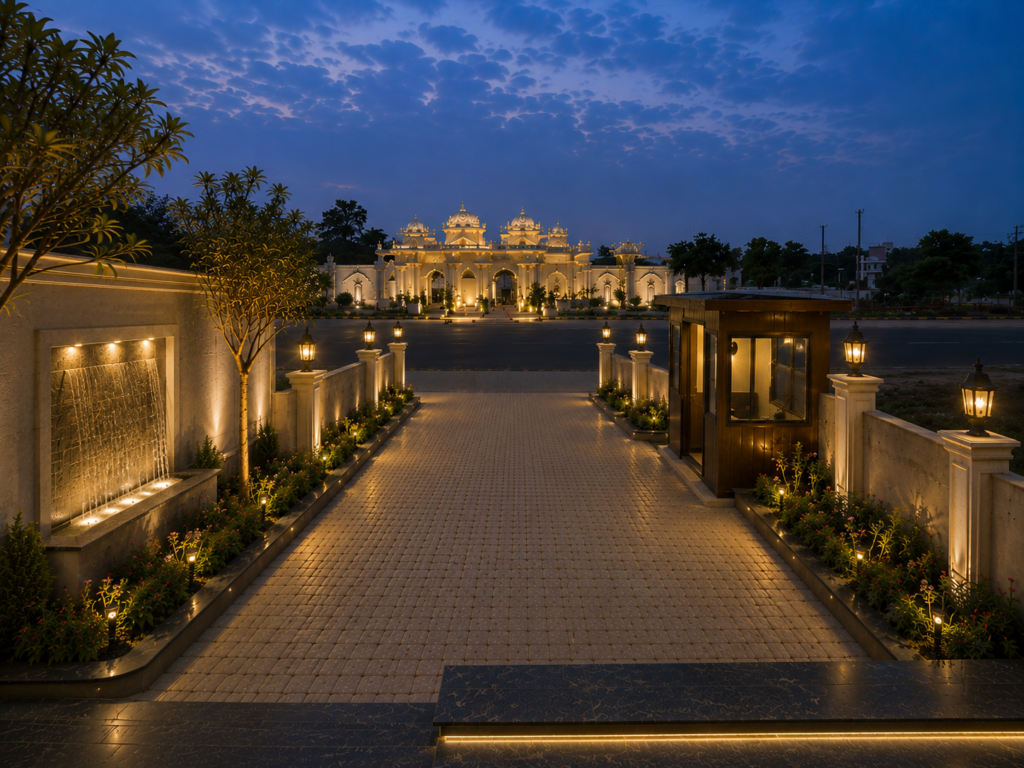
Modern vertical water features suitable for hotels, corporate offices, and luxury residences.
Lotus Fountains
Beautiful floral-inspired fountain concepts that symbolize purity, beauty, and prosperity.
Interactive Fountains
Engaging water features that encourage visitor participation in public spaces and recreational areas.
LED Illuminated Fountains
Advanced lighting systems that create stunning visual effects during evening and nighttime hours.
Contemporary Architectural Fountains
Minimalist and modern fountain designs perfectly suited for contemporary architecture.
Heritage & Traditional Fountains
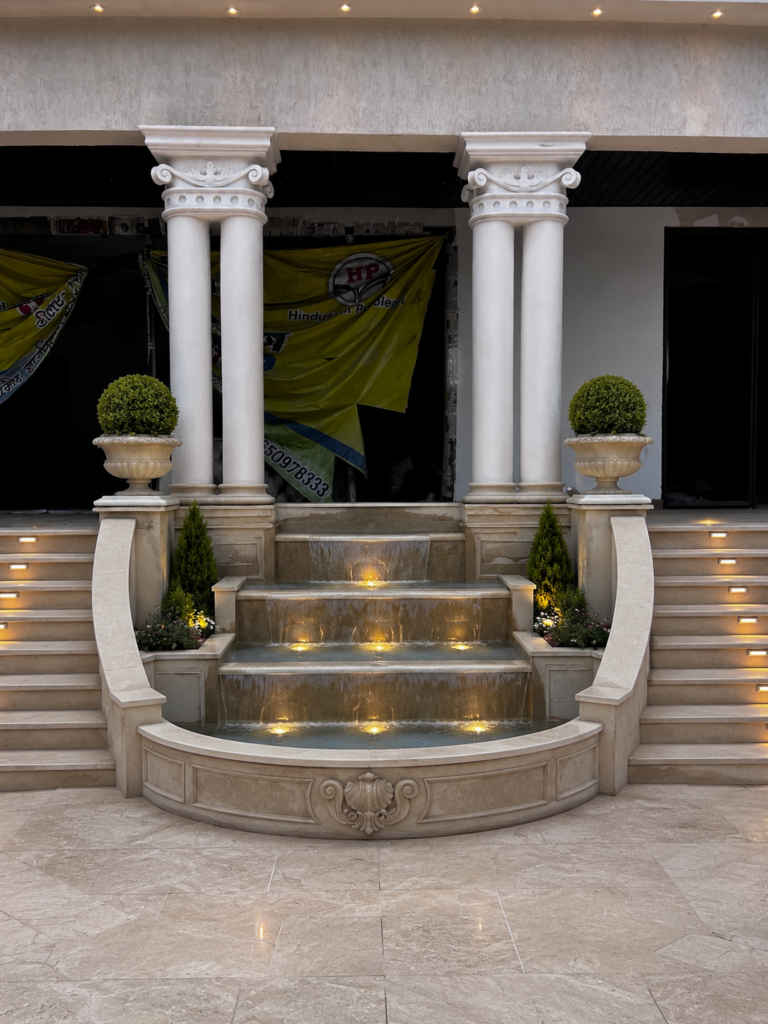
Classical and culturally inspired fountain designs that celebrate architectural heritage and craftsmanship.
Complete Design-to-Execution Services
At Mehta Art Gallery, we provide end-to-end fountain solutions. Our services include:
- Fountain concept development
- Custom design creation
- CAD drawings and technical detailing
- 3D rendering and visualization
- Fountain manufacturing
- Sculptural fabrication
- Water circulation systems
- LED lighting integration
- Installation and commissioning
- Maintenance support
From a small decorative fountain to a large-scale landmark installation, our team manages every aspect of the project with professionalism and attention to detail.
Quality, Innovation & Craftsmanship
We believe that a fountain should not only be beautiful but also durable and efficient. Therefore, we use premium materials, advanced engineering systems, and modern technologies to ensure long-lasting performance.
Our fountains are designed using:
- High-quality stone and granite
- Stainless steel structures
- Bronze and metal sculptures
- Premium water circulation equipment
- Energy-efficient pumps
- Advanced LED lighting systems
- Weather-resistant construction materials
Every project reflects our commitment to quality craftsmanship, innovation, and artistic excellence.
Why Choose Mehta Art Gallery?
Creative Design Expertise
Our team combines artistic vision with technical precision to create truly unique fountain concepts.
Customized Solutions
Every fountain is designed specifically for the client’s location, architecture, and objectives.
Complete Project Management
From concept to completion, we handle every stage of the project.
Premium Quality Standards
We use only high-quality materials and proven engineering systems.
Nationwide Project Capability
We undertake projects across India for residential, commercial, corporate, hospitality, and government sectors.
Customer-Focused Approach
Your vision becomes our inspiration. We work closely with clients to ensure complete satisfaction throughout the project.
Contact Mehta Art Gallery Today
If you are planning a fountain project for your home, hotel, resort, corporate office, commercial development, government project, public space, educational institution, healthcare facility, or any other location, our team is ready to assist you.
Let us help you create a breathtaking fountain that enhances the beauty, prestige, and value of your property.
Contact Mehta Art Gallery today for consultation, conceptual design development, project planning, and complete fountain solutions.
Discover how artistic creativity, engineering excellence, and flowing water can transform your space into a landmark destination.
Mehta Art Gallery – Creating Beautiful Conceptual Fountains for Homes, Hotels, Commercial Spaces, Corporate Campuses, Government Projects, and Public Destinations Across India.