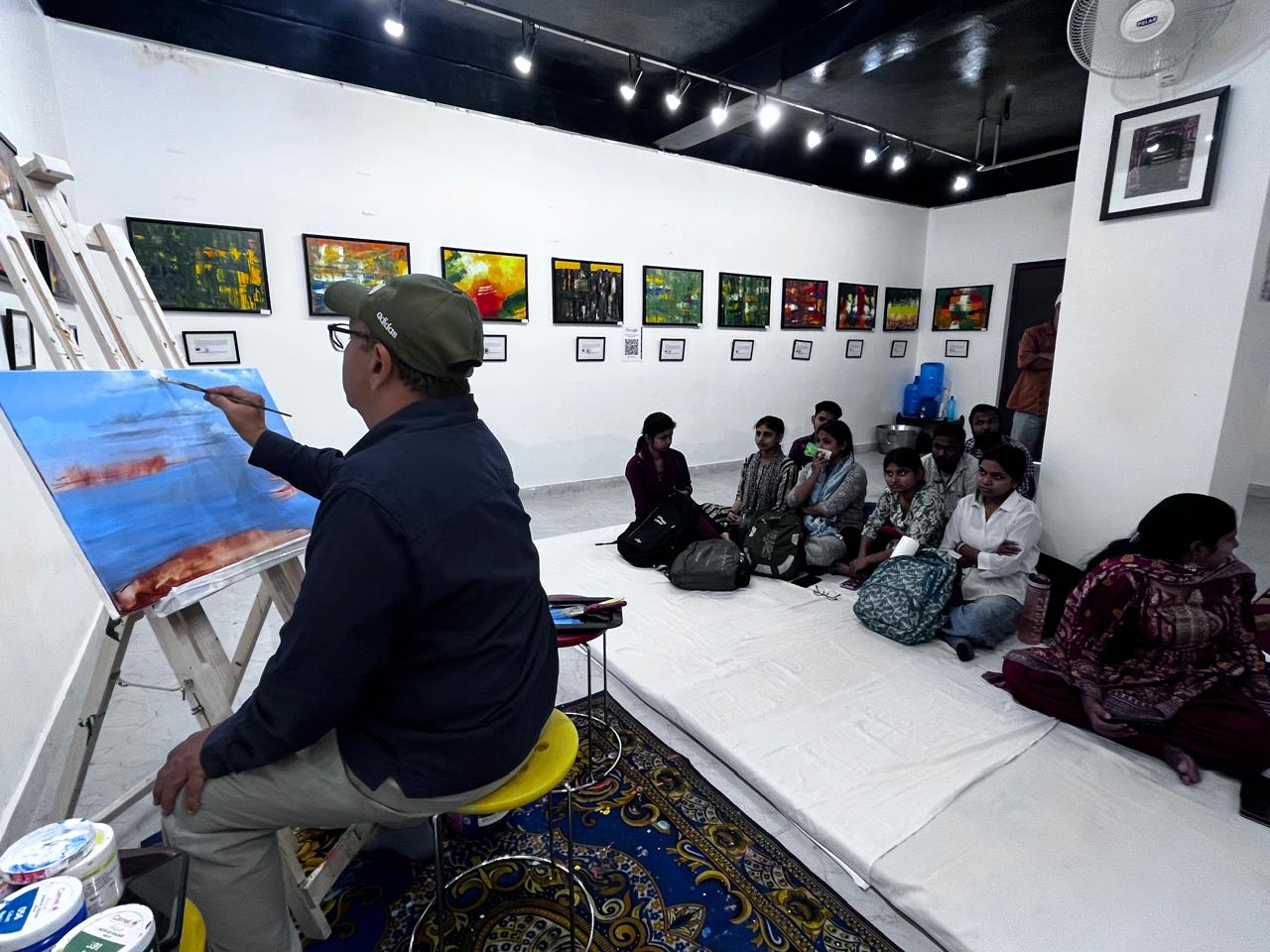
Art has always been a bridge between imagination and reality. It gives shape to emotions, transforms silence into expression, and allows individuals to connect deeply with themselves and the world around them. In a city as culturally vibrant and spiritually rich as Varanasi, art continues to flourish through meaningful initiatives that encourage creativity among young minds. One such inspiring event recently took place at Mehta Art Gallery, where a special Landscape Painting Workshop was conducted by renowned senior artist Dhirendra Sisodia.
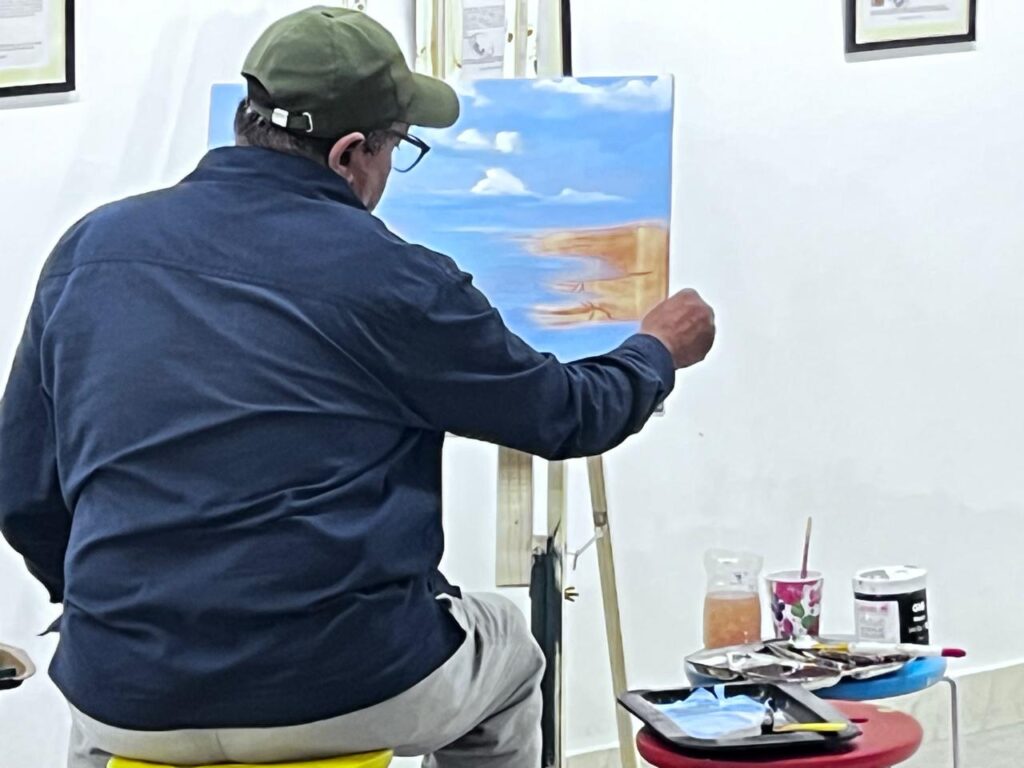
The workshop became a beautiful celebration of creativity, learning, colours, and artistic exchange. Students from various colleges, institutions, and art enthusiasts from different backgrounds gathered together to participate in an immersive session focused on the art of landscape painting. The event not only offered practical learning but also created an atmosphere where young artists could experience the emotional and meditative side of painting nature on canvas.
A Creative Morning Filled with Inspiration
As participants entered the gallery space, the atmosphere was filled with excitement and curiosity. Canvases, acrylic colours, brushes, easels, and palettes were carefully arranged, transforming the gallery into an open studio of imagination. Young artists eagerly waited to observe and learn from Dhirendra Sisodia, whose artistic journey and experience have inspired many emerging painters.
The workshop began with an introduction to the fundamentals of landscape painting. Sisodia Ji spoke about how landscapes are not merely representations of mountains, rivers, trees, or skies, but reflections of emotions and experiences. According to him, every natural scene carries a rhythm, a mood, and a story that an artist must learn to observe deeply before translating it onto canvas.
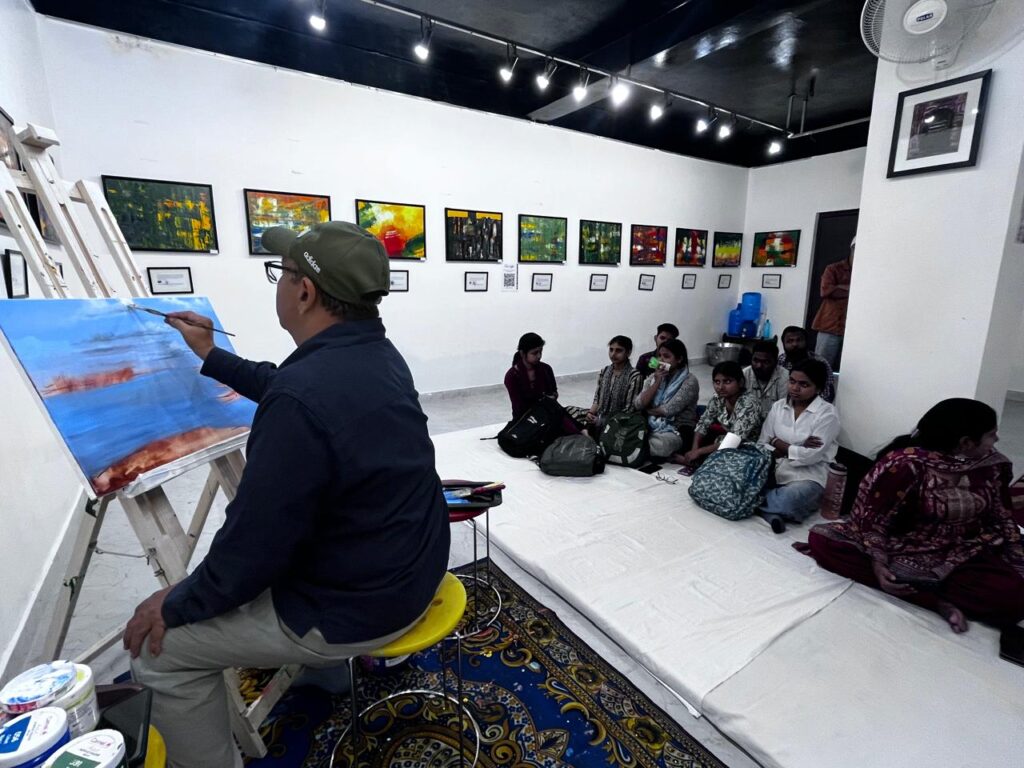
He emphasized that a good landscape painting is not just technically correct; it must also carry sensitivity and feeling. Nature itself is a living composition of light, movement, balance, and harmony, and the role of an artist is to capture that essence with honesty and emotion.
Understanding Landscape Painting Beyond Technique
One of the most enriching aspects of the workshop was the way the senior artist connected technical learning with emotional understanding. He explained how every landscape has layers of depth and perspective, and how colour tones can create mood and atmosphere.
Using acrylic paints on canvas, Sisodia Ji demonstrated how artists can create a sense of distance, light, and movement in their paintings. He discussed the importance of understanding foreground, middle ground, and background in landscape composition. Participants learned how colour intensity changes with distance and how softer tones can create atmospheric perspective.
He also explained the role of natural lighting in painting. Whether it is the softness of morning light, the dramatic warmth of sunset, or the calmness of cloudy skies, each moment in nature carries a different visual emotion. Through live demonstration, he showed how artists can blend colours to achieve realistic and expressive effects.
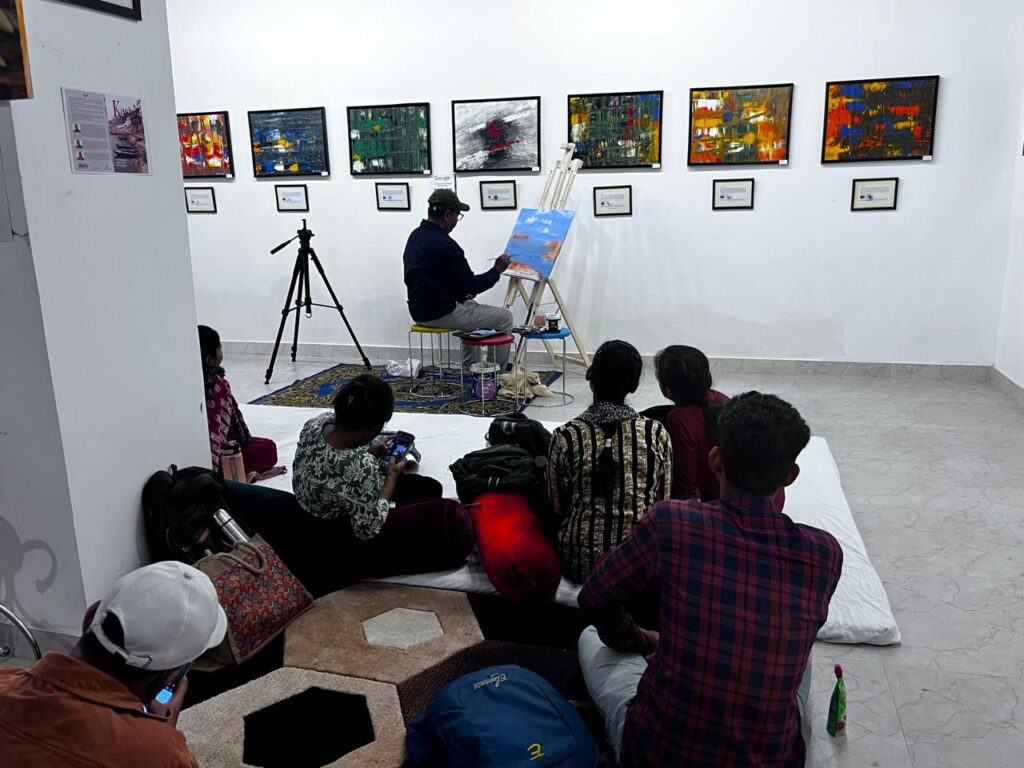
The students watched carefully as a blank canvas slowly transformed into a beautiful landscape filled with flowing visual energy. Brushstroke by brushstroke, the painting evolved into a scene that appeared alive with natural rhythm and balance.
Live Demonstration: Bringing Nature to Canvas
The live painting session became the highlight of the workshop. Participants gathered around the canvas as Sisodia Ji started creating a landscape composition from scratch. He began with a loose sketch and gradually developed the structure of the scenery.
He demonstrated how to block large areas with broad strokes before moving toward finer details. Participants learned how trees can be painted using texture techniques, how skies can be blended smoothly, and how reflections in water can be created using controlled brush movements.
The session offered valuable lessons in patience and observation. Young artists realized that painting is not only about copying visuals but about interpreting what one feels while observing nature.
Throughout the demonstration, the senior artist interacted continuously with participants, answering questions and sharing personal experiences from his artistic journey. His humble and encouraging approach created a comfortable learning environment where students felt motivated to experiment without fear.
Participation of Young Artists and Students
The workshop witnessed enthusiastic participation from students and young artists from different colleges and institutions. Among the participants were Saurav Verma, Aaditya Rai, Tejaswa Singh Tomar, Pooja, Sandhya, Khushboo, Aaradhana, and many others who actively engaged in the learning process.
Some participants were beginners who had never worked seriously on canvas before, while others already had artistic experience and came to refine their techniques. Regardless of their skill level, every participant found the workshop meaningful and inspiring.
As the session progressed, participants began creating their own landscape paintings under the guidance of the senior artist. It was fascinating to see how each individual interpreted nature differently. Some used vibrant colours and expressive strokes, while others preferred softer palettes and detailed realism. This diversity highlighted the beauty of artistic individuality.
The gallery space soon became filled with colourful canvases, creative discussions, and moments of artistic discovery. Participants exchanged ideas, observed each other’s work, and encouraged one another throughout the session.
Learning the Importance of Observation
One of the key lessons shared during the workshop was the importance of observation in art. Sisodia Ji explained that an artist must learn to “see” before learning to paint. Nature constantly changes, light shifts, shadows move, colours evolve, and textures transform with weather and time.
He encouraged students to spend more time observing real landscapes instead of depending entirely on photographs. According to him, direct observation develops sensitivity, which eventually strengthens artistic expression.
He also shared that landscape painting teaches patience and mindfulness. When artists observe natural elements carefully, they become more connected to their surroundings and their inner emotions. In today’s fast-paced digital world, such practices help individuals slow down and reconnect with themselves creatively.
Art as Emotional Expression
Beyond technical guidance, the workshop also became a discussion about the emotional role of art in life. Participants were encouraged to understand painting not only as a profession or hobby but also as a medium of self-expression and mental peace.
The senior artist explained that every colour carries emotional energy. Cool tones may create calmness, warm colours may express passion or energy, and contrasting shades may generate dramatic impact. By understanding emotional colour relationships, artists can create more meaningful works.
Young participants shared how painting helps them release stress, improve concentration, and feel emotionally balanced. Many students expressed that the workshop inspired them to take art more seriously in their personal and creative journeys.
Encouraging Young Creative Minds
The initiative by Mehta Art Gallery reflects an important commitment toward nurturing young talent and promoting artistic culture in the city. In recent years, the gallery has emerged as a vibrant creative space where exhibitions, workshops, discussions, and cultural interactions regularly take place.
Founder and artist Amit Kumar addressed the participants during the workshop and shared the vision behind organizing such events. He emphasized that art should remain accessible to everyone, especially young students who wish to explore their creativity.
According to him, workshops like these provide a practical learning environment where participants gain direct interaction with experienced artists. Such experiences cannot be replaced by textbooks or online tutorials because they involve personal guidance, observation, and emotional connection.
He also mentioned that the gallery aims to continuously create opportunities for emerging artists through exhibitions, collaborative projects, and educational programs.
Presence of Social Activist Lenin Raghuvanshi
The event was further enriched by the presence of Lenin Raghuvanshi, who appreciated the role of art in society and encouraged young participants to continue their creative pursuits.
He spoke about how art contributes to cultural development and social sensitivity. According to him, when young individuals engage in creative activities, they develop broader perspectives and emotional awareness, which positively influences society as a whole.
He praised the efforts of Mehta Art Gallery for creating an environment where art education and cultural interaction can flourish together. His encouraging words inspired many students to remain dedicated to their artistic growth.
Distribution of Participation Certificates
At the conclusion of the workshop, participation certificates were distributed to all attendees as a gesture of appreciation and encouragement. The certificates were presented jointly by Lenin Raghuvanshi, senior artist Dhirendra Sisodia, and Amit Kumar.
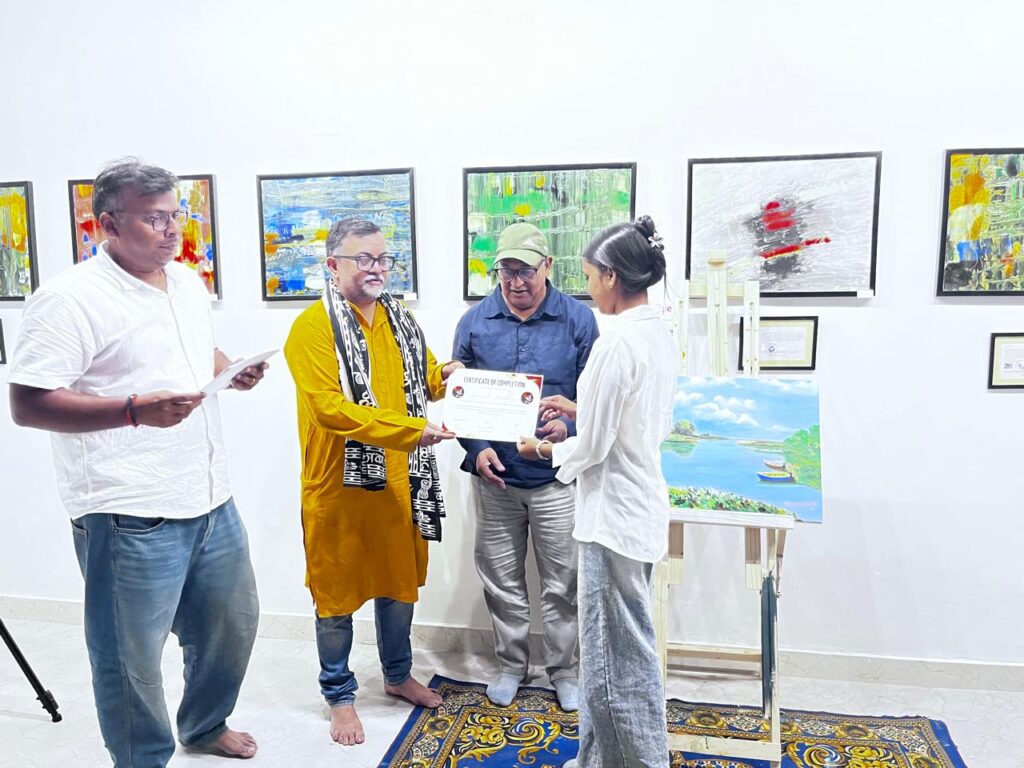
The certificate distribution ceremony became a proud and memorable moment for participants. Many students clicked photographs with their artworks and mentors, preserving memories of a meaningful artistic experience.
For several young artists, receiving recognition in such a creative environment boosted their confidence and motivated them to continue practicing art with dedication.
A Platform for Artistic Dialogue
One of the most valuable outcomes of the workshop was the interaction between experienced artists and emerging talents. Such events create a bridge between generations of artists, allowing knowledge, philosophy, and techniques to be shared directly.
Participants had the opportunity to discuss not only painting methods but also artistic struggles, inspiration, discipline, and career possibilities in the art world. These conversations often become life-changing moments for young creatives who seek direction and encouragement.
The workshop also highlighted the importance of physical creative spaces like galleries. In an era dominated by digital communication, art galleries continue to serve as cultural hubs where people gather, interact, and experience creativity collectively.
The Growing Art Culture in Varanasi
Varanasi has always been known for its spiritual depth, music, literature, and cultural richness. In recent years, the city’s contemporary art scene has also been gaining recognition through the efforts of independent artists, galleries, and cultural organizations.
Events like the Landscape Painting Workshop demonstrate how art is becoming increasingly accessible to younger audiences. Such initiatives help build a stronger artistic community while encouraging creative exploration among students and aspiring artists.
Workshops also play an important role in preserving artistic traditions while introducing modern techniques and contemporary perspectives. They encourage experimentation, dialogue, and continuous learning.
Why Landscape Painting Remains Timeless
Landscape painting has existed across centuries and artistic movements because nature continues to inspire humanity universally. Whether realistic, impressionistic, abstract, or contemporary, landscapes allow artists to express emotion through natural forms.
In today’s urban and digitally distracted lifestyle, landscape painting offers a calming and reflective experience. It reconnects individuals with nature, silence, observation, and mindfulness.
Through this workshop, participants not only learned painting techniques but also experienced the meditative beauty of artistic creation. They discovered how observing skies, trees, water, and open spaces can become a source of emotional healing and inspiration.
Conclusion: A Celebration of Art, Learning, and Creativity
The Landscape Painting Workshop at Mehta Art Gallery was far more than a technical training session. It became a celebration of creativity, mentorship, artistic dialogue, and emotional expression.
Under the guidance of Dhirendra Sisodia, young artists explored the beauty of nature through colours and imagination. They learned valuable artistic techniques while also understanding the deeper emotional and philosophical aspects of painting.
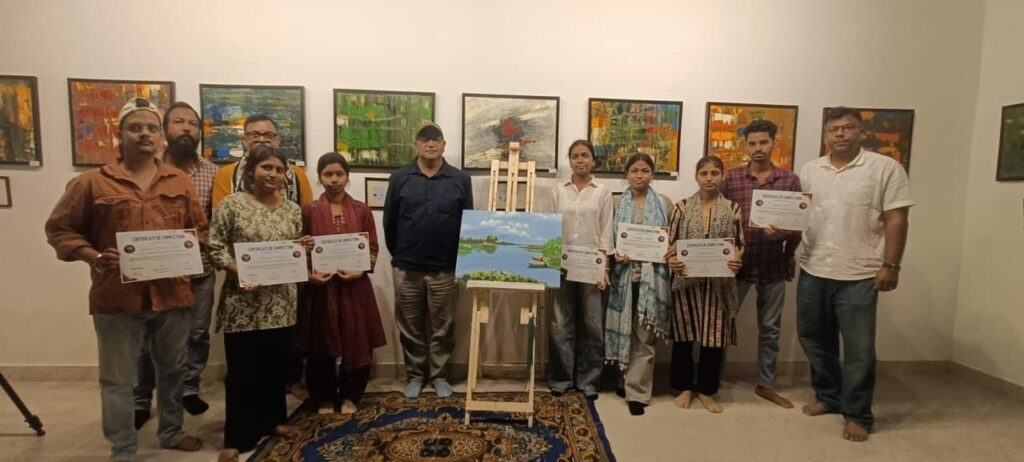
The active participation of students, the encouraging presence of Lenin Raghuvanshi, and the dedicated efforts of Amit Kumar made the event truly memorable and inspiring.
As the workshop concluded, participants left not only with certificates and paintings but also with renewed confidence, creative energy, and a stronger connection to art. Events like these continue to strengthen the cultural identity of Varanasi and inspire a new generation of artists to dream, create, and express themselves fearlessly through art.