Visit Mehta Art Gallery
Art and Culture: The Mirror of Life

Art and culture are not decorations of society; they are its heartbeat. They reflect the values, struggles, and aspirations of people, from the smallest village to the largest nation. Together, they shape identity, preserve heritage, and inspire progress.

The Essence of Art and Culture
Art is the creative expression of human imagination—seen in painting, music, dance, literature, and design. Culture is the collective way of life—traditions, customs, beliefs, and practices that give communities their unique character. One sustains creativity, the other nurtures identity. Without them, life would lose depth and meaning.

Art as a Reflection of Society
Art is often called a mirror because it captures the spirit of its time. Ancient cave paintings tell us about early human survival, while modern digital art speaks of technology and globalization. In times of oppression, art becomes resistance; in peace, it celebrates joy. Every brushstroke, song, or story carries the mood of its people and their age.

Culture as the Soul of Communities
Culture is what binds people together. It lives in languages, festivals, food, attire, and rituals. A village fair with folk songs and crafts reflects centuries of heritage, while a modern city concert showcases global exchange. Both are valuable, both shape identity. A nation without culture is like a tree without roots—it cannot stand strong.

Nations and Their Cultural Identity
True strength of a nation lies not only in its economy but also in its cultural identity. India, for instance, is a mosaic of languages, dance forms, crafts, and traditions. From tribal art to Mughal monuments, from yoga to folk music, every expression adds to its unity in diversity. Cultural richness builds pride, tolerance, and respect across differences.

Agents of Change
Art and culture are not only about the past; they also shape the future. Writers, performers, and filmmakers often challenge inequality and open dialogue. A folk song may preserve the wisdom of ancestors, while a social play may question injustices. In every age, culture inspires reform and keeps societies alive to new possibilities.

A Universal Language
Art transcends boundaries. A painting, a melody, or a dance can be understood without translation. This universality connects people across continents. Cultural tourism thrives on such exchanges, boosting economies while fostering mutual understanding.

Challenges in the Modern World
Despite their importance, traditions face threats from globalization and commercialization. Many art forms and languages risk extinction as younger generations shift toward modern lifestyles. It is vital to balance progress with preservation through education, support for artists, and cultural platforms.

Conclusion
Art and culture are the true wealth of humanity. They remind us of who we are, root us in heritage, and guide us into the future. Whether in a village celebration or a national festival, they give meaning to life. Indeed, art and culture are not just mirrors of society—they are life itself.

The Soul of Art: Artists of Imagination vs. Masters of Technique

Art has always been a mirror to the human experience, reflecting our emotions, dreams, struggles, and triumphs. But not all artists create in the same way. While some are guided by profound inner feelings and unbound imagination, others rely on mastery of technique and learned skills. Both paths produce beautiful results, yet the essence behind the brushstrokes differs greatly.

In this article, we explore the difference between two distinct types of artists: those who paint through thoughts and imagination fueled by inner emotions, and those who paint through technical proficiency and learned skill.

1. The Artist of Imagination and Emotion: Painting from Within

These artists create from a deep emotional reservoir. Their canvas becomes a diary, their brush an extension of their soul. They are not limited by rules or formal structure. Instead, they are guided by intuition, dreams, memories, and feelings.

Characteristics:

Their art is expressive, often abstract or symbolic. Each painting tells a story or conveys a mood, even if it’s not immediately understood by others. They break conventional norms to remain authentic to their inner voice.

Example:

Consider Vincent van Gogh, whose swirling skies and burning colors in Starry Night were not about realism, but raw emotional intensity. Van Gogh’s works were deeply personal—each stroke reflected his mental state and inner turmoil, not just the physical landscape.

Modern Example:

A self-taught artist painting her childhood memories in bright, surreal colors might not know perspective or anatomy perfectly—but her work connects deeply with viewers because it tells a sincere, heartfelt story.

These artists are often innovators. Their work might be technically “imperfect,” but it stirs the soul.

2. The Skilled Technician: Painting with Mastery and Precision

These artists often go through formal training. They study anatomy, perspective, color theory, and composition. Their focus is on perfection and precision. Their work can leave viewers in awe of their discipline and control.

Characteristics:

Their art shows technical excellence—flawless lines, lifelike proportions, refined shading. They can replicate any image or scene realistically. Their skill is often admired more than the emotional depth of the artwork.

Example:

Think of Leonardo da Vinci, who was not only a master of technique but also of science and form. His work like The Last Supper shows impeccable understanding of space, perspective, and anatomy. His paintings are timeless partly due to this unmatched precision.

Modern Example:

A hyperrealist painter who can create portraits so detailed that they resemble photographs. Viewers marvel at the ability, but may not always feel an emotional response beyond admiration of skill.

These artists are craftsmen, capable of amazing visual results that demonstrate dedication, patience, and training.

3. Where the Two Worlds Meet

The most compelling artists often blend both worlds. They feel deeply and paint skillfully. They learn technique not to restrict imagination, but to enhance it. This harmony creates works that are both technically impressive and emotionally resonant.

Example:

Frida Kahlo combined deep personal symbolism with solid technical skills. Her paintings were visual diaries filled with emotion, yet her use of color, form, and composition showed control and awareness of artistic technique.

4. Conclusion: Expression vs. Execution

The artist who paints through thoughts, feelings, and imagination creates from a sacred space—where art is not just seen but felt. Their work connects emotionally and spiritually. In contrast, the artist who paints through learned skill and precision gives form to beauty, structure to chaos, and mastery to visual storytelling.

Neither is superior. One creates from the heart, the other with the hands. The best art comes when the two unite—when skill becomes the servant of imagination, and imagination respects the discipline of skill.

In a world full of images, it is the art that speaks—to the mind and the soul—that remains unforgettable.

How Art Transforms Culture and Shapes Children’s Growth

Art is not merely decoration—it’s a profound language of expression that transcends words, borders, and generations. It plays a crucial role in both cultural evolution and the holistic development of children. In a world increasingly driven by speed and technology, art becomes a grounding force, nurturing creativity, empathy, and identity. Let’s explore how art shapes our societies and future generations.

1. Art and Cultural Identity

Art reflects, preserves, and evolves culture. From ancient cave paintings to modern installations, it records the beliefs, struggles, victories, and beauty of humanity. Whether it’s a traditional folk dance, a mural in a local neighborhood, or a contemporary sculpture, art is the heartbeat of a culture.

Cultural continuity: Art preserves history and traditions for future generations. Unity in diversity: Art fosters inclusion and understanding across diverse cultures. Platform for social dialogue: Artists often raise awareness of social and political issues, becoming voices for the unheard.

2. Art as a Tool for Child Development

Introducing children to art from an early age stimulates all areas of development—emotional, cognitive, physical, and social. Whether drawing, painting, or sculpting, children engage with their inner thoughts and the external world simultaneously.

Cognitive Growth

Art encourages critical thinking, spatial reasoning, and problem-solving. For example, understanding patterns, shapes, and symmetry in art builds a foundation for subjects like math and science.

Emotional Intelligence

Art allows children to express feelings they may not yet have words for. It helps them develop empathy, self-awareness, and emotional control.

Motor Skills

Activities like coloring or cutting paper sharpen fine motor skills, essential for writing and coordination.

Language and Communication

When children talk about their creations, they learn new vocabulary and improve verbal expression.

3. Art Builds Confidence and Self-Worth

Completing an artwork gives children a sense of accomplishment. When their creativity is acknowledged and displayed—at home, school, or galleries—it boosts their self-esteem. Art teaches children that their voice matters and that expression is a strength, not a weakness.

4. Art Encourages Innovation and Future Readiness

In a rapidly changing world, creative thinking is a top skill for the future. Art inspires original thought and experimentation. By nurturing a child’s imagination, we prepare them to become innovators, leaders, and problem solvers across all fields—not just in art.

5. Community Art and Collective Growth

Community-based art projects can bring people together, rebuild neighborhoods, and educate citizens. Murals, street art, and public exhibitions beautify spaces while telling stories that bind communities. For children growing up in such environments, art becomes part of their identity and values.

Conclusion

Art is not optional; it’s essential. It teaches us who we are, where we’ve come from, and where we’re headed. By embracing art in our homes, schools, and communities, we shape a generation that is not only smarter but also more compassionate, confident, and culturally grounded.

Art has been an essential part of human culture for centuries. From the ancient murals on cave walls to the masterpieces of the Renaissance, paintings have not only captured beauty but have reflected the very essence of life, spirituality, and human experience. In today’s fast-paced, digitally-driven world, the role of original paintings in our homes is even more significant than ever before.

1. Fostering Personal Growth Through Art

Art speaks to us on a deeper level. It tells stories, evokes emotions, and challenges our perspectives. Hanging an original painting in your home is more than just an aesthetic choice—it’s an investment in your own personal growth. When you surround yourself with original art, you invite ideas, inspiration, and new ways of thinking into your daily life.

An original painting has the power to transform your space and your mind. It offers a constant source of reflection, reminding you of your personal goals, desires, and passions. Whether it’s a vibrant abstract piece or a serene landscape, the right painting can inspire you to embrace change, take risks, and pursue your aspirations.

2. A Spiritual Connection for the Soul

Many spiritual traditions view art as a pathway to higher consciousness. Original paintings have a unique energy that mass-produced prints simply cannot replicate. The artist’s hand, the emotions poured into each stroke, and the story behind the creation of a piece of art bring an authentic energy into your home that can enhance your spiritual journey.

Art allows for introspection, meditation, and connection with the self. A carefully chosen piece of art can become a focal point for your spiritual practices, creating a sanctuary within your home where you can center yourself, reflect, and grow spiritually. Whether you’re drawn to religious symbols, nature-inspired themes, or abstract representations of emotions, art can act as a bridge between the material and spiritual realms.

3. Creating a Peaceful and Harmonious Environment

Your home is your sanctuary, and its environment plays a crucial role in your overall well-being. Original paintings contribute significantly to creating a peaceful and harmonious atmosphere. Unlike mass-produced prints or digital images, each original artwork is a unique creation that brings a sense of authenticity, warmth, and individuality to your space.

The right painting can uplift your mood, evoke positive feelings, and calm your mind. The colors, textures, and compositions can affect the energy of a room, promoting relaxation and peace. Whether it’s the tranquility of a calming landscape or the vibrancy of a lively cityscape, original art has the power to influence the ambiance and energy flow in your home.

4. Enhancing Happiness and Emotional Well-being

Art has the profound ability to evoke emotion. When placed in a home, an original painting can create an emotional connection, triggering feelings of joy, gratitude, love, and contentment. The emotional resonance of art can uplift your spirit and create an atmosphere where happiness can flourish.

Original paintings bring a sense of originality and joy that mass-produced works often lack. When you choose a painting that resonates with you personally—whether because of its colors, symbolism, or meaning—you are bringing more than just a decorative object into your home. You are infusing your space with positivity and energy that directly influences your emotional well-being.

5. Progress and Achievement Through Art

Art is also a symbol of progress. By investing in original pieces, you are choosing to prioritize the quality and authenticity of your surroundings. Original art represents the value of craftsmanship, uniqueness, and individuality. It’s an expression of progress—not just in terms of the artist’s journey but also in your own.

As you accumulate original art over time, your collection becomes a reflection of your personal growth and achievements. Each painting tells a story of where you’ve been and where you’re headed, contributing to a sense of accomplishment and forward motion in your life. The act of collecting original paintings can, in itself, be an enriching experience that fosters a deeper connection to your aspirations.

6. Beautifying Your Space with Timeless Elegance

An original painting brings a level of elegance and sophistication that no mass-produced print or decorative item can match. It has the ability to elevate a room, turning it from an ordinary space into an extraordinary one. Art doesn’t just fill empty walls—it enhances your home’s overall aesthetic and creates an inviting environment for both residents and guests.

The beauty of original paintings lies not only in their visual appeal but also in their ability to tell stories. Each brushstroke, color, and detail carries meaning and emotion, adding a layer of depth to your home’s decor. Whether you’re drawn to classic realism, modern abstraction, or nature-inspired themes, the timeless beauty of an original painting enriches your space for years to come.

7. Cultivating a Sense of Peace and Fulfillment

In our busy lives, peace and fulfillment often seem elusive. However, an environment that nurtures these qualities is within our reach. The presence of original artwork in your home helps cultivates a sense of calm, balance, and fulfillment. It serves as a constant reminder of what is truly important: connection, mindfulness, and appreciation for beauty in all its forms.

Original art holds the power to transform your home into a haven of peace, encouraging relaxation, reflection, and inner harmony. It serves as a visual anchor in your life, a point of focus that helps you stay grounded amid the noise and chaos of the outside world.

Conclusion: The Essential Role of Original Art in Your Home

Incorporating original paintings into your home isn’t just a decorative choice—it’s an investment in your well-being, personal growth, and spiritual journey. Art has the power to bring peace, joy, and inspiration into your life. It serves as a powerful tool for creating a harmonious environment, enhancing your emotional well-being, and fostering a deeper connection to yourself and the world around you.

As you fill your home with original paintings, you invite the opportunity for growth, happiness, and a beautiful, peaceful life. Every brushstroke, every color, and every detail tells a story—your story. And with each original painting, you add depth, meaning, and authenticity to the space where you live and grow.
In a world brimming with noise, deadlines, and distractions, finding moments of true peace can feel like chasing a distant dream. Yet, within the quiet halls of an art gallery, surrounded by colors, textures, and timeless expressions, something remarkable happens: the mind slows down, the heart softens, and the soul begins to heal.

Art has always been more than decoration. It’s a mirror to our inner worlds, a doorway to new perspectives, and a silent companion in moments when words fall short. For centuries, humans have turned to paintings and visual expression not just to create beauty, but to process emotion, reflect on life, and find clarity in chaos.

Art as a Path to Inner Stillness

The simple act of standing before a painting whether it’s a stormy seascape, an abstract swirl of emotion, or a portrait brimming with unspoken stories invites us into the present moment. It asks nothing of us but to look, to feel, and to be.

This experience of mindful observation is powerful. It slows our racing thoughts, grounds our awareness, and gently pulls us away from stress and into serenity. In that stillness, something shifts. We begin to see not only the artist’s vision but also fragments of ourselves. Our thoughts take on new shapes. Our emotions find names.

A Shift in Perspective

Art challenges us. It questions our assumptions, invites empathy, and opens us to worlds beyond our own. Through color and form, we encounter unfamiliar cultures, ideas, and emotions and in doing so, expand our own capacity for understanding.

A single painting can re-frame how we view suffering, hope, love, or loss. It can teach us to sit with discomfort, to find meaning in ambiguity, and to embrace the complexity of the human experience. These subtle changes in perspective ripple through our lives, shaping how we relate to others, how we handle adversity, and how we see ourselves.

The Therapeutic Power of Creativity

Beyond viewing art, the act of creating it offers even deeper healing. Many psychologists now recognize art therapy as a powerful tool for emotional wellness. Whether it’s painting, sketching, or even doodling, creative expression bypasses the analytical mind and taps into something more primal and intuitive.

Through art, people can process trauma, release suppressed emotions, and reconnect with their inner selves. It’s a nonverbal language that speaks directly to the soul gentle, honest, and deeply human.

A Space for Peace

At our gallery, we believe that art is more than something to look at it’s something to feel. It’s a conversation between artist and viewer, a bridge between minds, and a sanctuary for those seeking peace in a fast-moving world.

We invite you to walk our halls not just with your eyes, but with your heart open. Let the colors wash over you. Let the silence speak. Let the brushstrokes carry you into stillness.

Because in every canvas lies a chance, not just to see differently, but to live more gently.

Visit Us

Whether you’re an art lover, a curious soul, or simply someone in search of peace, our gallery is a space for reflection, inspiration, and quiet transformation. Step inside and let art be your therapy.

Discover the Spirit of Indian Art at Mehta Art Gallery, Varanasi

Original Paintings • Sculptures • Commissioned Artworks • Murals for Government & Private Projects

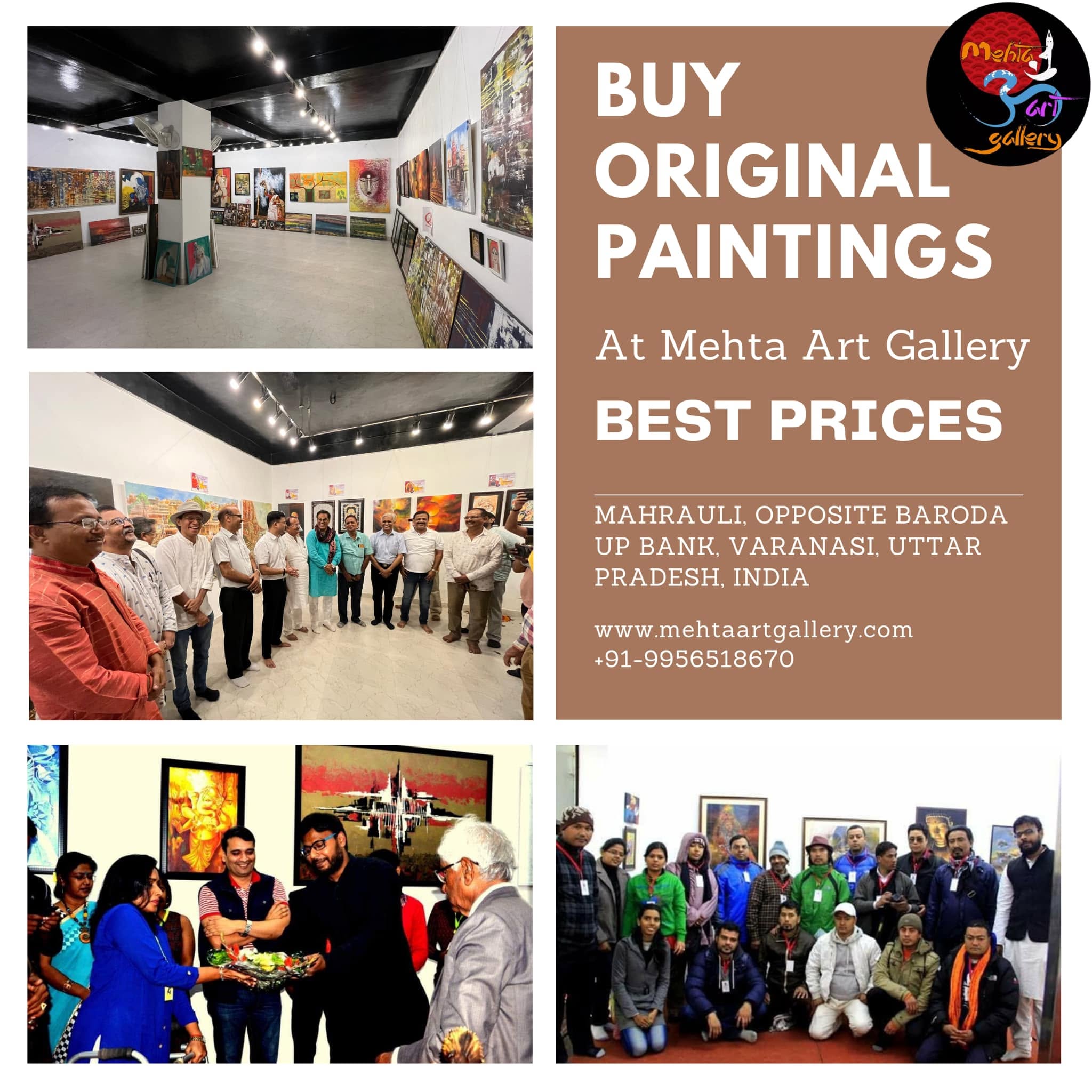
In the timeless city of Varanasi, where culture flows as richly as the Ganges, Mehta Art Gallery stands as a vibrant center of artistic excellence. Recognized as one of the largest and most dynamic art galleries in Varanasi, we specialize in original paintings, sculptures, mural artworks, and custom commission projects that breathe life into homes, offices, temples, hotels, and public spaces.

Whether you’re an art lover, architect, collector, or institution—Mehta Art Gallery invites you to explore, create, and collaborate.

What We Offer

Original Paintings

Browse a diverse range of styles—from contemporary abstracts to classical Indian forms—crafted by some of the region’s most talented artists. Whether you’re buying your first piece or adding to your personal collection, we offer artworks suited to every budget.

Sculptures That Tell Stories

Our sculpture collection spans stone, wood, metal, and mixed media, perfect for interior décor, landscape installations, religious centers, or cultural venues. Every piece reflects mastery in form and emotion.

Commissioned Artworks

Looking for a custom portrait, religious scene, abstract statement, or a personalized gift? We bring your vision to life with fully tailored commissioned paintings—created to your size, style, and material preferences.

Murals for Government & Private Projects

We have successfully executed large-scale mural projects for government institutions, private developers, hotels, educational campuses, and cultural centers. Our murals enhance not just walls, but also the soul of the space—crafted in all mediums and scalable for any setting.

Interested in a mural or public art project? Contact us for site visits, quotations, and design concepts.

Cross-Border Cultural Collaboration

We proudly partner with artists and organizations in Nepal for cultural exchange programs, joint exhibitions, and collaborative art installations. Mehta Art Gallery serves as a bridge between the spiritual and creative worlds of India and Nepal—fostering harmony through art.

Why Choose Mehta Art Gallery?

• Team of Professional Artists: We work with a large collective of local and national artists across disciplines.

• Trusted by Institutions: Experience in both private decor and government mural projects.

• International Engagements: Recognized for art exchange programs and exhibitions abroad.

• Flexible Pricing & Bulk Commissions: Perfect for both individual buyers and developers.

• Exhibitions & Events: Regular art shows, student showcases, and curated exhibitions in Varanasi and beyond.

Visit Us or Get in Touch

  • Mehta Art Gallery
  • Mehta Bhavan, Raja Moti Chand Road, Opposite Gramin Bank, Mahraulli, Varanasi – 221108, Uttar Pradesh, India
  • Call/WhatsApp: +91 99565 18670
  • 🌐Website: www.mehtaartgallery.com
  • Email: mehtaartgallery@gmail.com
  • Open: 10:00 AM – 6:00 PM (All Days)

Let’s Create Something Timeless Together

At Mehta Art Gallery, art is more than decoration—it is expression, tradition, and transformation. From sacred temple murals to elegant hotel lobbies, from personalized canvases to monumental sculptures, we craft art that speaks your language.

Looking for custom work, bulk orders, or mural project quotes?
Call us at 99565 18670 or visit www.mehtaartgallery.com to get started.

Let us turn your space into a living work of art.

The Jan Mitra Nyas (PVCHR) Award, presented in Varanasi, recognizes individuals and organizations for their contributions to social justice and human rights, especially for marginalized communities. Established by the Jan Mitra Nyas, an organization founded in 1999, the award highlights efforts toward improving the rights of Dalits, Adivasis (indigenous people), women, and other vulnerable groups in India. The organization itself, inspired by social reformers like Dr. B. R. Ambedkar and Mahatma Gandhi, works to combat issues such as extrajudicial violence, police misconduct, and caste-based injustices.

Through legal advocacy, psycho-social support, and community-based initiatives, Jan Mitra Nyas addresses human rights violations and strives to empower affected communities. The award is part of a broader mission to establish a society based on equality and justice, with initiatives such as testimonial therapy, health camps, and livelihood projects for survivors of violence. This initiative has gained national and international recognition, contributing to wider awareness and support for grassroots human rights activism.

For more information, you can visit Jan Mitra Nyas’s official site or resources on their achievements and mission. https://janmitranyas.in/ and https://pvchr.asia/

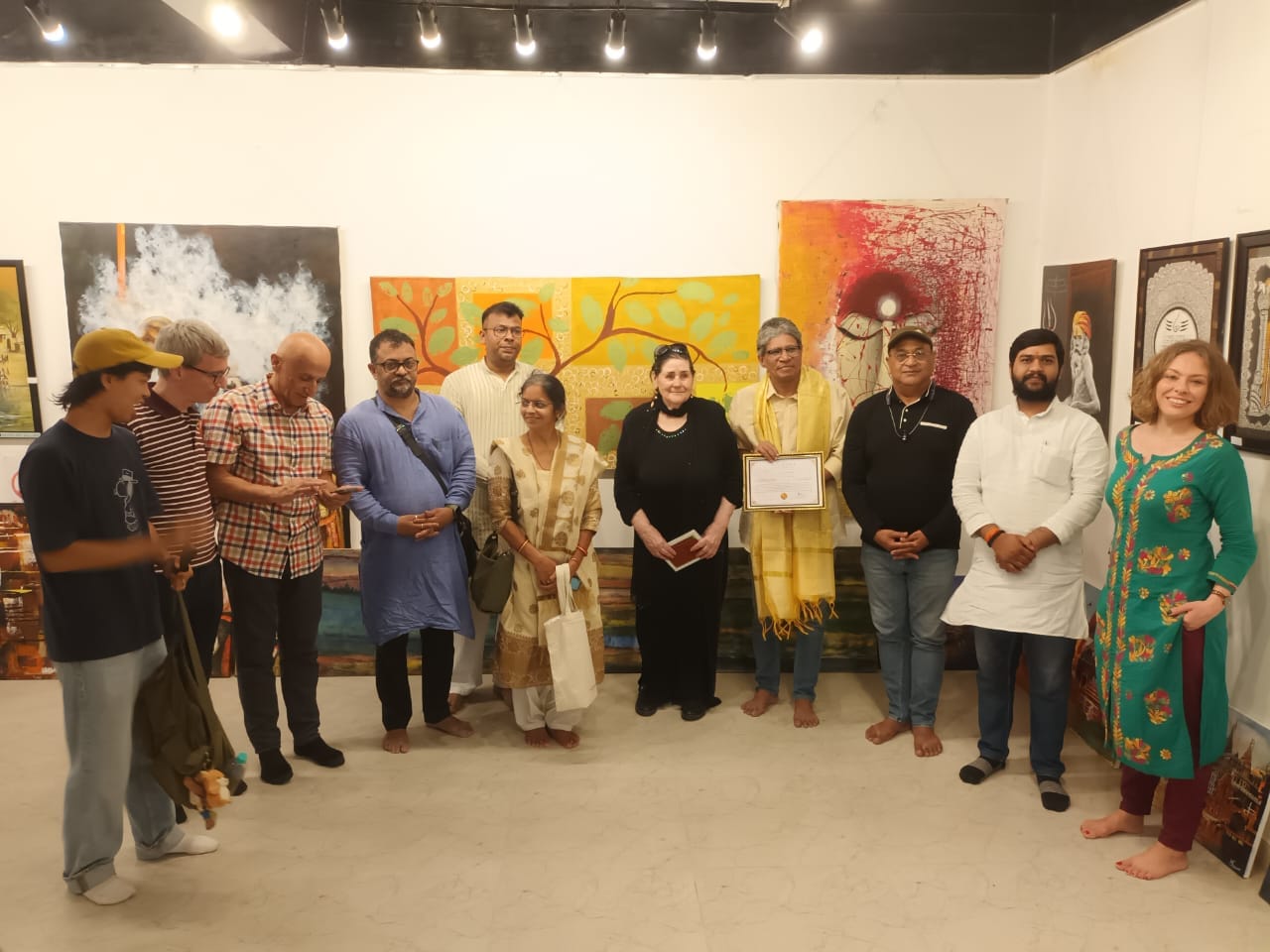
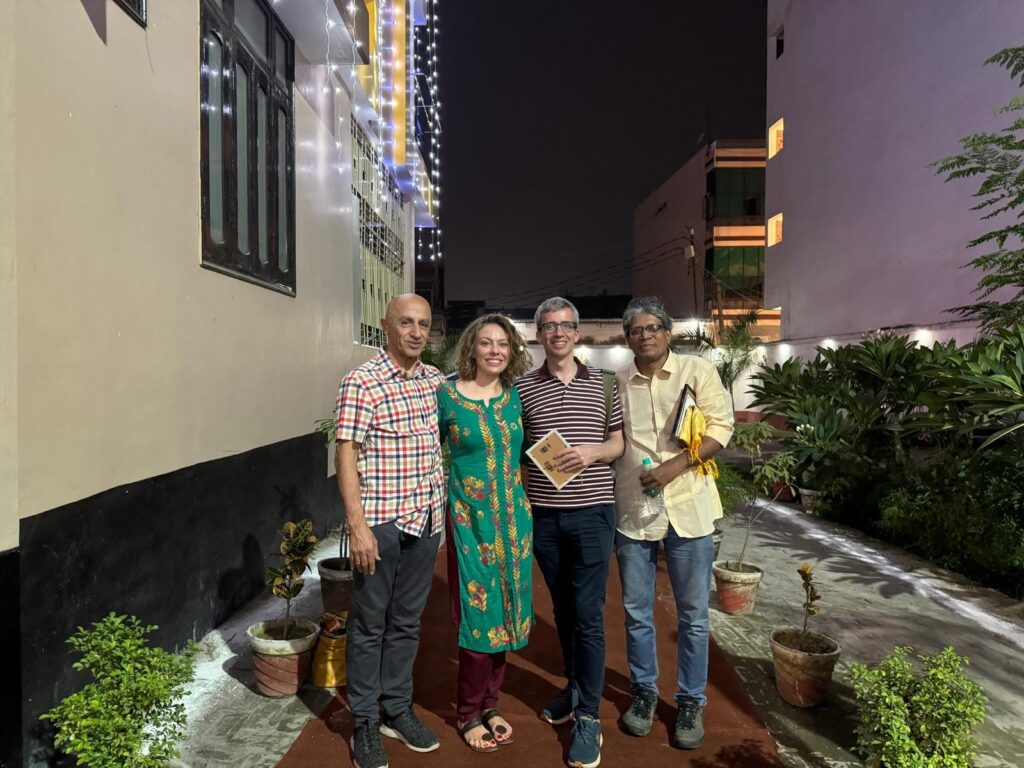
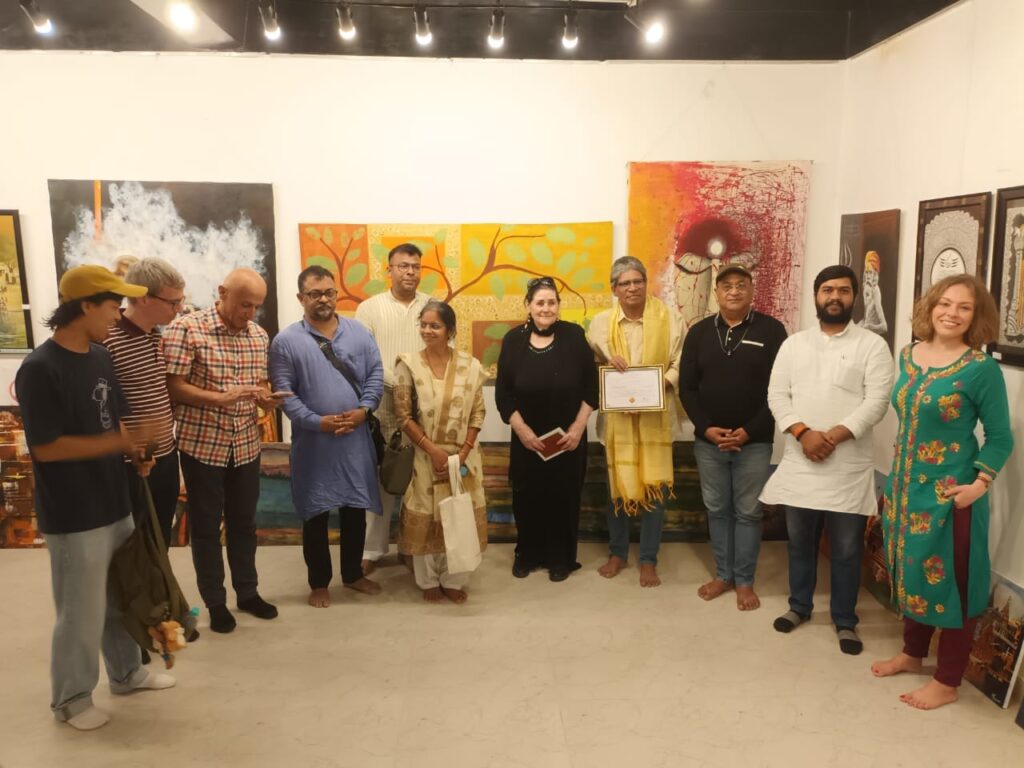
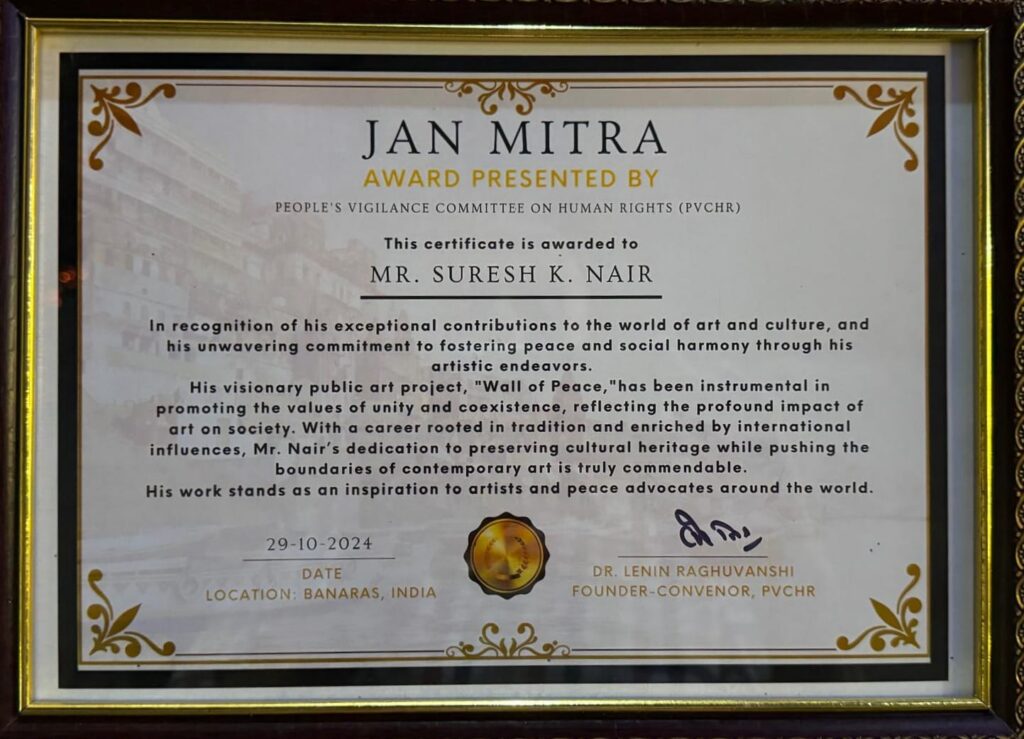
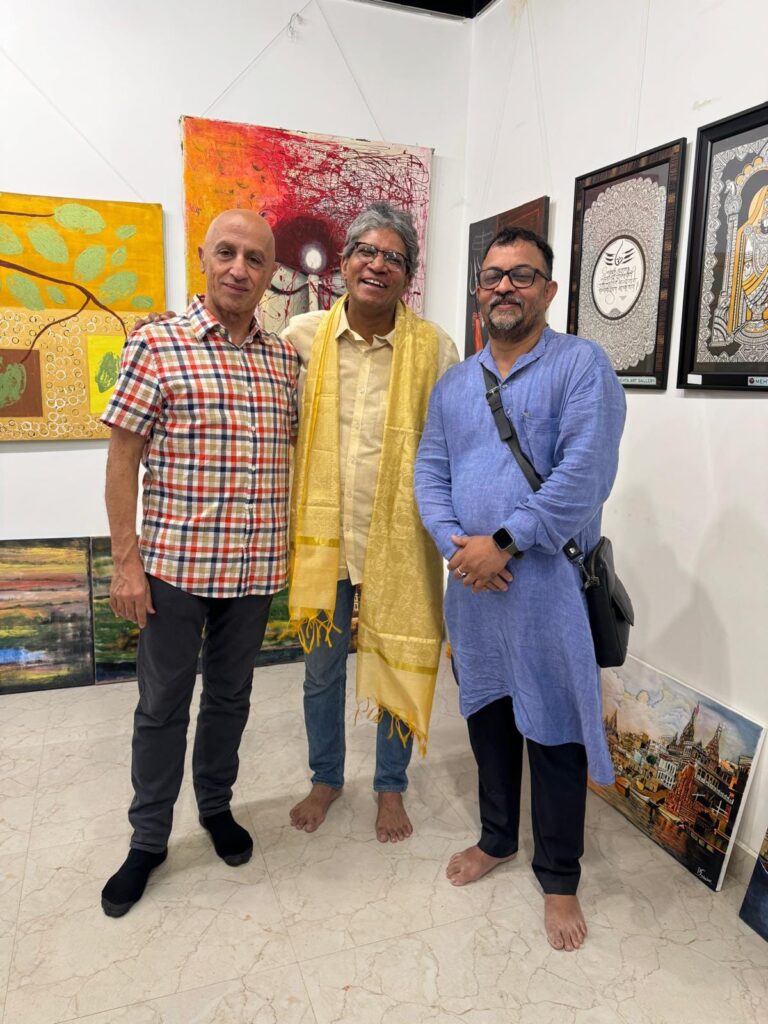
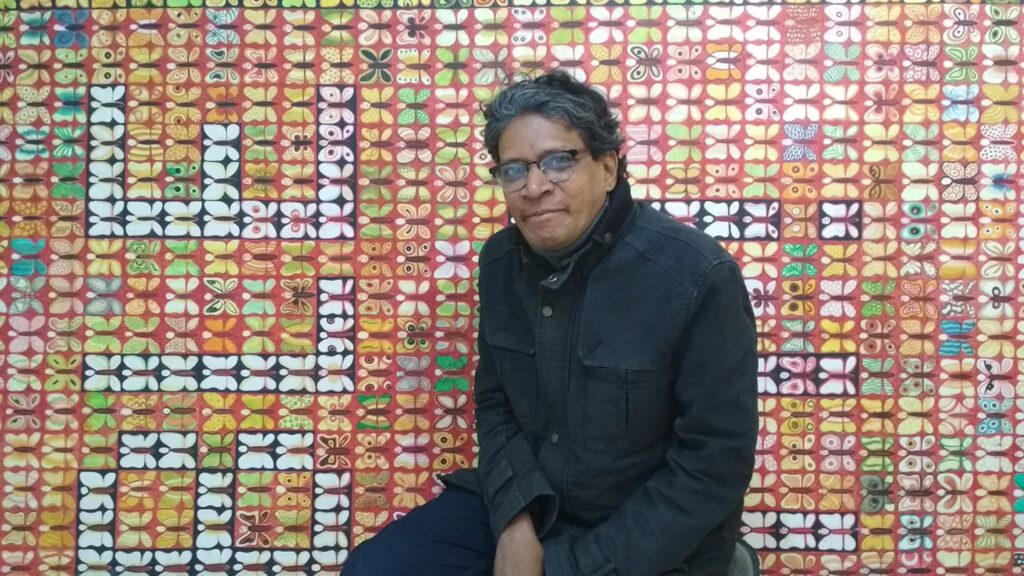
This certificate is awarded to Mr. Suresh K. Nair in recognition of his exceptional contributions to the world of art and culture, and his unwavering commitment to fostering peace and social harmony through his artistic endeavors. His visionary public art project, “Wall of Peace,”has been instrumental in promoting the values of unity and coexistence, reflecting the profound impact of art on society. With a career rooted in tradition and enriched by international influences, Mr. Nair’s dedication to preserving cultural heritage while pushing the boundaries of contemporary art is truly commendable. His work stands as an inspiration to artists and peace advocates around the world. Helma Ritscher, Chairwoman of the Indo-German Society of Remscheid, Germany presented ths prestigious award to the Mr. Nair. The event was graced by Dr. Lenin Raghuvanshi, Founder and Convenor of PVCHR; Prof. Chawky Frenn, Associate Professor at George Mason University and Fulbright Scholar at Banaras Hindu University, Smt. Shruti Nagvanshi, Shri. Direndra Sisodia, Shri. Amit Kumar founder of Mehta Art Gallery and other eminent dignitaries at Mehta Art Gallery, Varanasi, Uttar Pradesh, India.

Brief about, Mr. Suresh K. Nair is a contemporary Indian artist from Kerala, renowned for his murals and fine art that merge traditional Indian styles with modern techniques. He is recognized for his expertise in mural art, which is deeply rooted in Kerala’s classical painting traditions, but his work often carries a unique, contemporary expression. Nair’s art frequently reflects themes of Indian mythology, spirituality, and social issues, showcasing a blend of vibrant colors, detailed patterns, and a strong narrative style.

He studied at Institute of Mural Painting, Guruvayur and Visva Bharati University, Santiniketan, and his murals have gained widespread appreciation, not only in India but also internationally, as he has contributed to various public art projects, exhibitions, and workshops worldwide.

Nair’s contributions to mural art have helped revitalize and modernize this ancient art form, while he remains dedicated to preserving Kerala’s rich artistic heritage. His work often explores complex themes with sensitivity, and he is celebrated for creating art that bridges cultural tradition and modern thought.

The “Wall of Peace” by Suresh K. Nair is a remarkable mural installation that he created at the Government Vocational Higher Secondary School in Cherpulassery, Kerala. Completed in 2013, this mural is one of his most ambitious projects and serves as a powerful visual representation of harmony, tolerance, and unity. Spanning around 1,200 square feet, it combines traditional Indian mural techniques with modern themes, depicting figures and symbols that reflect values of peace and coexistence.

The mural showcases diverse cultural and religious symbols, blending together images of saints, spiritual figures, nature, and mythological elements. Nair designed the mural to be a source of inspiration for students and the community, reinforcing values of non-violence and compassion. It includes imagery like the Buddha, Mahatma Gandhi, Mother Teresa, and other icons of peace, alongside intricate, nature-inspired motifs.

Through the “Wall of Peace,” Nair emphasizes the importance of art in educational spaces as a way to inspire young minds and promote positive values. This mural has become an iconic piece, admired both for its artistic merit and its message, and it represents Nair’s commitment to using art as a means of social and moral engagement. The “Wall of Peace” is not only a work of beauty but also a testament to Kerala’s rich mural tradition, reinvented to address modern social ideals. To know more: https://wallofpeace.in/

The Essence of Life: Art

By: Amit Kumar

It gives meaning to your life and you will never be alone if you are an artist.

Art gives an inner peace of mind.  From art you can search yourself and you can tell your life story, your thoughts, your vision through colors on canvas let everyday people find themselves by seeing the art.

In this frenetic world, people are forgetting about themselves and too many are running, often blindly, to earn a livelihood, earn money.  Emotionally and tragically physically people kill and hate one another to chase after money.  Art, alone, has the power to save our virtues.  People must increase their awareness regarding art and explore and read the art and the visions of artists.  Artists always create works which relate to society and culture en masse.  It depends on individual thought as to what was actually visualized. Art serves as communication for the improvement of social relationships through greater understanding of human experience. Art is society’s greatest cultural university that is open to all.

The purpose of art is washing the dust of daily life off our souls. –Pablo Picasso

Art is not just colors or thoughtless decoration.  It is the feelings and emotions of artists who created works drawn from their souls with intentional meaning.  After a work is completed, its interpretation is out of the artists’ hands literally.  The viewing public can then see and gain insights by seeing their own lives in it and find solutions as well.

“Light and shadow, color and form, texture and intensity, representation and expression; these are the ways that art speaks to us”.

Ascetics is just one of the principles of art.  Yet, what is pleasing to one person is not the same to another.  Works by Hieronymus Bosch appear as if Salvador Dali was having a terrible day.  Yet, both artist’s styles invite discussion, and provocation.  To me this is the essential principle of art: provoke thought!

Putting brush in paint to canvas or whatever preferred medium is not the only art.  There are many works of art that appear naturally: a rose, a waterfall, a magnificent mountainscape, an archway created by wind, rain and erosion, to mention but a few.  In all its various glories, visual art is a feast for the eyes and soul.  This is when the artist and the viewer are closest to each other.  One having produced a work from the mind, the other determining its merits in theirs: a dialog of the minds.

Despite the perception that the skills to create art are innate – we are born with it – the practice, failures, learning from failure, the successes are all integrated due to the diligence of the artist.  Trial and error is not innate, it’s takes many hours, years of study and practice.  To aid in the dialog of the minds is creativity.  The unspoken bond between artist and audience.  The greater appreciation of art can be reinforced with education by the audience, but it is not essential.  A higher level of education can help a viewer or critic articulate the merits or demerits of a work.  But, the perception of beauty is not solely driven by education.  In the end, it’s still a “gut feeling” regardless of how much or little schooling by the viewer.

An emotional transformation “takes over” the consciousness of an artist when working.  Pulling on many emotional, mental and visceral threads, we go to that special place in our minds/souls to create art.  Intentional or not, somewhat trance-like, there is a powerful meditative level that artists reach to produce our works.

The greatest service of art is the betterment of humanity by its astonishing power to communicate, to unite, to divide, however always stimulating communication.  Which is quite amazing seeing as pictures do not talk or do they?

Art Vs Vote: A big threat for the real Artists

By: Amit Kumar

Far too often, I see posts and messages in my inbox demanding votes to score a win on many websites.  Participants and all their colleagues, friends and relatives on social websites demanding votes to make them win and trying to force us to be proud in their machinations. Those who are doing, unwisely think that they are supporting anyone.  In reality, they all are indulging in some wrong doing and manipulation in voting, this causes a corrosive, corruptness which affects the process and the artists specifically.

  • It’s simply begging for votes to get an empty win because they actually don’t have true confidence in their own art and creations.  That’s why this continues by amateur artists who claim to be a professionals.
  • This lame manipulation prevents the viewing public and other artists from seeing the real works of others who participate there.  Most voters don’t actually see or care about the work of that person.  They support friends’ work out of personal loyalty, not on the merits of the work itself.  This will continue to degrade the overall quality of art as votes are meted out on personalities, rather than the merits of the works of art.
  • The unfeeling face of politics is not fit to judge a painting.  More votes does not mean better art.  The political-art crowd is making this a filthy endeavour.
  • Participants who are in a race to get more and more votes for themselves often forget about their art, they are simply in a race to defeat another artist, often forsaking long-term growth in style and quality for the mere bauble of popularity.  This blind chase has led to polluting of art in their ignorance.
  • Artists has few demands for anything in this materialistic world, they just rely on supplies for their work and they are know then by seeing their work themselves.  A true artist need not force others to see their works.  A true artist will have his/her work sought out based on the merits of the work itself, not whose friend, brother, uncle, or aunt who voted for them.
  • Art and artists should be open and every artists has the full right to have their woks viewed in front of all, then people can judge and select best one which really deserves the acclaim: Not just by an artful hustler who just own some votes through some networks and with help of friends, colleagues or relatives.

“BE PURE AND BEHAVE AS A REAL ARTIST”

Why I Became An Artist?

By: Amit Kumar

Please allow me to reveal a truth about, why I became an artist, started painting and chose this as my career and my livelihood. In school at that time, I loved and enjoyed painting art works and won many competitions at school level. At that time I knew in my soul that this was going to be my future life and accepted it as my career.

After school I took admissions for graduation to higher studies and moved out to another city. With a myriad of thoughts at the time, I forgot about painting, but still loved to do any artistic work whenever it came across in my way like in any function in college or in hostel. In my final year, I still didn’t know where I was going with my art, but cleared my mind knowing that I had to complete my Master of Business Administration (MBA) and then do a job for some time and then start something new.

I joined another college for higher study and started my study and completed it in two years.  During these two years I started painting some and also exhibited in a show in the college auditorium with huge collections and also got a placement with a good package.  Upon joining an established organization, I started going to the office and lived life with a simple same routine day after day.  I didn’t enjoy it.  After sometime, I seriously questioned what I am actually doing, for this I was definitely was not born.

At the same time, I saw many problems in society whether on social networking sites, on news, or on my ways when traveling anywhere, I saw many problems like poor people begging, humans just ignoring each other, caring not at all if anyone dead on road in accident, old person lying on road, no food to eat for people, small children begging on street.  Lots of problem I observed and sometimes I felt terrible and ask from deep within myself: Who am I?  What is my role on this earth?

With many thoughts and imaginations I started to paint and to live in my own way and in that I felt free from everything and also realized that to be free and happy you have to live with your passion.  I became an artist and also planned to open my own art gallery to support many artists like me and other professionals.  Today, personally, artistically, and professionally, I am growing and feeling satisfied that I am doing what I want and leading my life and supporting many people without any exception and this will I do for my whole life.  My dream is to set a platform for all from which everyone can get whatever they want in the art field.