“Beyond the Brush: A Journey of Life, Emotions, and Expression in Contemporary Abstraction”
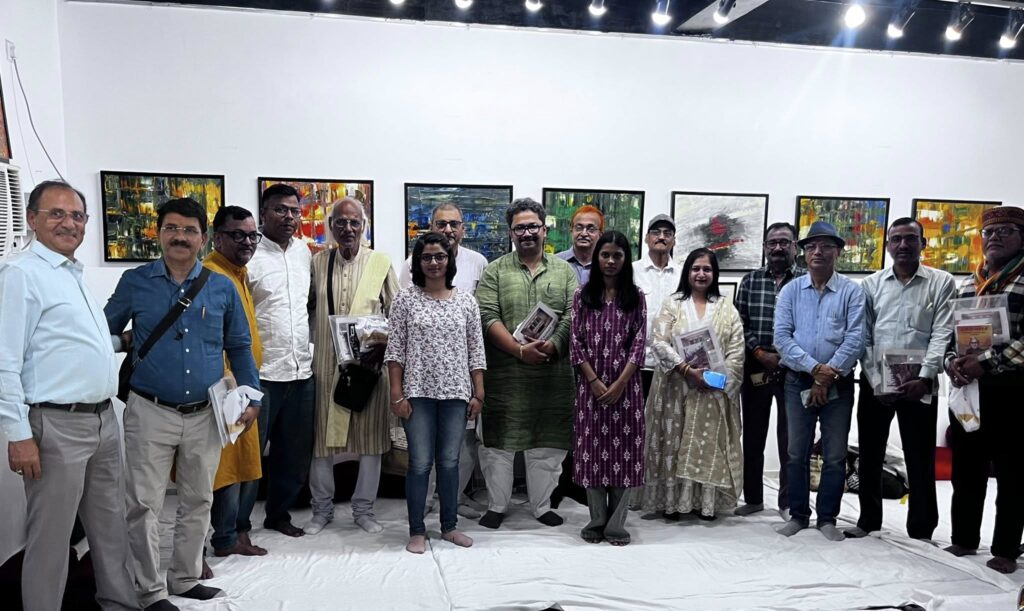
In the timeless city of Varanasi, where spirituality and tradition have long defined its cultural identity, an extraordinary artistic moment unfolded on the evening of April 26. Amid the familiar echoes of temple bells and the quiet flow of the Ganges, a different kind of expression found its voice, one that did not rely on rituals or scriptures, but on colors, textures, and the profound language of abstraction. This moment was shaped by Amit Kumar Mehta, an artist whose work bridges the deeply personal with the universally human, and who has steadily carved a space for contemporary abstract art within a city known more for its classical forms.
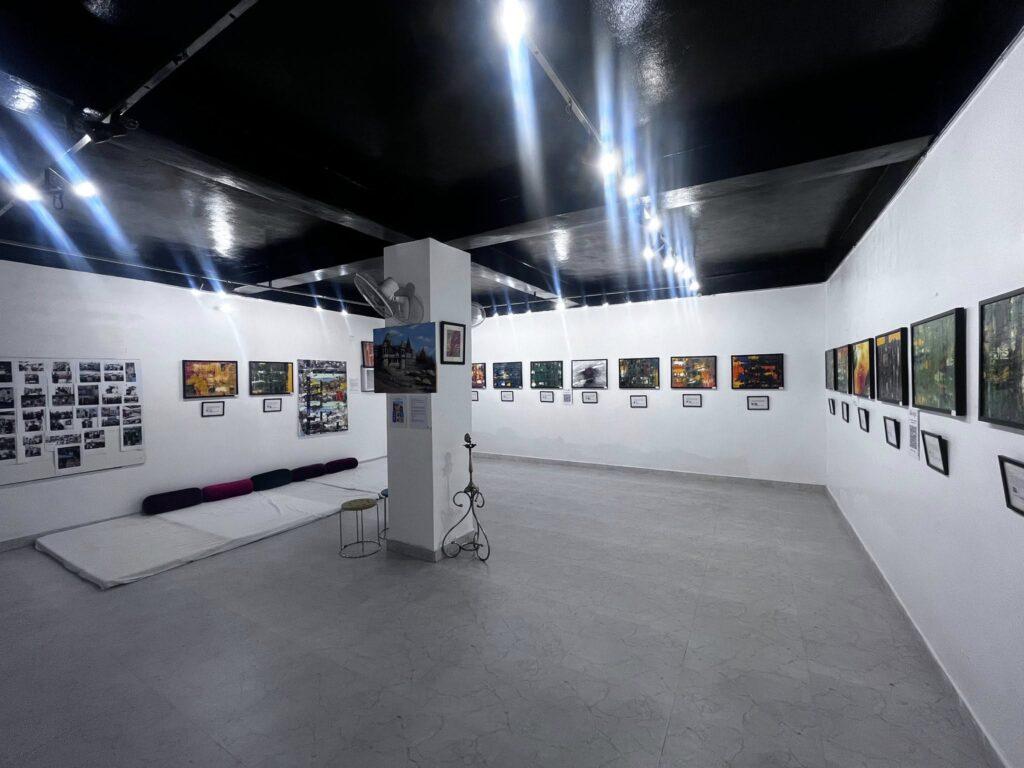
The exhibition, held at Mehta Art Gallery, was not simply a presentation of paintings; it was an immersive journey into the layered realities of life itself. Amit Kumar Mehta unveiled a series of 24 paintings, each one rooted in the themes of life expression, feelings, emotions, and the journey of existence. These were not narratives in the conventional sense, nor were they bound by the constraints of literal interpretation. Instead, they existed in the fluid and open-ended realm of contemporary abstract art, where meaning is not dictated by the artist but discovered by the viewer. The canvases became mirrors, reflecting not a fixed story but the shifting inner landscapes of those who stood before them.
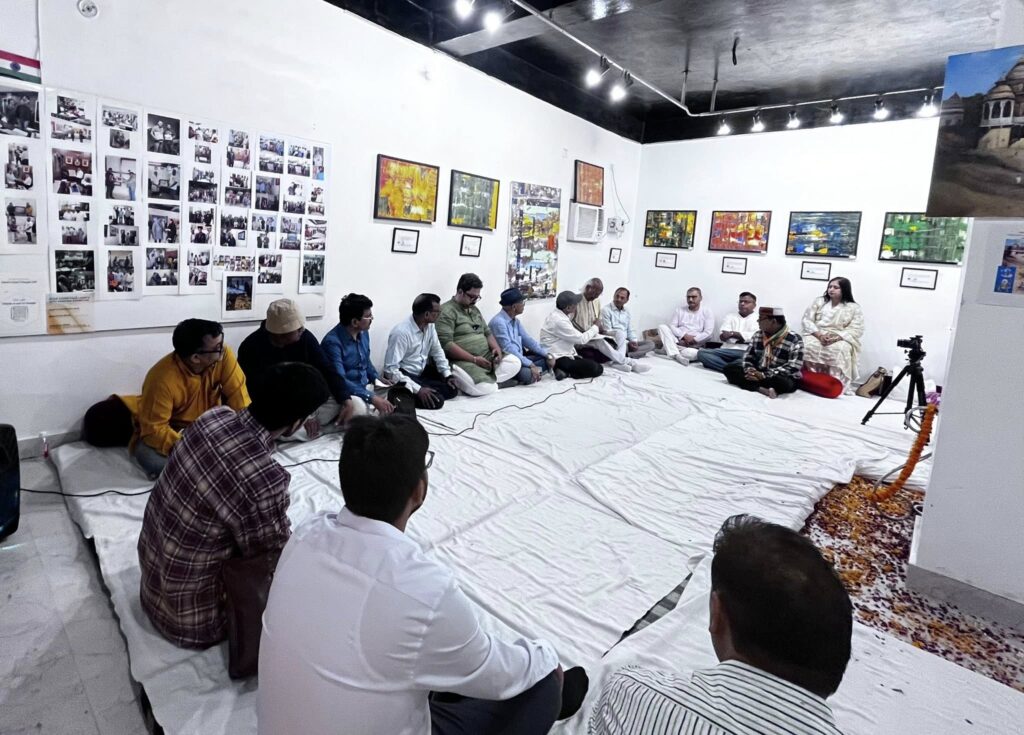
The preparation for this exhibition had been an intensely personal process. In the months leading up to April, the artist withdrew into a state of deep introspection, allowing his studio to become both a sanctuary and a site of exploration. There were no rigid outlines or predetermined compositions guiding his hand. Each painting began as a dialogue between emotion and instinct, evolving layer by layer as color met canvas. At times, the brush moved with urgency, creating bold and almost turbulent forms that seemed to capture the chaos of thought and feeling. At other moments, the strokes softened, giving rise to quiet gradients and subtle textures that evoked calm, acceptance, or reflection. This oscillation between intensity and restraint became the defining rhythm of the series, mirroring the unpredictable nature of life itself.
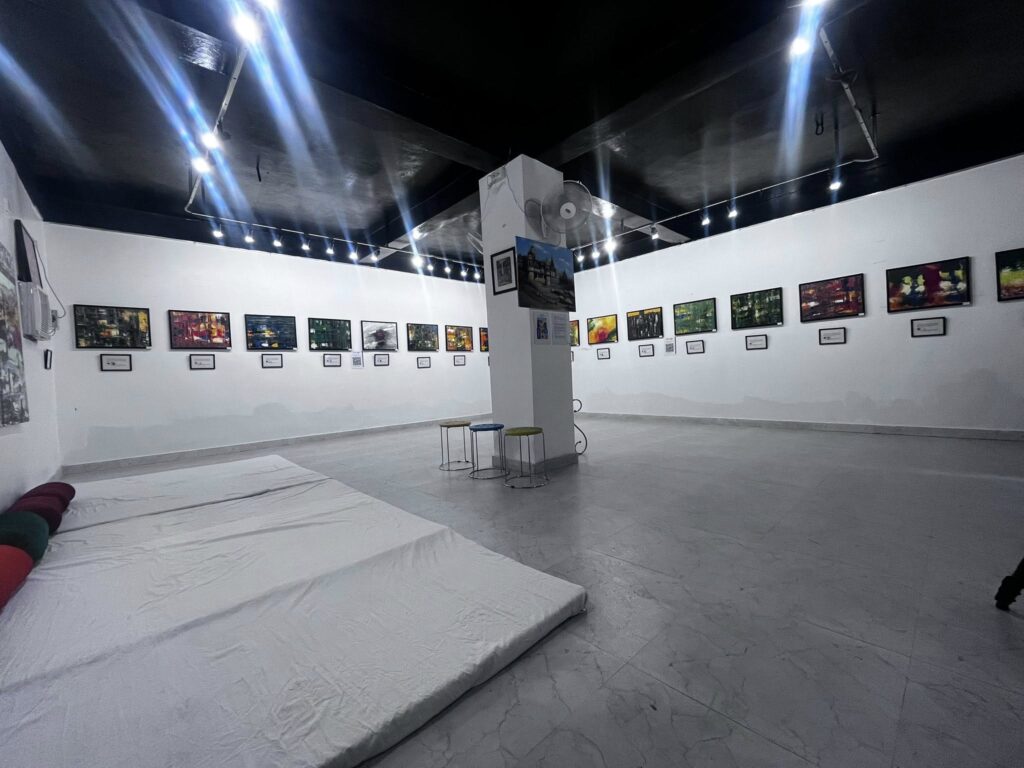
When the day of the exhibition finally arrived, the gallery space had been transformed into an environment that invited contemplation. The lighting was carefully arranged to enhance the depth and texture of each canvas, allowing every stroke and layer to reveal itself gradually. The paintings were placed in a sequence that encouraged viewers to move through them as if they were chapters of a larger, unfolding narrative. As the doors opened and guests began to arrive, there was a palpable sense of anticipation, not just for the event itself but for the experience it promised.
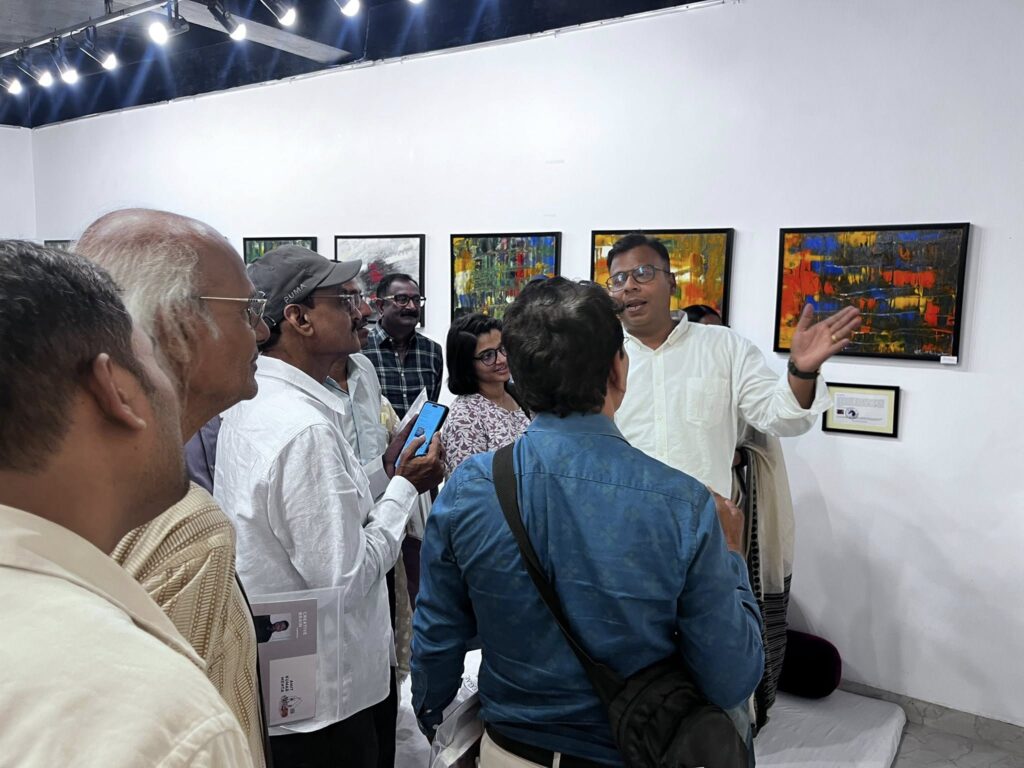
The inauguration was graced by prominent figures from Varanasi’s cultural and intellectual circles, whose presence added significance to the occasion. Yet, as the formalities concluded and the exhibition truly began, it became clear that the focus would remain entirely on the art. Visitors moved slowly through the gallery, their pace dictated not by curiosity alone but by a deeper engagement with what they were seeing. There was a noticeable absence of hurried observation. Instead, people paused, reflected, and allowed themselves to be drawn into the emotional spaces created by each painting.
What made the exhibition particularly powerful was the way it fostered a deeply personal connection between the artwork and its audience. Without defined forms or explicit subjects, the paintings invited interpretation rather than imposing it. A canvas filled with sharp contrasts and intersecting lines might evoke struggle or conflict for one viewer, while another might see it as a representation of resilience or transformation. Similarly, a composition of soft hues and flowing textures could be perceived as a moment of peace, a memory of love, or even a sense of loss gently dissolving into acceptance. Each response was valid, and each interpretation added to the richness of the experience.
As the evening progressed, the response to the exhibition grew increasingly remarkable. Conversations emerged, not in loud or performative tones, but in quiet exchanges that reflected genuine engagement. Visitors spoke of how the paintings resonated with their own lives, how certain compositions seemed to capture emotions they had never been able to articulate. For many, this was not just an encounter with art but a moment of self-recognition. The gallery became a space where individual experiences intersected, connected by the shared language of feeling.
The critical response to the exhibition further reinforced its significance. Observers and connoisseurs of art noted the maturity and clarity evident in the works, praising the artist’s ability to balance spontaneity with control. They spoke of the emotional authenticity that ran through the series, describing it as both deeply personal and universally accessible. The exhibition was also recognized for its professionalism, from the thoughtful curation of the artworks to the overall presentation of the space. Many remarked that such a refined and conceptually cohesive exhibition was a rare occurrence in Varanasi, marking a new level of artistic engagement for the city.
For Varanasi itself, this exhibition represented more than an isolated success. It hinted at a subtle but meaningful shift in the city’s artistic landscape. While its rich heritage of traditional art forms remains integral to its identity, the enthusiastic reception of this contemporary abstract exhibition suggested an openness to new modes of expression. It indicated that audiences were not only willing but eager to engage with art that challenges conventional boundaries and invites introspection.
At the center of this transformation was Amit Kumar Mehta, whose approach to art is defined by sincerity rather than spectacle. Despite the overwhelming success and appreciation surrounding the exhibition, his perspective remained grounded. For him, the act of creation is not about producing visually appealing compositions but about engaging in a continuous process of understanding life itself. His paintings are not answers but questions, not conclusions but ongoing explorations. This humility and commitment to authenticity are perhaps what make his work so compelling.
As the evening drew to a close, the gallery space retained a quiet energy, as though the conversations and emotions it had hosted continued to linger in the air. Even as the walls prepared to part with the paintings they had held, there was a sense that the experience itself would endure far beyond the confines of the exhibition. Those who had attended carried with them not just memories of what they had seen, but the feelings those works had stirred within them.
The success of this exhibition stands as both an achievement and a beginning. It marks a significant milestone in the journey of Amit Kumar Mehta and sets a precedent for future artistic endeavors in Varanasi. More importantly, it reaffirms the timeless power of art to connect, to reveal, and to transform. In a world often defined by noise and distraction, this exhibition offered a rare moment of stillness—a space where people could pause, reflect, and encounter themselves through the silent yet eloquent language of abstraction.
#BeyondTheBrush #AmitKumarMehta #MehtaArtGallery #VaranasiArt #ContemporaryArt #AbstractArt #ArtExhibition2026 #IndianArt #ModernArtIndia #ArtOfExpression #EmotionsOnCanvas #LifeInArt #AbstractExpressionism #ArtCollectors #CreativeJourney #VisualStorytelling #ArtLoversIndia #GalleryExhibition #EmergingArtistIndia #ArtAndSoul