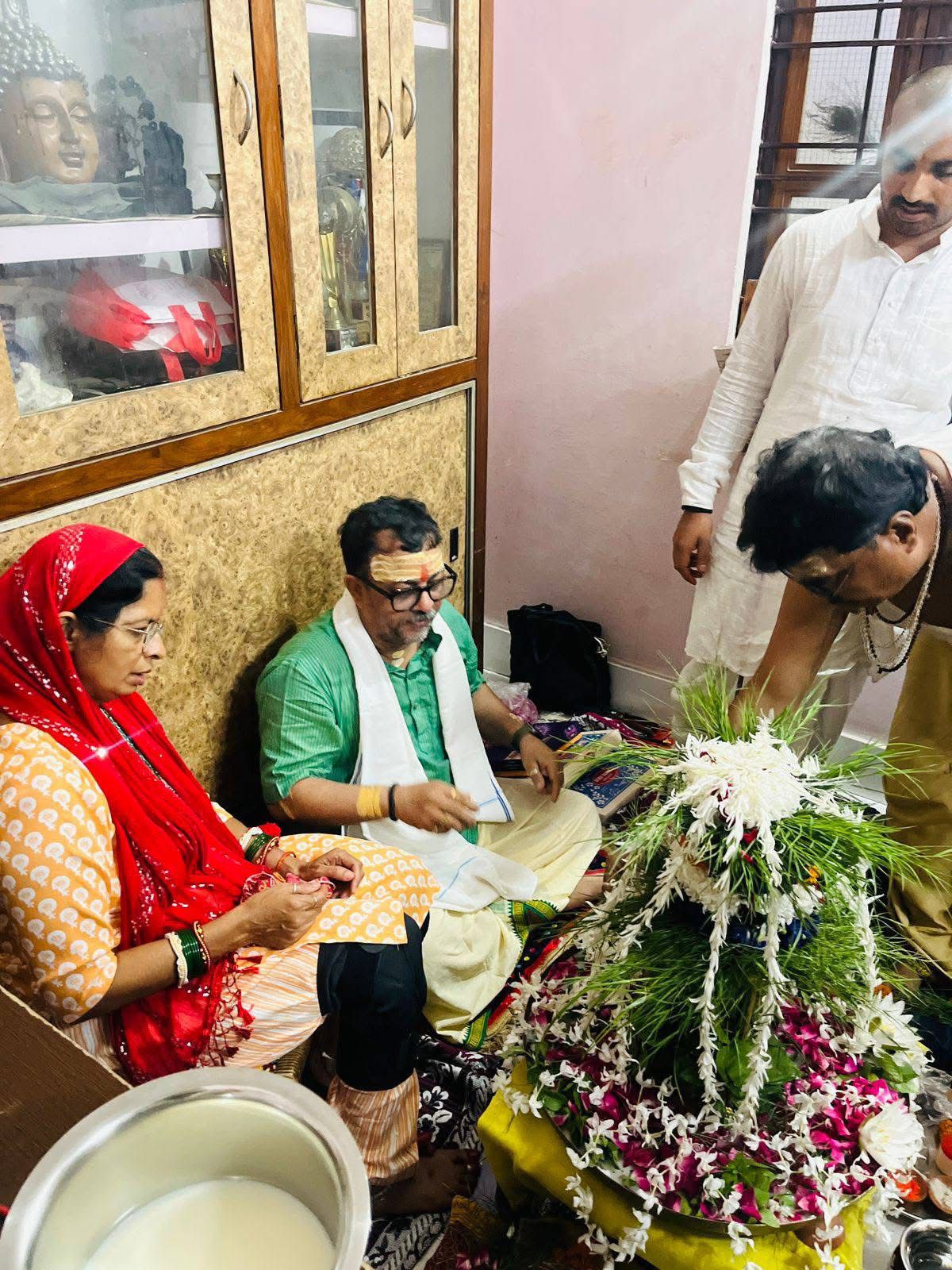
Wedding Anniversary Tribute to Dr. Lenin Raghuvanshi and Shruti Nagvanshi
There are relationships that quietly nurture personal happiness, and then there are partnerships that gradually become institutions of hope for others. The shared journey of Dr. Lenin Raghuvanshi and Shruti Nagvanshi belongs to the latter, a companionship that has continuously expanded beyond domestic life into the moral, social, and cultural fabric of society. Their wedding anniversary is therefore not merely a remembrance of vows exchanged decades ago; it is an opportunity to reflect upon a life lived together in service of dignity, justice, creativity, and human expression.
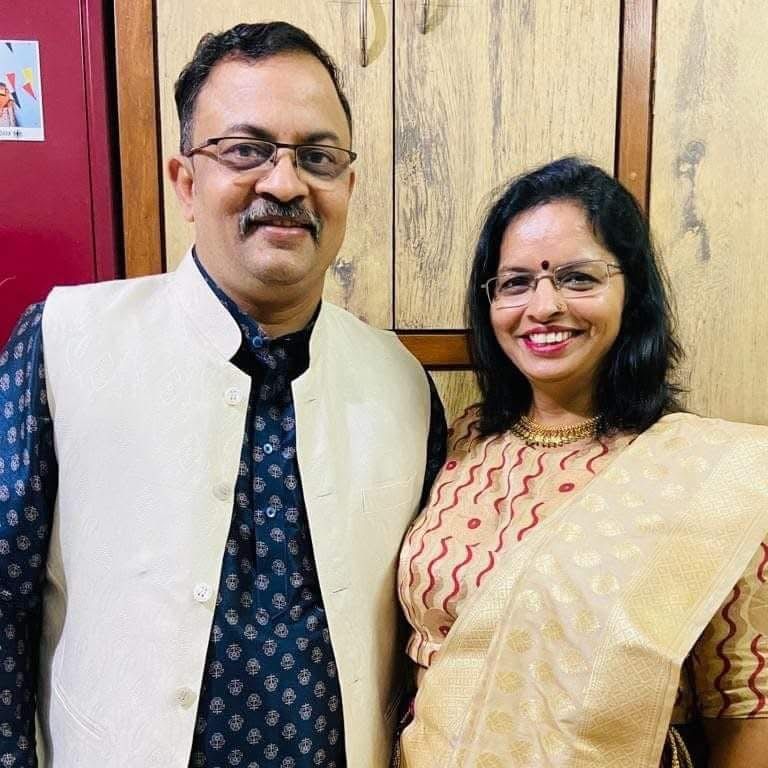
Marriage often finds strength in shared understanding, but when shared understanding transforms into shared responsibility, it acquires a rare depth. From the early years of their companionship, both carried a sensitivity toward inequality and suffering visible around them. Growing up in and around Varanasi, they experienced a city where spirituality and struggle coexist closely. Sacred traditions flourished beside poverty and social exclusion. This contrast shaped their awareness that compassion must not remain philosophical alone; it must become action.
Their marriage in 1992 marked the beginning of a journey that gradually intertwined personal life with social commitment. Rather than separating home from society, they chose to open their lives toward those who needed solidarity. This decision demanded courage. Human rights work is rarely comfortable. It involves confronting systems that resist change and standing beside individuals whose voices are often ignored. In such a path, companionship becomes more than emotional support; it becomes shared resilience.
The establishment of the People’s Vigilance Committee on Human Rights (PVCHR) became a defining expression of this shared vision. Emerging from a desire to create spaces for marginalized communities to reclaim dignity, the organization addressed bonded labour, caste discrimination, gender injustice, torture survivors, and rural deprivation. Each intervention required patience and moral clarity. Justice is not achieved through confrontation alone; it grows through listening, healing, and sustained engagement. Their partnership enabled exactly this balance.
Dr. Lenin Raghuvanshi’s advocacy has often appeared through strong public engagement with structural injustice. His efforts connected grassroots realities with broader democratic conversations, ensuring that suffering hidden within villages entered national and international awareness. Yet activism cannot survive through confrontation alone. It requires trust within communities, and this is where Shruti Nagvanshi’s contribution became profoundly transformative. Through women’s leadership initiatives, health awareness programs, and participatory forums, she nurtured confidence among those who had long believed silence was their destiny.
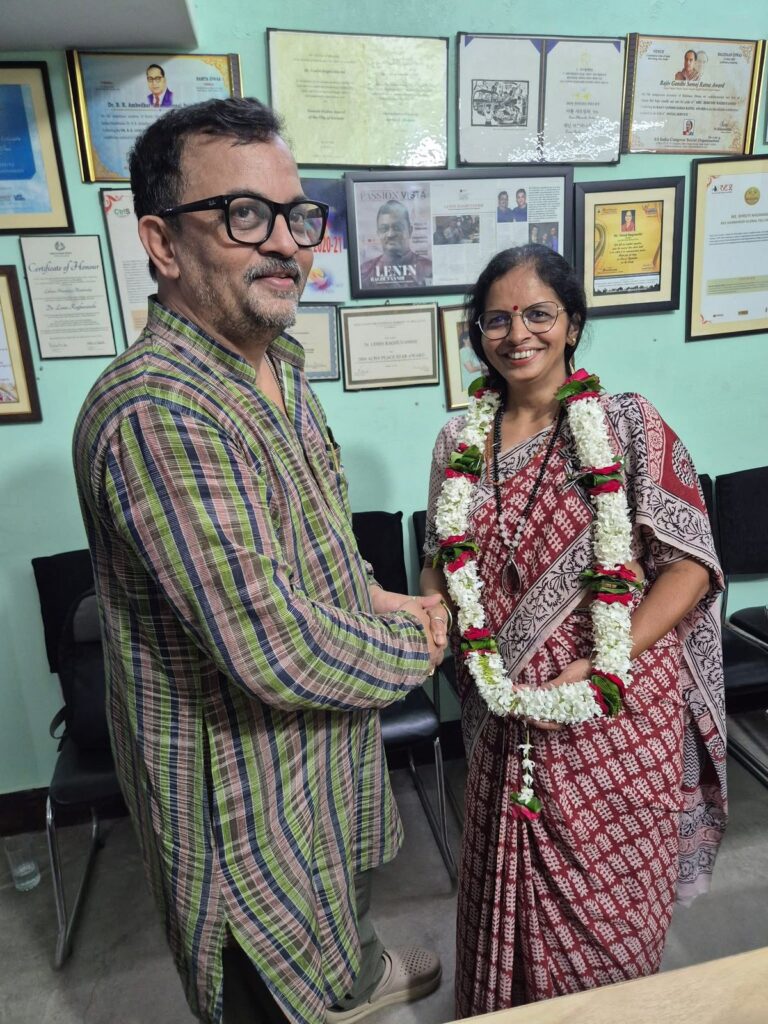
Women began speaking openly about violence and health challenges. Communities started participating in decision-making processes. Young girls discovered the possibility of education where resignation once prevailed. These transformations emerged not from charity but empowerment, a philosophy deeply shared between them.
However, an often less discussed yet equally meaningful dimension of their journey has been their engagement with art and culture as instruments of social dialogue. In a city like Varanasi, art is not merely decoration; it is memory, philosophy, and resistance expressed through colour and form. Understanding this, both recognized that artists play an essential role in shaping collective consciousness.
Their association and encouragement toward artistic initiatives connected with Mehta Art Gallery opened important spaces where creativity could intersect with social awareness. At a time when many independent artists struggled to find recognition beyond commercial boundaries, such collaborations created opportunities for dialogue between activism and art practice.
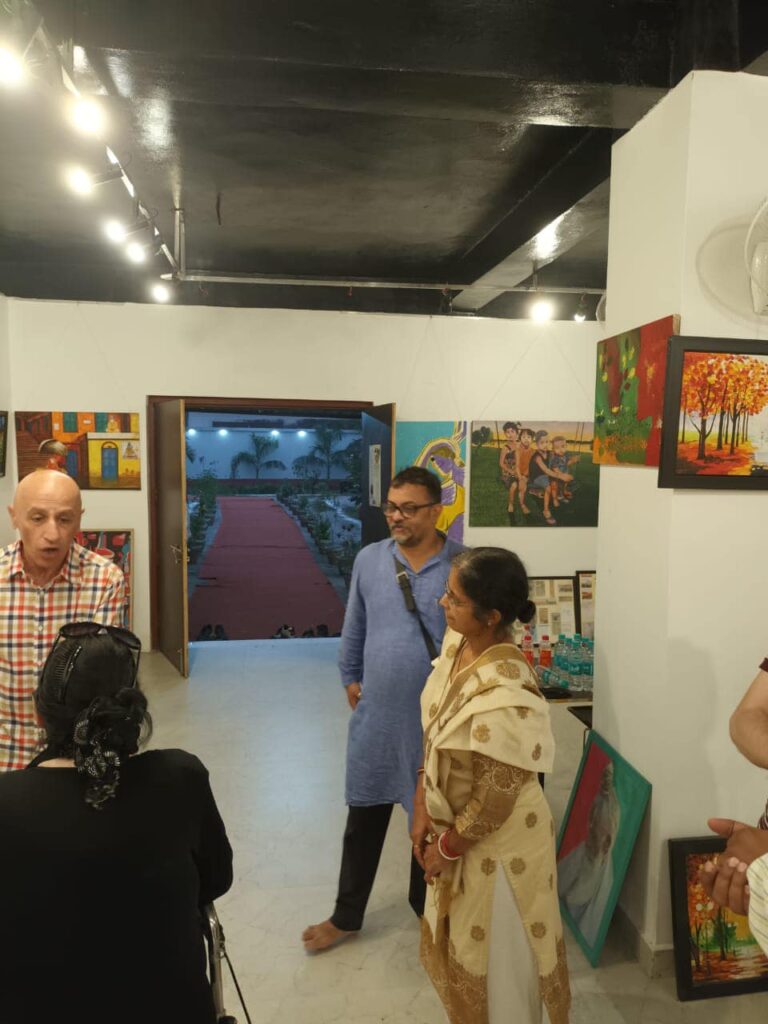
Art exhibitions supported through these engagements encouraged artists to reflect upon human dignity, social harmony, and lived realities rather than limiting themselves to market expectations alone. Conversations between activists, writers, and artists created an atmosphere where painting, sculpture, and visual expression became mediums of questioning injustice and celebrating resilience.
Dr. Lenin Raghuvanshi’s presence in artistic gatherings and discussions associated with Mehta Art Gallery reflected a belief that human rights discourse should not remain confined to legal or academic language. Art communicates where words fail. A painting depicting labourers, women, or spiritual landscapes of Kashi can sometimes speak more powerfully than policy documents. By encouraging interaction between human rights defenders and artists, he helped expand the understanding that culture itself can become an instrument of democracy.
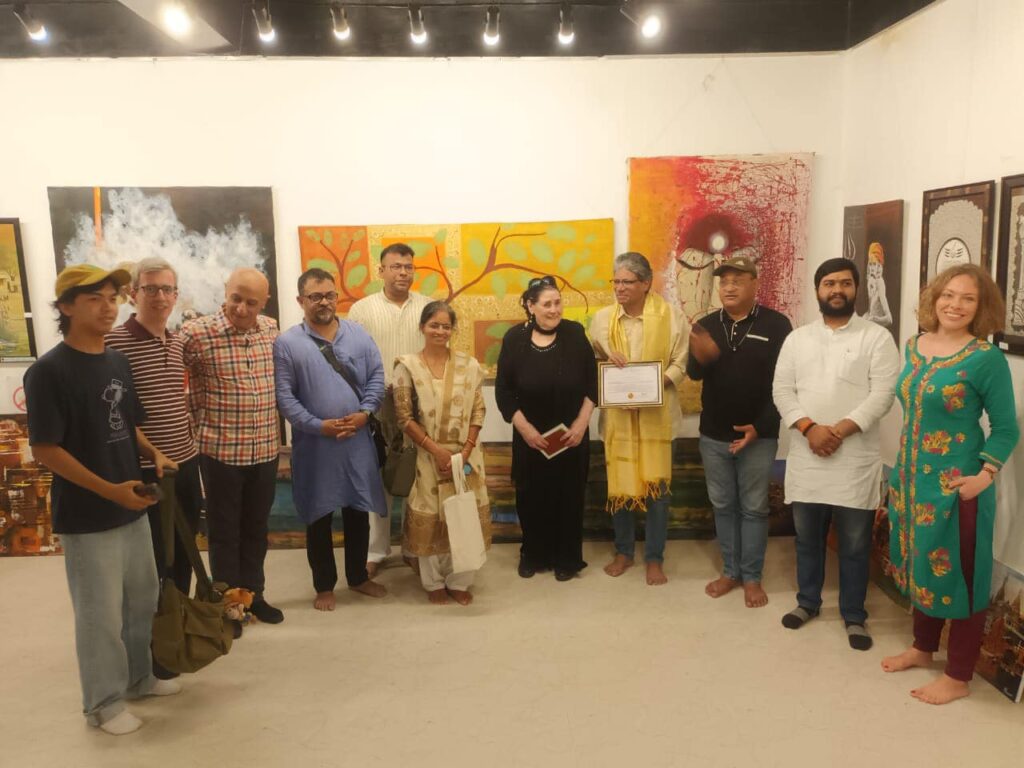
Artists often work in solitude, wrestling with emotion and imagination. Recognition and moral encouragement therefore hold immense value. Through dialogues, exhibitions, and cultural interactions, artists found affirmation that their work possessed social relevance. The gallery space became not only an exhibition venue but a meeting ground for ideas, where creativity engaged with lived human experience.
Shruti Nagvanshi’s sensitivity toward community participation also reflected in such cultural engagements. Her understanding that art can nurture healing resonated strongly with survivors and marginalized communities who participated in workshops and creative interactions. Artistic expression offered individuals a language beyond trauma, allowing stories to emerge through colours and forms when direct narration felt difficult.
Such intersections between activism and art demonstrate a deeper philosophy guiding their lives, that justice must engage not only institutions but imagination. Social transformation cannot occur through law alone; it also requires emotional awakening within society. Artists, writers, and cultural practitioners therefore become essential companions in movements for dignity.
The challenges faced during decades of activism were not insignificant. Working against bonded labour systems or entrenched discrimination inevitably invited resistance. Social change disturbs inherited privilege. Moments of pressure, uncertainty, and exhaustion must have appeared repeatedly along their journey. Yet companionship provided strength. Their marriage offered a space where vulnerability could exist alongside determination, where difficult experiences could be shared and transformed into renewed courage.
Recognition from national and international platforms gradually acknowledged their contributions. Invitations to speak, awards, and collaborations expanded their influence across borders. Yet what remains remarkable is their rootedness. Despite global recognition, their work continues to return to villages, communities, and ordinary individuals seeking justice. This humility perhaps defines their legacy more than accolades ever could.
Their philosophical orientation toward compassion and equality reflects a belief that activism must also nurture reconciliation. Survivors require healing alongside justice. Communities divided by discrimination require dialogue alongside accountability. This approach shaped models of participatory democracy where people themselves become protectors of rights rather than passive recipients of assistance.
Balancing such demanding social engagement with personal life requires extraordinary understanding between partners. Family becomes both refuge and inspiration. Their ability to nurture familial bonds while sustaining intense activism reflects mutual respect and shared purpose. Rather than competing commitments, family and social responsibility appear to have strengthened one another.
In many ways, their marriage offers lessons urgently needed in contemporary society. Relationships today are often measured through comfort or achievement. Their journey reminds us that companionship can also become service. Love guided by ethical conviction expands outward. It listens to unfamiliar voices and stands beside those whom society forgets.
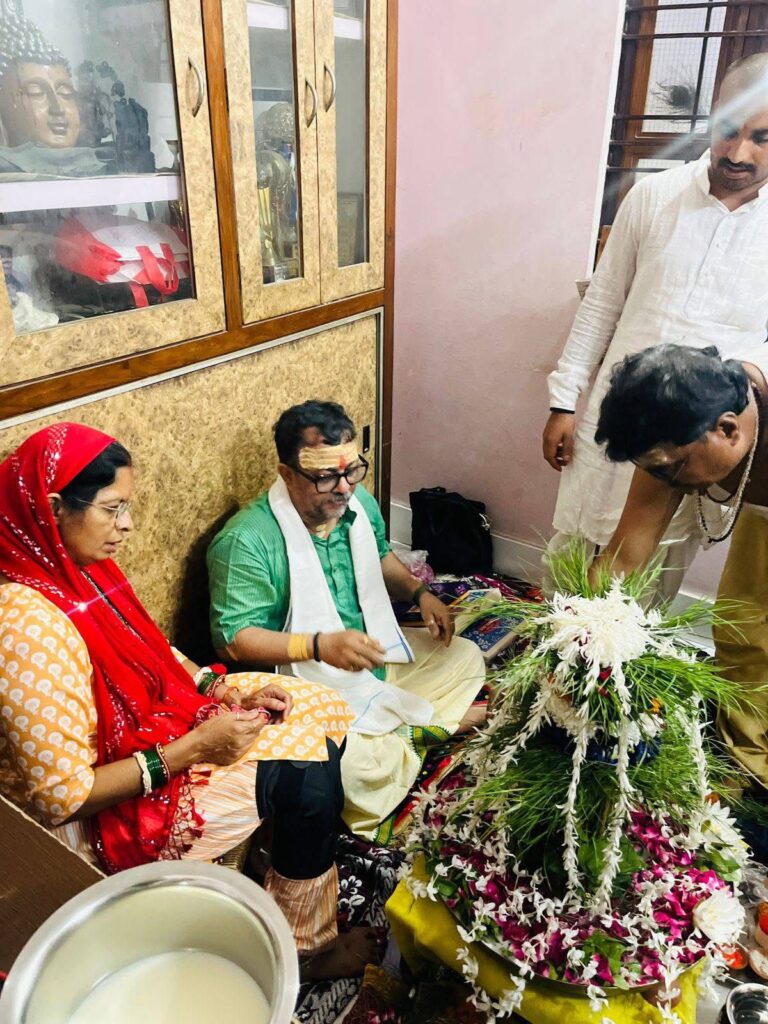
On this wedding anniversary, countless individuals who may never personally attend a celebration nonetheless remain part of it in spirit. Every worker freed from exploitation, every woman who discovered her voice, every child who entered education instead of labour carries within them an invisible blessing for this partnership. Artists encouraged to continue creative journeys, exhibitions that fostered dialogue, and cultural spaces strengthened through collaboration also form part of this living celebration.
May this anniversary bring moments of reflection amid continuing responsibilities. May their companionship continue inspiring activists, artists, and young leaders searching for examples of integrity grounded in humility. May their shared journey remind society that justice and creativity are not separate paths but companions capable of transforming human consciousness together.
Time counts anniversaries through years, but history measures them through impact. The journey of Dr. Lenin Raghuvanshi and Shruti Nagvanshi demonstrates what becomes possible when compassion, courage, and culture walk side by side. Their marriage stands not only as a personal milestone but as a continuing promise, that when love aligns itself with humanity, hope grows stronger than fear.
Heartfelt wedding anniversary wishes to both of you, companions in life, partners in justice, and inspiring supporters of both humanity and creative expression.