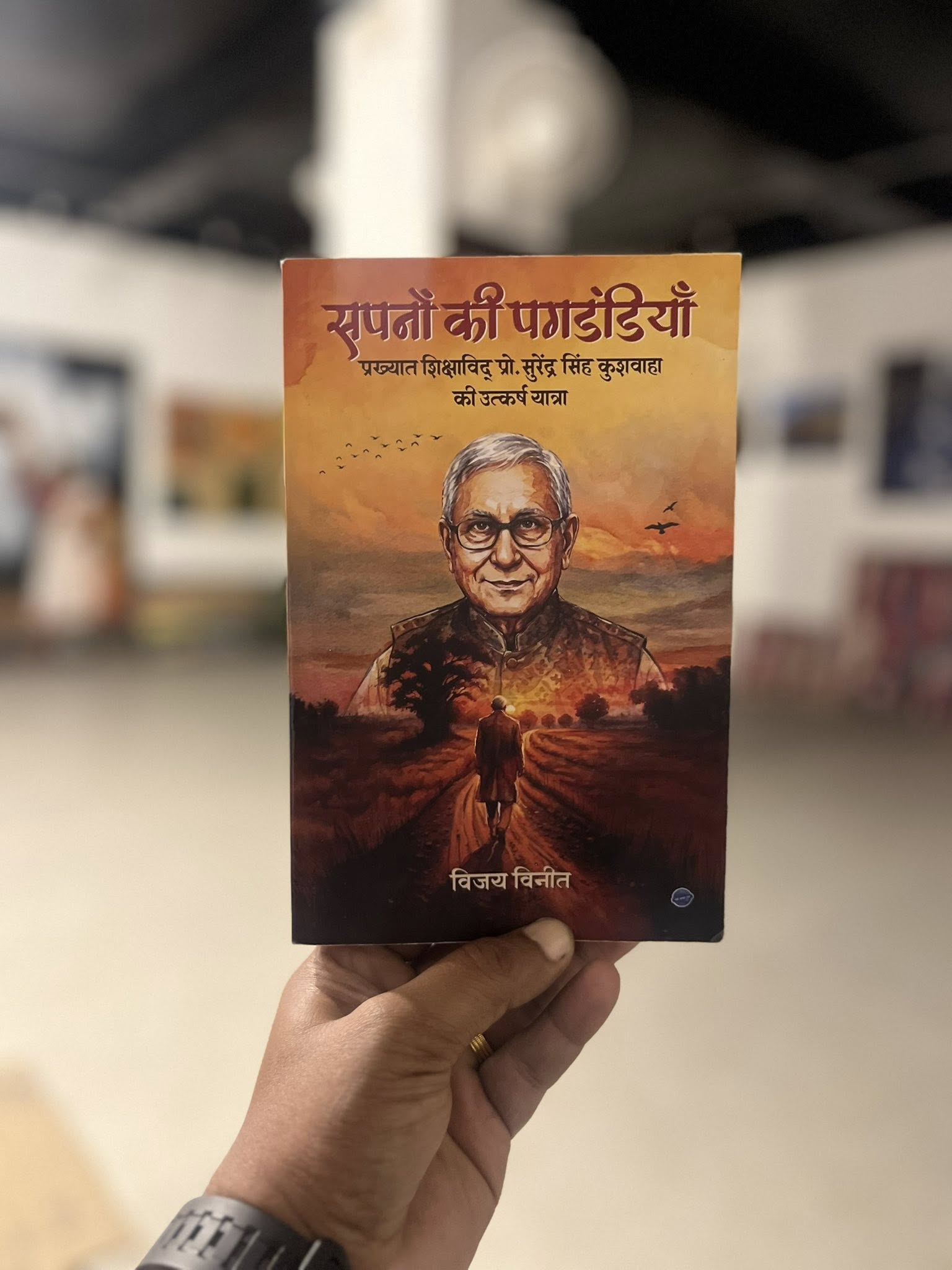
Varanasi Witnesses a Literary Celebration Rooted in Education, Journalism, and Social Values
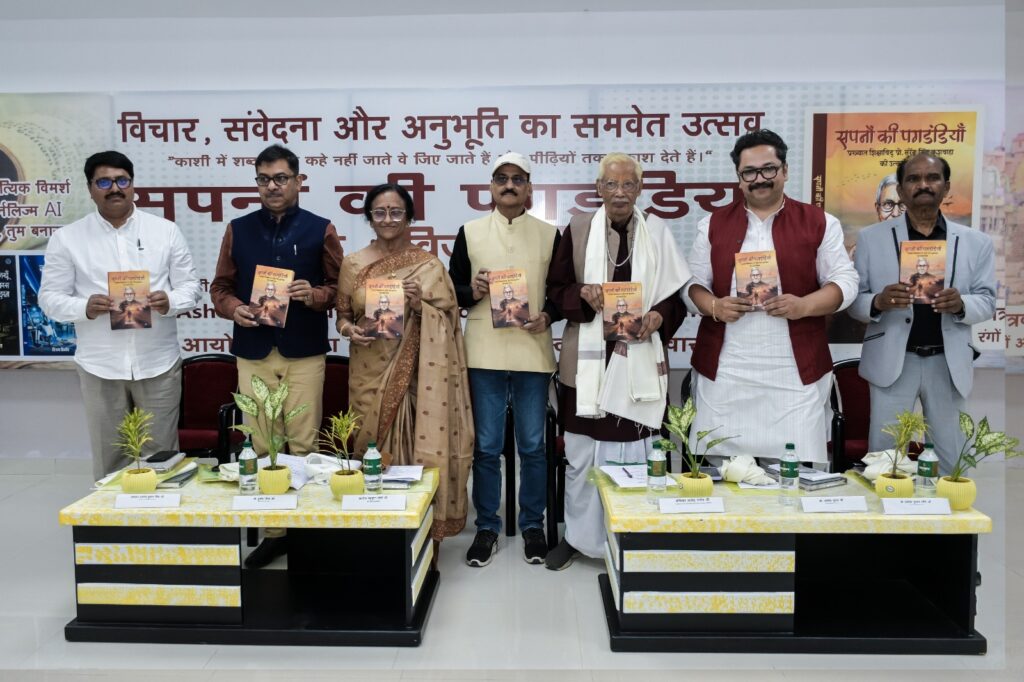
On 17 February 2026, the culturally vibrant city of Varanasi once again reaffirmed its deep relationship with literature, intellectual dialogue, and social thought as senior journalist and author Vijay Vineet unveiled his latest book Sapno Ki Pagdandiyan at the Ashoka Institute of Technology and Management. The event brought together educators, writers, journalists, academicians, and literary enthusiasts to celebrate not merely the launch of a book, but the documentation of a life devoted to education, perseverance, and societal transformation.
The book narrates the remarkable life journey of renowned educationist Professor Surendra Singh Kushwaha, presenting his struggles, achievements, ideals, and contributions in a literary form that bridges biography with inspiration. More than a personal narrative, the work reflects the evolving educational landscape of India and the role of committed individuals who shaped it through vision and dedication.
The ceremony was attended by eminent personalities from academia and journalism, and the gathering reflected the intellectual ethos of Varanasi, a city where literature and learning have flourished for centuries.
A Writer Known for Courageous Journalism and Sensitive Storytelling
Author Vijay Vineet is widely recognized for his fearless journalism and socially conscious writing. His literary and journalistic journey has been shaped by decades of experience across several major cities including Lucknow, Bareilly, Meerut, and ultimately Varanasi, which became his permanent intellectual home.
Beginning his journey from rural roots near Chakia in Uttar Pradesh, a region closely associated with literary traditions, Vineet developed a writing style grounded in observation, emotional depth, and authenticity. His professional association with prominent newspapers such as Dainik Jagran, Amar Ujala, Hindustan, and Jansandesh Times helped shape his reputation as a journalist who balanced courage with responsibility.
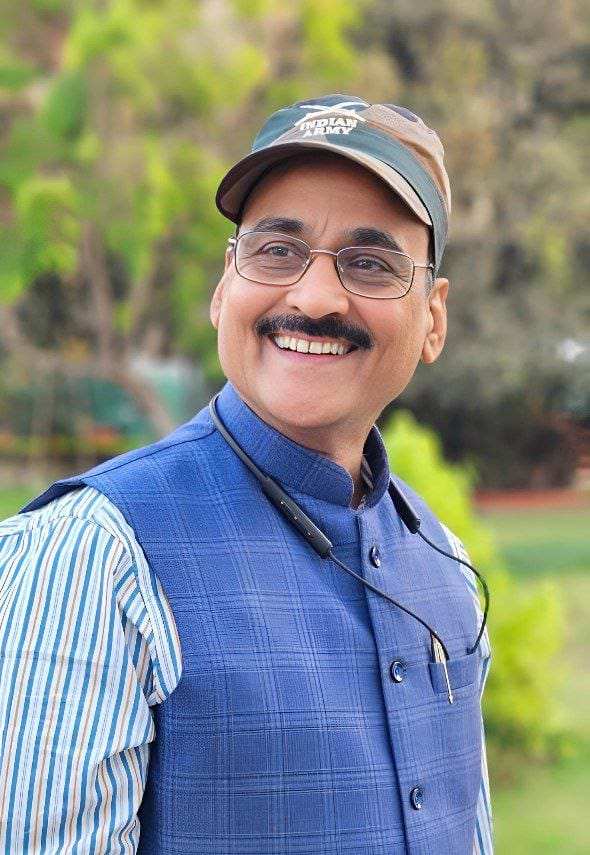
His writing gained wider recognition during the COVID-19 pandemic when his work Banaras Lockdown documented the social realities of the crisis. The book became an important testimony of the period and earned appreciation for spreading awareness during a time dominated by uncertainty and fear. His efforts were acknowledged internationally when he was included among selected global personalities recognized for spreading informational awareness during the pandemic and was honored with the Corona Information Heroes recognition.
Over the years, Vijay Vineet has authored several widely appreciated works including Batkahi Banaras Ki, Banarasi Ghat Ka Ziddi Ishq, Main Ishq Likhu, Tum Banaras Samajhna, and Journalism AI. Each of these writings reflects his deep connection with society, culture, and human emotion.
In Sapno Ki Pagdandiyan, Vineet moves beyond reportage into reflective storytelling, presenting a deeply human portrait of a scholar whose life became a pathway for others.
The Essence of the Book: Dreams Walked Through Determination
The title Sapno Ki Pagdandiyan, meaning “Footpaths of Dreams,” itself carries symbolic meaning. A pagdandi, a narrow pathway formed through repeated footsteps, represents journeys created not through shortcuts but through persistence.
Professor Surendra Singh Kushwaha’s life embodies precisely such a journey.
The book traces his evolution from humble beginnings to becoming a respected academic leader and education reformer. Rather than presenting achievements as isolated milestones, the author situates them within the emotional and social realities that shaped his thinking.
Readers encounter a narrative filled with determination, personal discipline, and a deep commitment to education as a transformative force.
Professor Kushwaha’s career reflects an unwavering dedication to students, language development, and academic reform. During his tenure in leadership roles including university administration, he worked to strengthen educational standards while also encouraging regional languages and intellectual inclusivity.
The book highlights how education, when guided by vision and empathy, becomes more than institutional instruction, it becomes a social responsibility.
A Meaningful Launch at Ashoka Institute of Technology and Management
The launch ceremony held at the auditorium of Ashoka Institute of Technology and Management provided a fitting backdrop for the unveiling of a work centered on education.
The event witnessed participation from prominent academicians and writers who reflected on both the author’s literary contribution and Professor Kushwaha’s legacy.
Chief Guest Dr. Rita Bahuguna Joshi emphasized the importance of socially relevant literature. In her address, she stated that writing becomes meaningful only when it contributes to society and creates real impact among readers.
She described the book as an inspiring narrative of struggle, commitment, and devotion toward education.
According to her remarks, Professor Kushwaha’s leadership as Vice Chancellor played a significant role in shaping academic environments and providing new direction to education and regional language development. She also noted his active engagement with students and his dedication toward building academic culture beyond administrative responsibilities.
Her speech resonated strongly with the audience, reinforcing the idea that literature has the power to preserve living histories.
Voices from Journalism and Academia
The ceremony was enriched by thoughtful reflections from several distinguished speakers.
Senior editor Sudhir Mishra from Navbharat Times, senior writer Vyomesh Shukla, and Professor Manoj Kumar Singh of Banaras Hindu University were among those who appreciated the book’s literary sensitivity and documentary value.
Adding a deeply human dimension to the discussion, renowned social activist and founder of the People’s Vigilance Committee on Human Rights (PVCHR), Lenin Raghuvanshi, shared a moving reflection during his address. Speaking about Professor Surendra Singh Kushwaha, he described him as a personality whose life and thought process were guided by honesty, integrity, and moral courage. According to Raghuvanshi, Professor Kushwaha represented a rare blend of intellectual discipline and ethical commitment, a scholar whose decisions were shaped not by position or authority but by conscience.
He emphasized that in times when institutions increasingly struggle with questions of credibility and public trust, individuals like Professor Kushwaha become sources of inspiration. Their commitment to fairness, transparency, and human sensitivity offers direction not only to students and educators but also to society at large. Raghuvanshi noted that true education is reflected in character, and Professor Kushwaha’s life demonstrated how integrity can become the strongest form of leadership.
His remarks added an important social perspective to the literary gathering, reminding the audience that education, journalism, and social responsibility ultimately share a common purpose, strengthening humanity through truth and compassion.
Speakers collectively described Vijay Vineet as a sensitive yet fearless journalist whose pen does not create noise but communicates truth with dignity. They emphasized that in an era dominated by rapid information flow, meaningful storytelling rooted in human experience becomes increasingly important.The narrative style of the book, blending literary expression with factual authenticity, was widely praised for making academic biography accessible to general readers. The program concluded with a formal vote of thanks delivered by Sonam Upadhyay, while Ashok Anand conducted the proceedings with warmth and professionalism. The atmosphere throughout the event reflected intellectual celebration rather than ceremonial formality, a gathering where dialogue mattered as much as recognition.
Literature as Social Documentation
One of the most remarkable aspects of Sapno Ki Pagdandiyan lies in its ability to merge biography with social history.
Professor Kushwaha’s life journey unfolds alongside broader changes in Indian education and society.
From challenges faced in early academic environments to administrative leadership responsibilities, the narrative reveals how individual determination intersects with institutional transformation.
The author does not portray success as effortless. Instead, he explores the patience required to build credibility and the resilience necessary to sustain ideals within complex systems.
Readers witness the struggles faced by educators working within bureaucratic structures, yet continuing to prioritize students and academic integrity.
This realism gives the book emotional authenticity.
A Portrait of Education Rooted in Humanity
Education in India has often been discussed through policy debates and institutional reforms. However, stories of individuals who quietly shaped educational ecosystems rarely receive literary attention.
By focusing on Professor Kushwaha’s journey, Vijay Vineet restores this balance.
The book portrays an educator deeply invested in nurturing intellectual curiosity among students.
His commitment extended beyond classrooms into cultural and linguistic encouragement, recognizing education as a bridge connecting tradition and modernity.
Through anecdotes and reflective commentary, readers encounter a personality driven by humility rather than authority.
The narrative emphasizes how leadership grounded in empathy fosters lasting institutional respect.
Language, Culture, and Regional Identity
Another significant dimension explored in the book is the importance of regional language development.
Speakers at the launch highlighted Professor Kushwaha’s efforts in encouraging linguistic diversity and strengthening academic discourse through regional languages.
In a country as linguistically rich as India, such initiatives contribute to inclusivity and accessibility in education.
The book subtly reflects how cultural identity and academic excellence need not exist in opposition.
Instead, they can strengthen each other when guided by thoughtful leadership.
Vijay Vineet’s Literary Style
The success of Sapno Ki Pagdandiyan also lies in the author’s distinctive writing style.
Vineet approaches biography with the sensitivity of a storyteller and the discipline of a journalist.
- His prose avoids exaggeration while maintaining emotional depth.
- Rather than glorifying achievements, he explores motivations and dilemmas.
- This balanced narrative approach allows readers to connect with Professor Kushwaha not merely as an administrator or scholar but as a human being navigating responsibilities and aspirations.
- The literary tone carries warmth and reflection, echoing the cultural sensibility of Banaras itself, contemplative, layered, and deeply humane.
Varanasi: The Cultural Context
The launch taking place in Varanasi added symbolic significance.
- The city has long been associated with intellectual traditions, spiritual inquiry, and literary creativity.
- From ancient philosophical debates to modern journalism and art movements, Banaras has nurtured thinkers who shaped Indian cultural consciousness.
- Hosting the launch within this environment underscored the book’s philosophical undertones.
- Like the city’s winding lanes and ghats, the metaphor of “pagdandiyan” suggests journeys shaped gradually through experience.
Why the Book Matters Today
- In contemporary times dominated by rapid digital communication and fleeting attention spans, reflective biographies hold special relevance.
- They remind readers that meaningful achievements emerge through patience rather than immediacy.
- Professor Kushwaha’s journey demonstrates how dedication to education creates generational impact.
- Students influenced by committed educators continue to shape society long after classrooms fall silent.
- The book therefore becomes more than remembrance.
- It becomes guidance.
- For young readers, it offers motivation.
- For educators, it offers recognition.
- For society, it offers reflection.
Reception and Expectations
The enthusiastic response at the launch indicates strong interest among readers and academicians.
Many attendees described the book as both inspiring and necessary, especially for younger generations seeking direction amid changing educational landscapes.
Literary observers believe the book will find readership beyond academic circles because of its accessible storytelling and emotional resonance.
Its blend of journalism, literature, and biography creates a narrative capable of engaging diverse audiences.
Conclusion: Footpaths that Become Roads
Sapno Ki Pagdandiyan ultimately celebrates the idea that extraordinary journeys often begin quietly.
Professor Surendra Singh Kushwaha’s life illustrates how perseverance, discipline, and commitment to knowledge can shape institutions and inspire countless individuals.
Through sensitive writing and careful documentation, Vijay Vineet transforms biography into reflection.
The launch at Ashoka Institute of Technology and Management was therefore not simply a publication event.
It was a tribute to education.
A tribute to journalism.
And above all, a tribute to the power of dreams walked step by step.
Like the narrow footpaths suggested in its title, the book reminds readers that when dedication guides each step, even the smallest path can eventually lead to a wide and meaningful road.