Visit Mehta Art Gallery
The Soul of Art: Artists of Imagination vs. Masters of Technique

Art has always been a mirror to the human experience, reflecting our emotions, dreams, struggles, and triumphs. But not all artists create in the same way. While some are guided by profound inner feelings and unbound imagination, others rely on mastery of technique and learned skills. Both paths produce beautiful results, yet the essence behind the brushstrokes differs greatly.

In this article, we explore the difference between two distinct types of artists: those who paint through thoughts and imagination fueled by inner emotions, and those who paint through technical proficiency and learned skill.

1. The Artist of Imagination and Emotion: Painting from Within

These artists create from a deep emotional reservoir. Their canvas becomes a diary, their brush an extension of their soul. They are not limited by rules or formal structure. Instead, they are guided by intuition, dreams, memories, and feelings.

Characteristics:

Their art is expressive, often abstract or symbolic. Each painting tells a story or conveys a mood, even if it’s not immediately understood by others. They break conventional norms to remain authentic to their inner voice.

Example:

Consider Vincent van Gogh, whose swirling skies and burning colors in Starry Night were not about realism, but raw emotional intensity. Van Gogh’s works were deeply personal—each stroke reflected his mental state and inner turmoil, not just the physical landscape.

Modern Example:

A self-taught artist painting her childhood memories in bright, surreal colors might not know perspective or anatomy perfectly—but her work connects deeply with viewers because it tells a sincere, heartfelt story.

These artists are often innovators. Their work might be technically “imperfect,” but it stirs the soul.

2. The Skilled Technician: Painting with Mastery and Precision

These artists often go through formal training. They study anatomy, perspective, color theory, and composition. Their focus is on perfection and precision. Their work can leave viewers in awe of their discipline and control.

Characteristics:

Their art shows technical excellence—flawless lines, lifelike proportions, refined shading. They can replicate any image or scene realistically. Their skill is often admired more than the emotional depth of the artwork.

Example:

Think of Leonardo da Vinci, who was not only a master of technique but also of science and form. His work like The Last Supper shows impeccable understanding of space, perspective, and anatomy. His paintings are timeless partly due to this unmatched precision.

Modern Example:

A hyperrealist painter who can create portraits so detailed that they resemble photographs. Viewers marvel at the ability, but may not always feel an emotional response beyond admiration of skill.

These artists are craftsmen, capable of amazing visual results that demonstrate dedication, patience, and training.

3. Where the Two Worlds Meet

The most compelling artists often blend both worlds. They feel deeply and paint skillfully. They learn technique not to restrict imagination, but to enhance it. This harmony creates works that are both technically impressive and emotionally resonant.

Example:

Frida Kahlo combined deep personal symbolism with solid technical skills. Her paintings were visual diaries filled with emotion, yet her use of color, form, and composition showed control and awareness of artistic technique.

4. Conclusion: Expression vs. Execution

The artist who paints through thoughts, feelings, and imagination creates from a sacred space—where art is not just seen but felt. Their work connects emotionally and spiritually. In contrast, the artist who paints through learned skill and precision gives form to beauty, structure to chaos, and mastery to visual storytelling.

Neither is superior. One creates from the heart, the other with the hands. The best art comes when the two unite—when skill becomes the servant of imagination, and imagination respects the discipline of skill.

In a world full of images, it is the art that speaks—to the mind and the soul—that remains unforgettable.
How Art Transforms Culture and Shapes Children’s Growth

Art is not merely decoration—it’s a profound language of expression that transcends words, borders, and generations. It plays a crucial role in both cultural evolution and the holistic development of children. In a world increasingly driven by speed and technology, art becomes a grounding force, nurturing creativity, empathy, and identity. Let’s explore how art shapes our societies and future generations.

1. Art and Cultural Identity

Art reflects, preserves, and evolves culture. From ancient cave paintings to modern installations, it records the beliefs, struggles, victories, and beauty of humanity. Whether it’s a traditional folk dance, a mural in a local neighborhood, or a contemporary sculpture, art is the heartbeat of a culture.

Cultural continuity: Art preserves history and traditions for future generations. Unity in diversity: Art fosters inclusion and understanding across diverse cultures. Platform for social dialogue: Artists often raise awareness of social and political issues, becoming voices for the unheard.

2. Art as a Tool for Child Development

Introducing children to art from an early age stimulates all areas of development—emotional, cognitive, physical, and social. Whether drawing, painting, or sculpting, children engage with their inner thoughts and the external world simultaneously.

Cognitive Growth

Art encourages critical thinking, spatial reasoning, and problem-solving. For example, understanding patterns, shapes, and symmetry in art builds a foundation for subjects like math and science.

Emotional Intelligence

Art allows children to express feelings they may not yet have words for. It helps them develop empathy, self-awareness, and emotional control.

Motor Skills

Activities like coloring or cutting paper sharpen fine motor skills, essential for writing and coordination.

Language and Communication

When children talk about their creations, they learn new vocabulary and improve verbal expression.

3. Art Builds Confidence and Self-Worth

Completing an artwork gives children a sense of accomplishment. When their creativity is acknowledged and displayed—at home, school, or galleries—it boosts their self-esteem. Art teaches children that their voice matters and that expression is a strength, not a weakness.

4. Art Encourages Innovation and Future Readiness

In a rapidly changing world, creative thinking is a top skill for the future. Art inspires original thought and experimentation. By nurturing a child’s imagination, we prepare them to become innovators, leaders, and problem solvers across all fields—not just in art.

5. Community Art and Collective Growth

Community-based art projects can bring people together, rebuild neighborhoods, and educate citizens. Murals, street art, and public exhibitions beautify spaces while telling stories that bind communities. For children growing up in such environments, art becomes part of their identity and values.

Conclusion

Art is not optional; it’s essential. It teaches us who we are, where we’ve come from, and where we’re headed. By embracing art in our homes, schools, and communities, we shape a generation that is not only smarter but also more compassionate, confident, and culturally grounded.

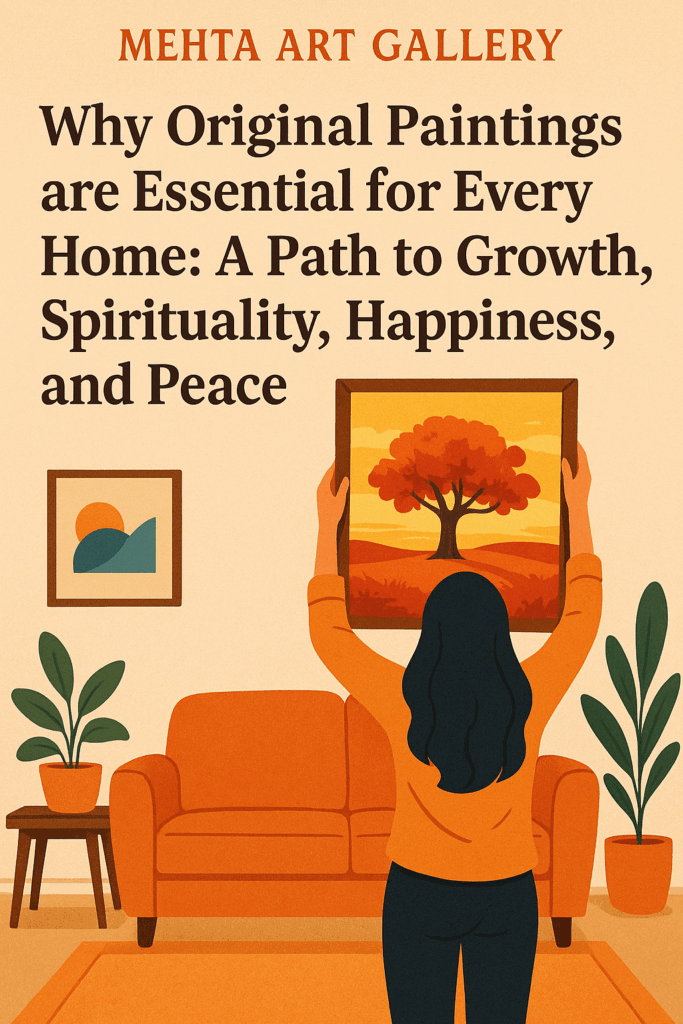
Art has been an essential part of human culture for centuries. From the ancient murals on cave walls to the masterpieces of the Renaissance, paintings have not only captured beauty but have reflected the very essence of life, spirituality, and human experience. In today’s fast-paced, digitally-driven world, the role of original paintings in our homes is even more significant than ever before.

1. Fostering Personal Growth Through Art

Art speaks to us on a deeper level. It tells stories, evokes emotions, and challenges our perspectives. Hanging an original painting in your home is more than just an aesthetic choice—it’s an investment in your own personal growth. When you surround yourself with original art, you invite ideas, inspiration, and new ways of thinking into your daily life.

An original painting has the power to transform your space and your mind. It offers a constant source of reflection, reminding you of your personal goals, desires, and passions. Whether it’s a vibrant abstract piece or a serene landscape, the right painting can inspire you to embrace change, take risks, and pursue your aspirations.

2. A Spiritual Connection for the Soul

Many spiritual traditions view art as a pathway to higher consciousness. Original paintings have a unique energy that mass-produced prints simply cannot replicate. The artist’s hand, the emotions poured into each stroke, and the story behind the creation of a piece of art bring an authentic energy into your home that can enhance your spiritual journey.

Art allows for introspection, meditation, and connection with the self. A carefully chosen piece of art can become a focal point for your spiritual practices, creating a sanctuary within your home where you can center yourself, reflect, and grow spiritually. Whether you’re drawn to religious symbols, nature-inspired themes, or abstract representations of emotions, art can act as a bridge between the material and spiritual realms.

3. Creating a Peaceful and Harmonious Environment

Your home is your sanctuary, and its environment plays a crucial role in your overall well-being. Original paintings contribute significantly to creating a peaceful and harmonious atmosphere. Unlike mass-produced prints or digital images, each original artwork is a unique creation that brings a sense of authenticity, warmth, and individuality to your space.

The right painting can uplift your mood, evoke positive feelings, and calm your mind. The colors, textures, and compositions can affect the energy of a room, promoting relaxation and peace. Whether it’s the tranquility of a calming landscape or the vibrancy of a lively cityscape, original art has the power to influence the ambiance and energy flow in your home.

4. Enhancing Happiness and Emotional Well-being

Art has the profound ability to evoke emotion. When placed in a home, an original painting can create an emotional connection, triggering feelings of joy, gratitude, love, and contentment. The emotional resonance of art can uplift your spirit and create an atmosphere where happiness can flourish.

Original paintings bring a sense of originality and joy that mass-produced works often lack. When you choose a painting that resonates with you personally—whether because of its colors, symbolism, or meaning—you are bringing more than just a decorative object into your home. You are infusing your space with positivity and energy that directly influences your emotional well-being.

5. Progress and Achievement Through Art

Art is also a symbol of progress. By investing in original pieces, you are choosing to prioritize the quality and authenticity of your surroundings. Original art represents the value of craftsmanship, uniqueness, and individuality. It’s an expression of progress—not just in terms of the artist’s journey but also in your own.

As you accumulate original art over time, your collection becomes a reflection of your personal growth and achievements. Each painting tells a story of where you’ve been and where you’re headed, contributing to a sense of accomplishment and forward motion in your life. The act of collecting original paintings can, in itself, be an enriching experience that fosters a deeper connection to your aspirations.

6. Beautifying Your Space with Timeless Elegance

An original painting brings a level of elegance and sophistication that no mass-produced print or decorative item can match. It has the ability to elevate a room, turning it from an ordinary space into an extraordinary one. Art doesn’t just fill empty walls—it enhances your home’s overall aesthetic and creates an inviting environment for both residents and guests.

The beauty of original paintings lies not only in their visual appeal but also in their ability to tell stories. Each brushstroke, color, and detail carries meaning and emotion, adding a layer of depth to your home’s decor. Whether you’re drawn to classic realism, modern abstraction, or nature-inspired themes, the timeless beauty of an original painting enriches your space for years to come.

7. Cultivating a Sense of Peace and Fulfillment

In our busy lives, peace and fulfillment often seem elusive. However, an environment that nurtures these qualities is within our reach. The presence of original artwork in your home helps cultivates a sense of calm, balance, and fulfillment. It serves as a constant reminder of what is truly important: connection, mindfulness, and appreciation for beauty in all its forms.

Original art holds the power to transform your home into a haven of peace, encouraging relaxation, reflection, and inner harmony. It serves as a visual anchor in your life, a point of focus that helps you stay grounded amid the noise and chaos of the outside world.

Conclusion: The Essential Role of Original Art in Your Home

Incorporating original paintings into your home isn’t just a decorative choice—it’s an investment in your well-being, personal growth, and spiritual journey. Art has the power to bring peace, joy, and inspiration into your life. It serves as a powerful tool for creating a harmonious environment, enhancing your emotional well-being, and fostering a deeper connection to yourself and the world around you.

As you fill your home with original paintings, you invite the opportunity for growth, happiness, and a beautiful, peaceful life. Every brushstroke, every color, and every detail tells a story—your story. And with each original painting, you add depth, meaning, and authenticity to the space where you live and grow.